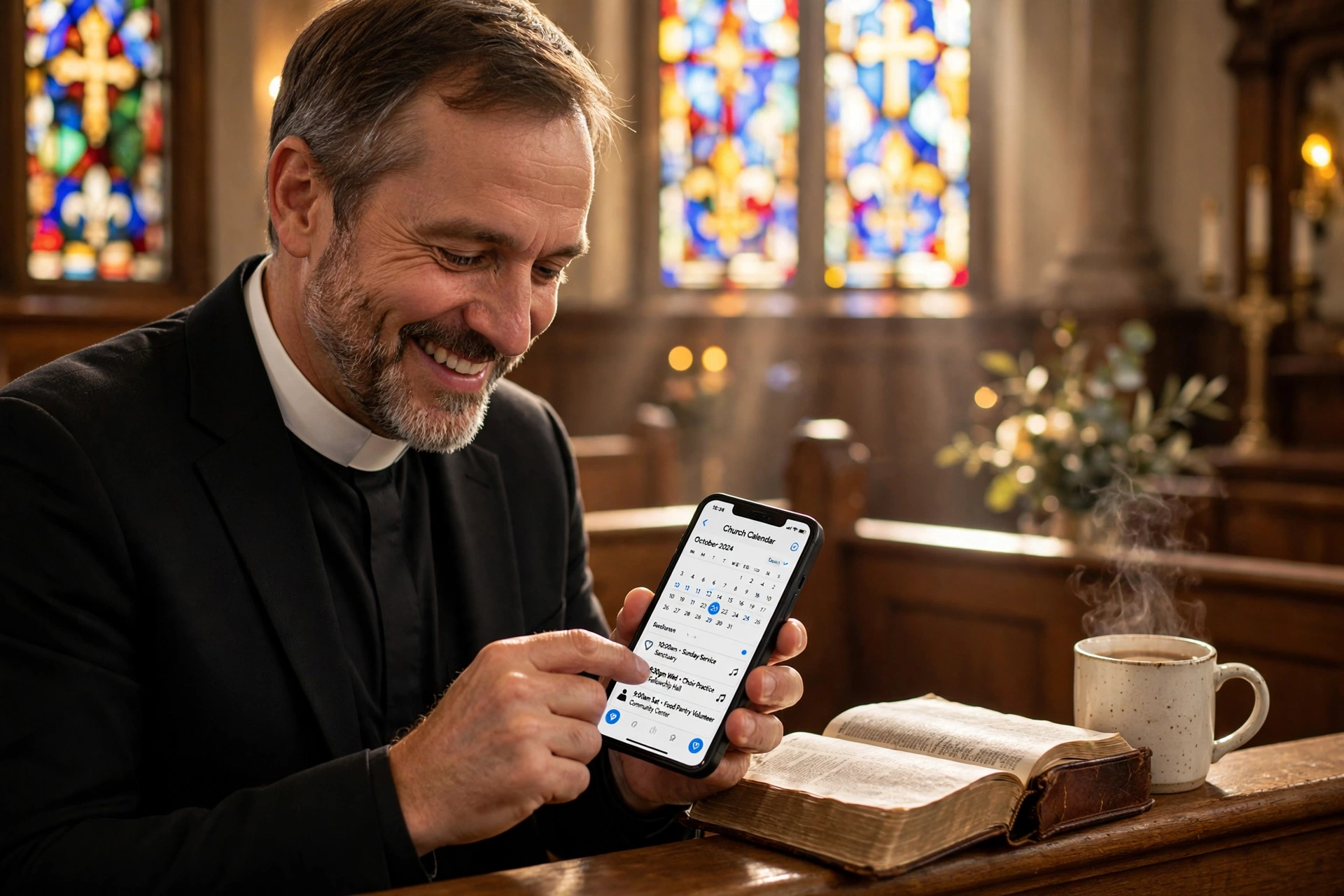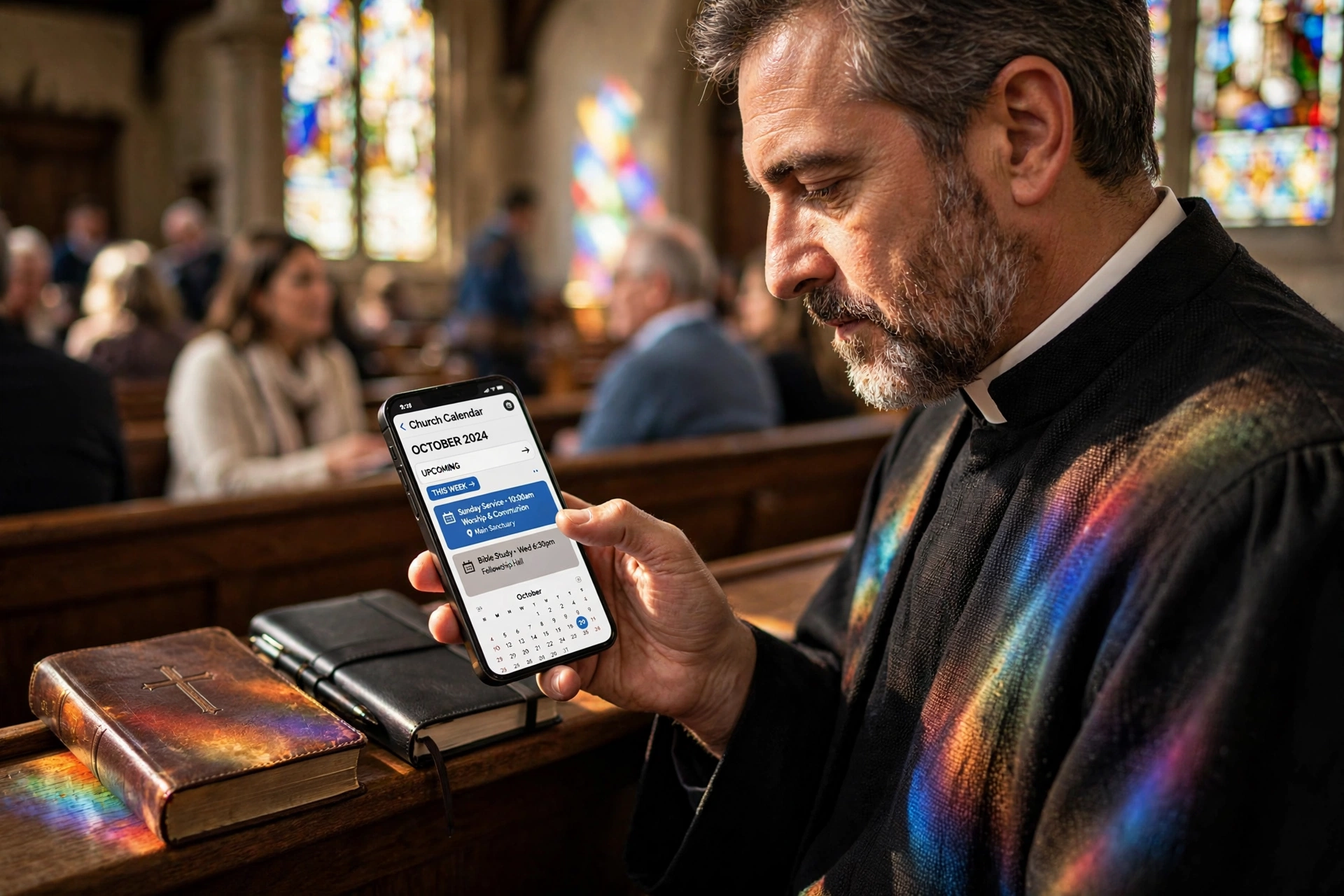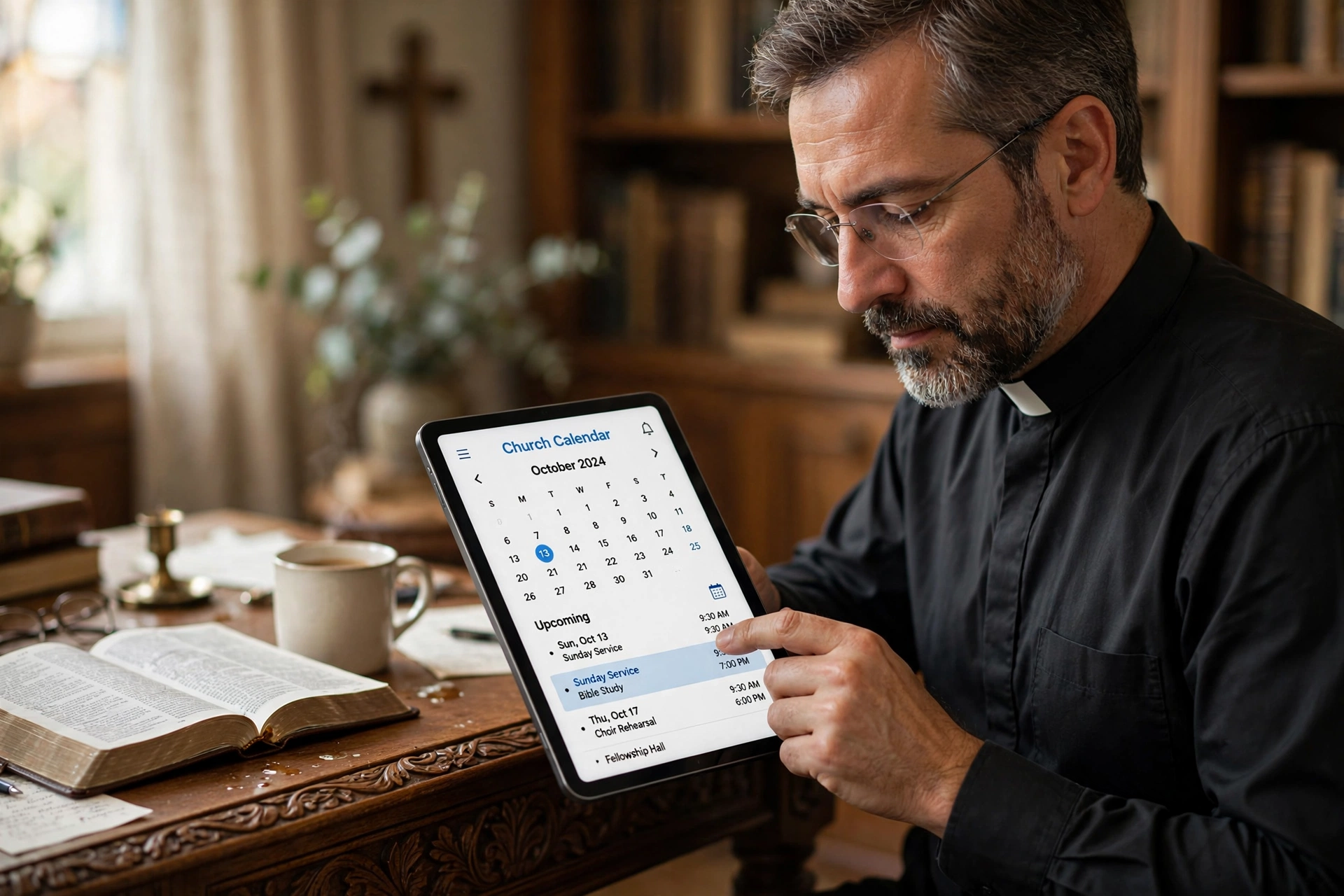
Managing a ministry in the Hub City requires a delicate balance between sudden pastoral emergencies and a rigorous schedule of sermons, board meetings, and community outreach. Effective pastor calendar management in Lubbock is achieved by implementing a centralized, digital scheduling system that allows congregants to book appointments autonomously while protecting the minister's private time for study and family. By shifting from manual notebooks to an automated platform like Pastor Agenda, Lubbock leaders can eliminate the back-and-forth of scheduling and ensure that pastoral care is accessible without leading to ministerial burnout.

Why Lubbock Ministries Are Transitioning to Digital Scheduling?
In my experience working with religious leaders across the South Plains, the primary driver for adopting digital pastor calendar management in Lubbock is the increasing complexity of congregational needs. Lubbock is a unique crossroads of academic influence from Texas Tech and a deep-rooted evangelical tradition. This creates a high demand for pastoral counseling and a constant stream of speaking engagements throughout the city. When a minister relies on a secretary or a paper planner, the friction in scheduling often results in missed opportunities for care or, conversely, a calendar so packed that the pastor has no time for the spiritual preparation required for a Sunday sermon.
According to Barna Group, pastoral burnout has reached critical levels, with a significant percentage of leaders citing a lack of boundaries and overwhelming administrative burdens as primary stressors. In Lubbock, where the community is tightly knit and accessibility is highly valued, the pressure to be 'always available' is immense. Implementing a digital boundary isn't about being unavailable; it is about being intentionally available. By using a scheduling tool, a pastor can designate specific 'Pastoral Care Hours,' ensuring that the ministry remains sustainable.
Furthermore, Lifeway Research indicates that churches incorporating technology into their administrative workflows see an increase in engagement among younger demographics, specifically Gen Z and Millennials, who expect digital-first interactions. In a city like Lubbock, bridging the gap between traditional ministry and modern expectations is essential for growth. When a member of the congregation can book a counseling session via a link rather than waiting for a phone call return, the barrier to seeking help is lowered significantly. This systemic shift transforms the office from a bottleneck into a gateway for ministry.
What Are the Key Benefits of Professional Calendar Management?
Professionalizing the way a minister handles their time leads to immediate dividends in both mental health and organizational efficiency. The most immediate benefit is the reclamation of 'Deep Work' time. For a pastor, deep work is the study of the Bible and the crafting of a sermon. When scheduling is haphazard, these hours are often interrupted by administrative interruptions.
Reduction of Administrative Friction
The traditional method of scheduling, emails, texts, and verbal requests, creates a cognitive load that drains a leader's energy. By automating the booking process, the pastor removes the need for the 'When are you free?' dance. This automation ensures that only available slots are presented, preventing the double-booking errors that often occur in busy Lubbock ministries. This efficiency allows the staff to focus on people rather than paperwork.
Enhanced Boundary Setting and Burnout Prevention
Boundaries are not obstacles to ministry; they are the infrastructure that makes ministry possible. A digital calendar allows a pastor to set 'hard blocks' for family time, sabbatical days, and study hours. When the system automatically hides these blocks from the public, it removes the guilt associated with saying 'no' to a request. The system becomes the 'bad guy,' while the pastor remains the shepherd. This is essential in the Lubbock culture where hospitality and availability are deeply ingrained values.
Data-Driven Ministry Insights
When you move from a paper ledger to a digital system, you begin to collect data. You can track how many counseling sessions are happening per month, which days are most requested, and the average duration of pastoral visits. This data allows a lead pastor to determine if it is time to call a new associate pastor or if the current staff is overextended. It turns anecdotal evidence into actionable data for church growth.
💡
Key Takeaway
The primary value of digital calendar management is not the technology itself, but the ability to protect the pastor's spiritual health by automating administrative boundaries.
| Management Approach | Traditional (Manual) | Generic AI Tools | Pastor Agenda Approach |
|---|---|---|---|
| Scheduling Speed | Slow (Days of back-and-forth) | Fast but impersonal | Instant & Ministry-Focused |
| Boundary Control | Manual/Often Ignored | Basic time-blocking | Dedicated Ministry Zones |
| Congregation Experience | High friction (Phone calls) | Cold/Corporate feel | Welcoming & Accessible |
| Risk of Error | High (Double-bookings) | Medium (Sync issues) | Low (Integrated Sync) |

Real-World Examples of Impact in Lubbock Churches
To understand the impact of these systems, we can look at two contrasting scenarios observed within the local ministry landscape. In both cases, the shift to professional calendar management changed the trajectory of the leader's week.
Case Study 1: The Overwhelmed Lead Pastor
A mid-sized congregation in North Lubbock was struggling with a lead pastor who spent nearly 10 hours a week simply coordinating appointments via text and email. This resulted in 'scheduling fatigue,' where the pastor would often forget to log an appointment, leading to overlapping meetings. After implementing a structured booking system via Pastor Agenda, the administrative time dropped from 10 hours to less than 30 minutes per week. The pastor reclaimed nearly 9 hours of time, which was redirected toward a new weekly mentorship program for young adults. The result was a 20% increase in youth engagement within the first quarter because the pastor actually had the time to be present.
Case Study 2: The Growing Multi-Site Ministry
A church with multiple campuses across Lubbock found that their associate pastors were constantly miscommunicating their availability, leading to congregants being told a pastor was available when they were actually in a meeting. By synchronizing all ministerial calendars into a single source of truth, they eliminated scheduling conflicts entirely. They implemented 'Counseling Windows' where specific slots were reserved for crisis intervention. This systemic change reduced the 'scheduling lag' from 48 hours to 0 seconds, as members could now book the first available slot instantly. This led to a measurable increase in member satisfaction and a more organized approach to pastoral care.
How to Get Started with Pastor Calendar Management in Lubbock
Transitioning to a digital system may seem daunting to those who have spent decades using a physical planner, but the process is straightforward when approached systematically. The goal is to move the 'logic' of the schedule from the pastor's head into a system that works automatically.
📚
Definition
Digital Scheduling is the use of software to automate the booking of appointments, integrating with personal calendars to ensure real-time availability without manual entry.
Step 1: Audit Your Current Time Allocation
Before touching any software, track every single activity for two weeks. Identify the 'non-negotiables', Sabbath, family dinner, sermon prep, and staff meetings. These are the blocks that must be protected in your new system. In Lubbock, this often includes accounting for travel time between campuses or home visits across the city.
Step 2: Define Your 'Ministry Windows'
Decide when you are available for different types of interactions. For example, Tuesday mornings might be for 'Administrative Appointments,' while Thursday afternoons are for 'Hospital and Home Visits.' By categorizing your time, you prevent the mental fatigue of switching between administrative tasks and emotional pastoral care.
Step 3: Implement Pastor Agenda
Instead of using a corporate tool like Calendly, which can feel cold and impersonal, use Pastor Agenda. This platform is designed specifically for the nuances of ministry. Set up your account, sync it with your existing Google or Outlook calendar, and create a booking page that reflects the warmth and welcoming nature of your church. Use language like 'Request a Time for Prayer' or 'Schedule Pastoral Guidance' rather than 'Book an Appointment.'
Step 4: Communicate the Shift to the Congregation
People resist change if they feel it's a barrier. Frame the new system as a way to provide better and faster care. Announce it from the pulpit: 'We want to make sure we can see you as soon as possible, so we've launched a new way to schedule time with me.' Provide the link in the church bulletin and on the website.
Common Objections to Digital Scheduling and the Data-Backed Truth
Many leaders in Lubbock express hesitation when moving toward automated scheduling. These objections usually stem from a misunderstanding of how the technology actually functions in a ministry context.
Objection 1: "It feels impersonal and corporate."
Most pastors assume that a link is less caring than a phone call. However, the data shows the opposite. According to research on user experience in non-profit sectors, accessibility is viewed as a form of care. When a member in crisis can see an open slot for tomorrow morning and book it instantly, they feel a sense of immediate relief that a 'leave a message and I'll call you back' approach cannot provide. The link is not the replacement for the relationship; it is the bridge to it.
Objection 2: "I'm afraid people will book too much of my time."
This is a common fear, but the reality is that manual scheduling is actually more prone to overbooking because the pastor often says 'yes' in the moment without checking the calendar. A digital system allows you to set a maximum number of appointments per day. For example, you can cap your day at three counseling sessions. Once those slots are gone, the system closes. This provides a mathematical guarantee against burnout that manual scheduling can never offer.
Objection 3: "My congregation isn't tech-savvy enough."
In the Hub City, there is a wide range of tech adoption. While some older members may still prefer a phone call, the majority of your administrative burden comes from the 30-60 age bracket, who are highly comfortable with digital tools. You can maintain a 'hybrid' approach where the church secretary handles the few manual requests while the bulk of the scheduling is automated. This reduces the secretary's workload and streamlines the process for everyone.
Frequently Asked Questions
Does pastor calendar management in lubbock replace my church secretary?
No, it does not replace the secretary; it empowers them. Instead of spending four hours a day playing 'phone tag' with congregants to find a meeting time, the secretary can focus on high-value tasks like event coordination, community outreach, and member care. The software handles the rote data entry of scheduling, allowing the secretary to transition from a 'scheduler' to a 'ministry coordinator.' In practice, this means the office becomes more productive and less stressed, as the constant interruption of scheduling requests is eliminated.
How do I handle emergency pastoral visits with an automated calendar?
Automation is for the predictable aspects of ministry, not the unpredictable. You should never let a software system dictate your response to a crisis. The best practice is to leave 'buffer blocks' or 'emergency slots' in your calendar that are not visible to the public. If a crisis arises, the pastor manually overrides the schedule. The automated system ensures that the routine appointments are handled, which actually clears the mental and physical space needed to respond to an emergency with full presence and urgency.
Can I sync Pastor Agenda with my personal family calendar?
Yes, and you absolutely should. One of the greatest challenges for ministers in Lubbock is the bleed-over between home and church. By syncing your professional scheduling tool with your personal calendar, any family event (like a child's sports game or a doctor's appointment) can be marked as 'Busy.' The scheduling software will recognize this and automatically hide that time from the public. This ensures that your family time is protected without you having to manually explain your unavailability to every person who requests a meeting.
Is this software secure for confidential pastoral counseling?
Security is paramount in pastoral care. Professional tools like Pastor Agenda use encryption to ensure that the details of who is booking and when are kept private. Unlike a public calendar or a shared spreadsheet, these systems are designed to keep appointment data secure. It is recommended that pastors use the booking tool for the scheduling phase and maintain the confidential notes of the session in a separate, secure clinical or ministerial record-keeping system to ensure maximum privacy for the congregant.
How long does it take for a congregation to adapt to digital booking?
Typically, the adaptation period takes about three to six weeks. The key is consistent communication. When the congregation sees that the process is faster and that the pastor is more present during their appointments (because they aren't stressed about the next double-booking), they will naturally adopt the new system. In Lubbock, where community word-of-mouth is strong, once a few influential members praise the ease of the new system, the rest of the congregation usually follows suit quickly.
Final Thoughts on Pastor Calendar Management in Lubbock
Effective pastor calendar management in Lubbock is not about replacing the shepherd's heart with an algorithm; it is about using technology to remove the administrative noise that interferes with the calling. When a minister is no longer bogged down by the logistics of 'when and where,' they can devote their full attention to the spiritual and emotional needs of their flock.
In the 2026 ministry landscape, the leaders who thrive will be those who master the art of intentional availability. By implementing a professional system, you aren't just organizing your days; you are protecting your calling and ensuring that your ministry remains a source of life rather than a source of exhaustion. Stop letting your calendar manage you and start managing your calendar to serve your people better.
If you are ready to reclaim your time and protect your peace, explore how PastorAgenda Blog can transform your ministry's efficiency. Visit pastoragenda.com today to start building a sustainable schedule that honors both your family and your congregation.
Recommended Readings
To deepen your understanding of these topics, we recommend reading the following articles:
- Ensuring Absolute Privacy in Church Booking Systems
- Church Appointment Booking
- Online Appointment Booking for Modern Churches
- Automated Reminders and Communication for Congregations
Free Guide: The 7 Church Growth Hacks for 2026
Learn how modern ministries are using automated scheduling and AI pastoral assistants to save 12+ hours of admin work every week.