
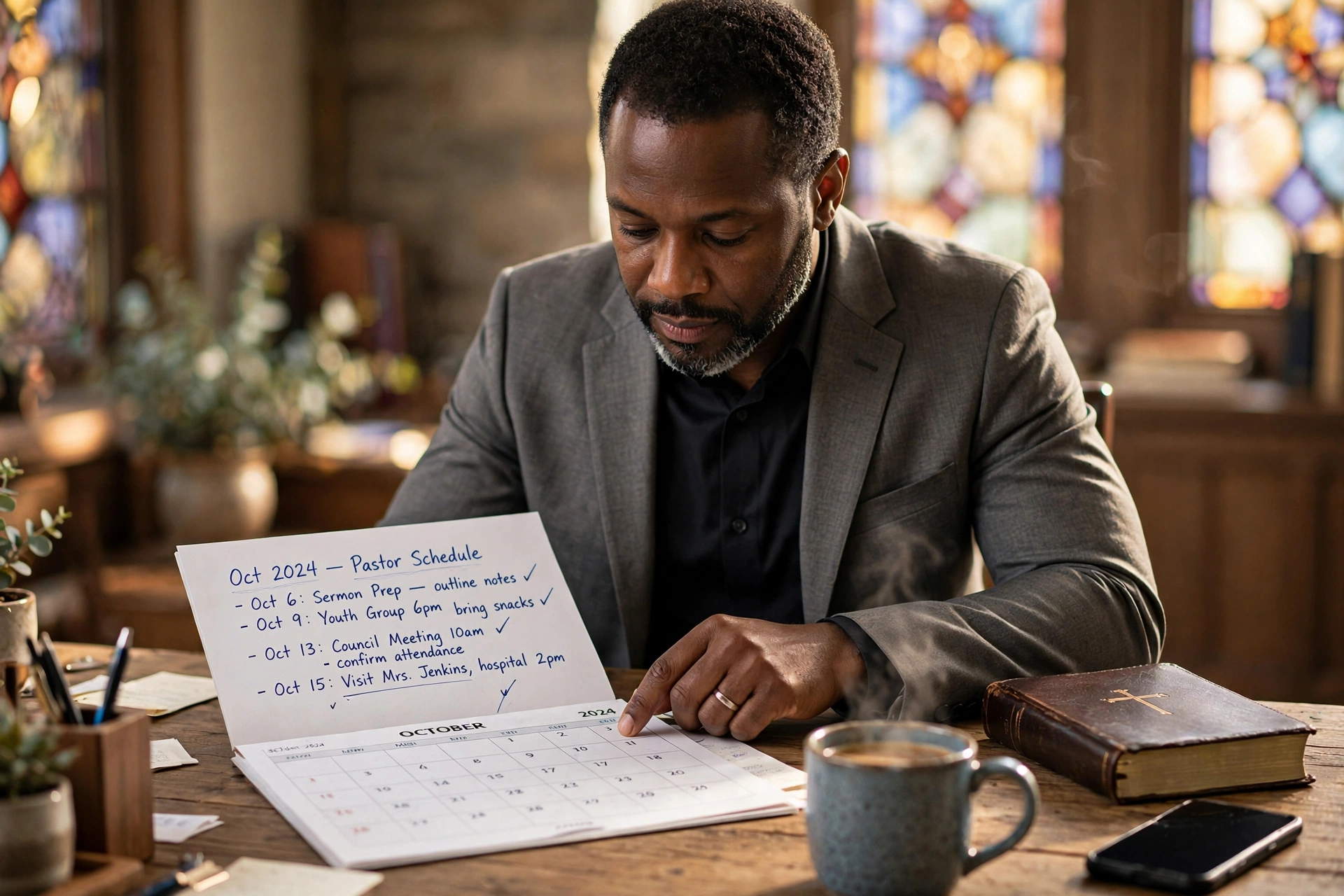
Managing a growing congregation in a metropolis as sprawling as Harris County requires more than just a spiritual calling; it requires a logistical strategy. For leaders in the Bayou City, effective pastor calendar management in Houston means implementing a centralized, digital scheduling system that synchronizes hospital visits, counseling sessions, and administrative duties across the city's diverse neighborhoods. By automating appointment requests and integrating them into a single source of truth, pastors can reclaim up to 10 hours per week, shifting their focus from administrative friction to direct ministry and congregational care.
In my experience working with church leaders across Texas, the pattern I see consistently is a reliance on fragmented tools, a mix of paper planners, WhatsApp threads, and basic digital calendars, that fail to account for the actual travel time between a morning visit in The Woodlands and an afternoon meeting in Sugar Land. This fragmentation creates a 'scheduling vacuum' where critical pastoral care falls through the cracks because the system cannot handle the complexity of a modern, multi-site or high-growth ministry in 2026.
Why Houston Ministries are Transitioning to Digital Scheduling?
Houston's unique urban geography makes traditional scheduling nearly impossible. With one of the most diverse populations in the United States and a physical footprint that covers over 1,200 square miles, the logistics of pastoral care are inherently complex. Local ministries are adopting professional scheduling systems because the cost of administrative error, such as double-booking a funeral or missing a critical crisis visit, is too high to ignore. The shift toward specialized tools is not about replacing the personal touch of ministry, but about creating the structural capacity to provide that touch to more people.
According to the Barna Group, leaders who utilize organized management systems report a significant decrease in burnout, as structured boundaries around their time allow for a healthier work-life balance. In Houston, where the 'hustle culture' of a major energy and medical hub often bleeds into the church, this boundary-setting is essential. Furthermore, Lifeway Research indicates that congregations today expect a level of digital accessibility similar to what they experience in their professional lives. When a member of a Houston congregation can book a counseling session online without a four-way phone tag with a church secretary, the perceived accessibility of the pastor increases dramatically.

This transition is also driven by the need for data. When a ministry tracks its time via a digital calendar, it can identify patterns. For instance, a pastor might realize that 40% of their time is spent on administrative meetings rather than pastoral counseling. By visualizing this data, the leadership can make informed decisions about hiring additional staff or delegating tasks, ensuring that the senior pastor's time is aligned with the church's highest priorities for 2026.
What Are the Key Benefits of Professional Calendar Management for Houston Pastors?
Effective calendar management transforms the role of the pastor from a stressed administrator to a focused spiritual leader. In a city where traffic on I-10 or the 610 Loop can turn a 20-minute drive into a 90-minute ordeal, the ability to strategically group appointments by location is a fundamental necessity, not a luxury.
Elimination of Scheduling Friction
The most immediate benefit is the removal of the 'back-and-forth' email chain. By providing a direct booking link, the pastor allows the congregant to see available slots in real-time. This empowers the member and removes the administrative burden from the church office. When the process is streamlined, the barrier to seeking pastoral care is lowered, which directly impacts the spiritual health of the congregation.
Strategic Time Blocking and Buffer Management
Professional systems allow for the implementation of 'buffer times.' For a Houston-based minister, a 15-minute buffer is insufficient; a 45-to-60-minute buffer between appointments in different zip codes is essential. This prevents the stress of arriving late and allows the pastor to enter each session with a calm, present mindset. Time blocking also ensures that sermon preparation, the core of the ministry, is protected as a non-negotiable appointment on the calendar, preventing it from being crowded out by urgent but less important requests.
Enhanced Pastoral Care Coordination
When scheduling is centralized, the entire leadership team can see the pastor's availability without needing to ask. This allows elders or associate pastors to step in and cover needs when the senior pastor is unavailable. In the event of a crisis, such as a medical emergency at the Texas Medical Center, the team can quickly reorganize the day's schedule, moving non-urgent meetings to ensure the most critical needs are met first.
💡
Key Takeaway
The primary value of professional calendar management is the creation of 'cognitive space,' allowing the pastor to focus on the person in front of them rather than the logistics of the next appointment.
Comparison of Scheduling Methodologies
| Feature | Manual/Paper Methods | Generic AI/Free Tools | Pastor Agenda Professional |
|---|---|---|---|
| Coordination | High friction; requires phone calls | Moderate; often lacks context | Low friction; seamless integration |
| Houston Logistics | No travel time accounting | Basic reminders only | Strategic buffers for city traffic |
| Privacy | High risk of loss/exposure | Data may be sold or unsecured | Secure, ministry-focused privacy |
| Congregation Access | Slow; dependent on office hours | Fast but impersonal | Fast, welcoming, and accessible |
| Sermon Protection | Easily overwritten | Basic alerts | Hard-blocked 'Deep Work' slots |
📚
Definition
Time Blocking is the practice of scheduling specific blocks of time for dedicated tasks (like sermon writing), treating these blocks as immovable appointments to prevent fragmented productivity.
Real Examples of Scheduling Transformation in Houston
To understand the impact of these systems, we can look at two contrasting scenarios from ministries within the Greater Houston area that shifted their approach to calendar management.
Case Study 1: The Multi-Site Growth Struggle
A mid-sized church with three campuses across North Houston was struggling with a total lack of coordination. The senior pastor was spending roughly 12 hours a week simply coordinating visits via text messages. This resulted in frequent double-bookings and a high level of frustration for the staff. After implementing a professional scheduling system, the church centralized all requests. Within three months, the pastor's administrative time dropped from 12 hours to 3 hours per week. More importantly, the number of documented pastoral counseling sessions increased by 22% because the process for requesting a meeting became frictionless for the members.
Case Study 2: The Crisis-Driven Ministry
A smaller urban church in downtown Houston focused heavily on street ministry and crisis intervention. Their schedule was chaotic, often reacting to emergencies without any structure. They implemented a system that categorized appointments by 'Urgency Level.' This allowed them to keep 20% of the pastor's daily calendar open for 'Emergency Slots' while protecting the other 80% for scheduled care and study. As a result, the pastor reported a 40% decrease in feelings of burnout, citing the ability to actually 'disconnect' during their scheduled time off, knowing that the system was managing the intake of requests.

How to Get Started with Professional Pastor Calendar Management?
Moving from a chaotic schedule to a streamlined system requires a deliberate process. You cannot simply install software; you must install a new way of valuing your time. Here is the step-by-step approach I recommend for Houston leaders.
Step 1: Perform a Time Audit
Before changing your tools, track every minute of your day for two weeks. Note how much time is spent in traffic, how many hours are lost to 'quick questions' that disrupt your flow, and how often you feel rushed. This data provides the baseline to prove the ROI of a new system. In most cases, Houston pastors find that 'hidden' administrative leakage accounts for nearly 25% of their working week.
Step 2: Define Your Availability Boundaries
Determine your 'Golden Hours' for sermon preparation and your 'Open Hours' for the congregation. Be explicit about these boundaries. For example, decide that Tuesdays are for study and Wednesdays are for outreach. Once these boundaries are set, they are programmed into the system. This prevents the 'availability paradox' where being too accessible actually makes you less effective in your primary calling.
Step 3: Implement Pastor Agenda
This is where the technology meets the ministry. Instead of using generic tools that aren't designed for the nuances of the cloth, deploy Pastor Agenda. This platform is specifically engineered for the rhythms of ministry. It allows you to set up your booking page, define your services (e.g. '30-min Counseling,' 'Home Visit,' 'Hospital Call'), and integrate your existing digital calendars. The setup is intuitive, meaning you don't need a degree in IT to get it running in your office.
Step 4: Communicate the Change to the Congregation
Transparency is key. Announce the new system from the pulpit or via the church newsletter. Frame it not as 'the pastor is now behind a screen,' but as 'the pastor is making more time for you.' Explain that the new system ensures that when they have an appointment, they have the pastor's full, undivided attention without the risk of a scheduling conflict.
Common Objections to Digital Scheduling in Ministry
Many leaders resist these tools due to misconceptions about the nature of pastoral work. However, the data suggests that the risks of maintaining the status quo are far greater than the risks of digitalization.
"It Feels Impersonal to Use a Booking Link"
Most leaders assume that a link creates a barrier. In practice, the opposite is true. For a congregant in crisis, a phone call that goes to voicemail for three days is far more impersonal than a booking link that confirms an appointment for tomorrow at 10 AM. Digital scheduling is the gateway to the personal encounter, not a replacement for it. According to Christianity Today, leveraging technology to handle the logistics of ministry actually increases the quality of the face-to-face interaction because the leader is less stressed and more prepared.
"I'm Not Tech-Savvy Enough for This"
This is a common fear, but modern tools like Pastor Agenda are designed with the user experience of the minister in mind. If you can send an email or use a smartphone, you can manage a professional calendar. The goal is to reduce complexity, not add to it. The transition period usually takes less than a week to master, and the time saved immediately offsets the learning curve.
"My Schedule is Too Unpredictable for a Calendar"
This is the exact reason why a professional system is needed. A paper calendar cannot adapt to a sudden 2-hour delay on the I-45. A digital system allows you to shift appointments with a single click and send automated notifications to all affected parties. Predicting the unpredictable is impossible, but managing the unpredictable is exactly what these tools are built for.
Frequently Asked Questions
How does pastor calendar management in houston differ from standard business scheduling?
Ministry scheduling requires a level of flexibility and emotional intelligence that standard business tools ignore. For example, a business appointment is usually a fixed transaction, whereas a pastoral session may overflow due to the emotional weight of the conversation. Professional ministry tools allow for 'overflow buffers' and categorization by urgency (e.g. crisis vs. routine), ensuring that the pastor can remain present without jeopardizing the rest of their day. Additionally, the geography of Houston requires specific travel-time logic that generic tools often lack.
Will using a scheduling tool make me seem less accessible to my members?
On the contrary, it increases perceived accessibility. When members can see a clear window of availability, they feel more confident in requesting time. It eliminates the anxiety of 'bothering' the pastor or wondering if their request was lost in an inbox. By formalizing the request process, you are telling your congregation that their time is valuable and that you are committed to giving them your undivided attention. It transforms the relationship from an unpredictable request-and-wait cycle into a professional and caring commitment.
How do I handle emergency visits that override my scheduled calendar?
The best practice is to utilize 'blocked' or 'reserved' slots. By leaving 1-2 open windows per day specifically for emergencies, you create a safety valve for your schedule. When a crisis occurs, you simply move a non-urgent administrative task into that reserved slot. A digital system allows you to communicate these changes instantly via automated SMS or email, ensuring that the member whose appointment was moved feels cared for and informed, rather than ignored.
Is my congregants' data secure when using an online booking system?
Security is a paramount concern in pastoral care. Professional tools like Pastor Agenda prioritize data privacy and encryption, ensuring that the names and reasons for visits remain confidential. This is a significant upgrade over paper calendars or unsecured email threads, which can be easily seen by unauthorized staff or lost. Following guidelines from Church Law & Tax on governance and administration, digital records provide a more secure and auditable trail of care, protecting both the pastor and the church legally.
Can I integrate my personal family calendar with my ministry calendar?
Yes, and this is one of the most important features for preventing burnout. Professional systems allow you to sync multiple calendars (e.g. Google, Outlook, Apple) so that your ministry availability is automatically adjusted based on your personal commitments. You can keep the details of your family events private while the system simply marks that time as 'Unavailable' for congregants. This ensures that your home life is protected and that you are not accidentally booking a counseling session during your child's soccer game.
Final Thoughts on Pastor Calendar Management in Houston
Effective pastor calendar management in Houston is no longer just an administrative preference; it is a strategic necessity for any leader intending to scale their impact in 2026. The combination of Houston's geographic challenges and the increasing demands of modern ministry requires a system that works as hard as the pastor does. By removing the friction of scheduling, protecting deep-work time for sermon preparation, and leveraging tools like Pastor Agenda, you move from a state of constant reactivity to a state of intentional leadership.
Stop letting the logistics of the Bayou City dictate the reach of your ministry. It is time to trade the chaos of fragmented lists for the clarity of a professional system. If you are ready to reclaim your time and focus on what truly matters, the spiritual health of your people, visit pastoragenda.com and start organizing your ministry for growth today.
Recommended Readings
To deepen your understanding of these topics, we recommend reading the following articles:
- Ensuring Absolute Privacy in Church Booking Systems
- Church Appointment Booking
- Online Appointment Booking for Modern Churches
- Automated Reminders and Communication for Congregations
Free Guide: The 7 Church Growth Hacks for 2026
Learn how modern ministries are using automated scheduling and AI pastoral assistants to save 12+ hours of admin work every week.



