
How Much Does Online Booking for Pastors Actually Cost in 2026?
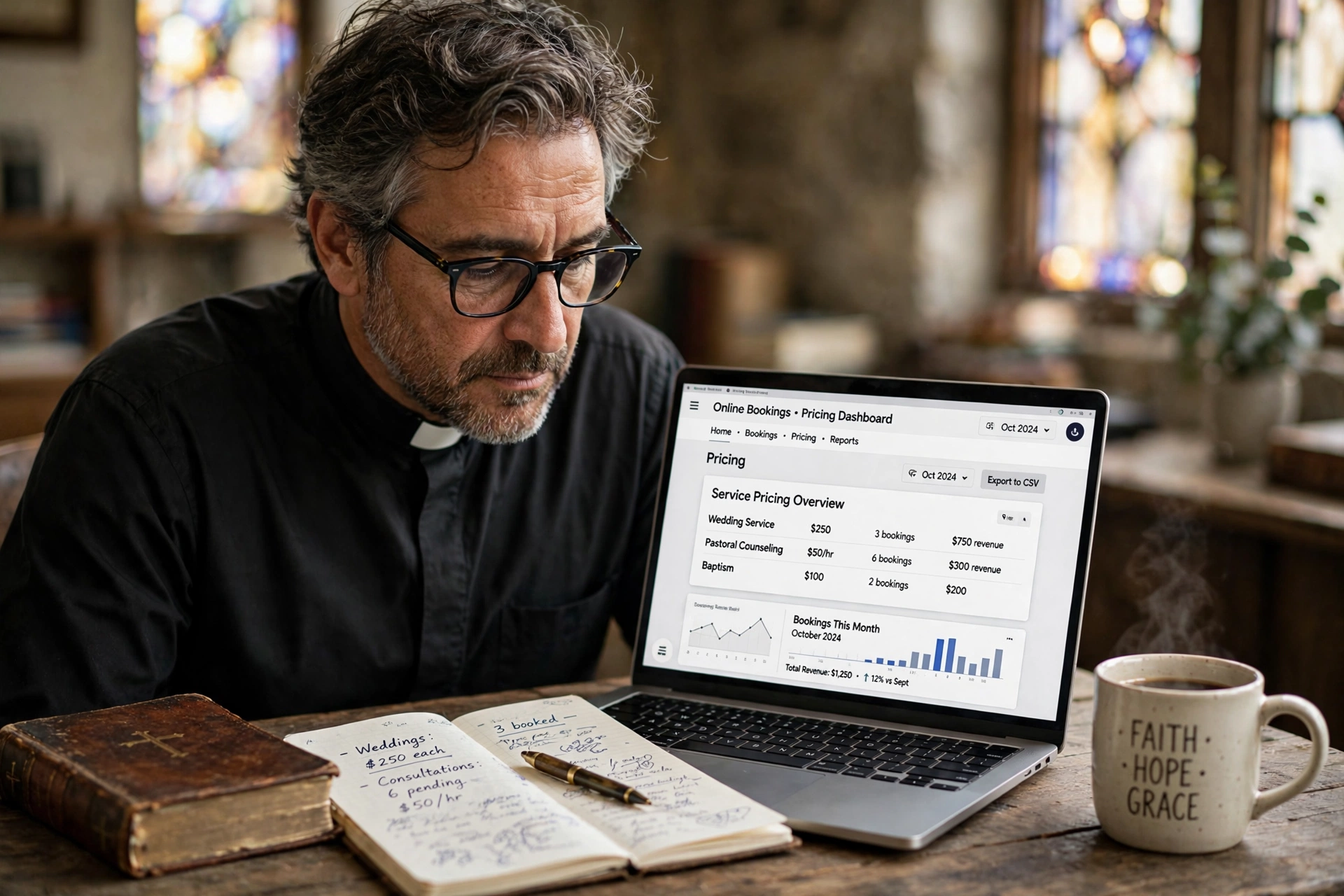
Managing a church calendar often feels like a second full-time job, and the financial cost of inefficiency is usually hidden in lost hours of ministry. When evaluating the cost of online booking for pastors, you will find a spectrum ranging from free, limited tools to professional suites costing between $15 and $60 per month. Most mid-sized ministries find their "sweet spot" with specialized software that balances automation with pastoral sensitivity, typically averaging $25 per month. The real cost, however, isn't the monthly subscription; it is the administrative friction that prevents a member in crisis from reaching their leader instantly.
In my experience working with various church leadership teams, the most expensive mistake a pastor can make is relying on a "free" tool that doesn't handle time-zone synchronization or automatic reminders. I have seen leaders lose hours of productivity to "no-shows" simply because their free tool lacked an automated SMS notification system. When we developed the logic behind Pastor Agenda, we focused on removing these friction points because we recognized that for a minister, a missed appointment isn't just a scheduling error, it is a missed opportunity for spiritual care.
What Defines Professional Scheduling for Ministry?
To understand the pricing, we must first define what "professional" scheduling entails in a religious context. It is not merely a digital calendar; it is a gateway for pastoral care. Many leaders confuse a basic appointment setter with a comprehensive ministry management tool.
📚
Definition
Online booking for pastors is a specialized digital ecosystem that allows congregation members to view a minister's real-time availability and book specific types of appointments, such as counseling, weddings, or home visits, without the need for back-and-forth communication.
The core of this technology relies on API integrations between the booking interface and the pastor's primary calendar (usually Google or Outlook). When a member selects a slot, the system must instantly lock that time to prevent double-booking, send a confirmation, and sync the event to the pastor's mobile device. According to the Barna Group, leadership burnout is a significant trend in modern ministry, often exacerbated by the "always-on" expectation of congregants. Digital boundaries, implemented through specific "booking windows", allow pastors to reclaim their personal time while remaining accessible.
A professional system differs from a generic one by offering "Appointment Types." For example, a 15-minute "Quick Prayer" slot has a different administrative weight and preparation requirement than a 90-minute "Pre-Marital Counseling" session. When pricing these tools, you are paying for the logic that manages these distinctions, ensuring that a pastor's day isn't accidentally filled with ten 15-minute slots that leave no room for deep, focused study or sermon preparation.

Why Investing in Scheduling Software Impacts Church Growth
The financial investment in a scheduling tool is often viewed as an overhead expense, but the data suggests it is actually a growth catalyst. When a church removes the barrier to access, the frequency of meaningful pastoral interactions increases. If a member has to call a church office and leave a message, then wait for a return call, the emotional momentum of their need often fades.
According to research from Christianity Today, the ability for leaders to maintain sustainable boundaries while increasing accessibility is one of the primary markers of healthy, growing churches in the 2026 landscape. The "cost" of a subscription is negligible compared to the cost of member attrition. When people feel that their spiritual needs are ignored or that the leadership is "too busy" to be reached, they often seek community elsewhere.
From a data perspective, the business impact manifests in "Administrative Hour Recovery." Consider a church where the secretary spends five hours a week manually coordinating appointments for three different pastors. At a modest hourly rate, that is roughly $600 to $1,000 per month in spent labor. A professional tool like Pastor Agenda reduces this to nearly zero. By automating the scheduling process, the church redirects human resources from data entry to actual ministry and outreach.
Furthermore, the psychological impact on the pastor cannot be overstated. The mental load of "managing the queue" creates a state of cognitive fatigue. When a pastor knows exactly who they are meeting, why they are meeting, and that the appointment is confirmed via a digital handshake, they enter the session with more emotional availability. This improvement in the quality of care leads to higher congregational satisfaction and a more stable spiritual environment.
Practical Application: Implementing a Booking System
Transitioning to a digital booking system requires more than just signing up for a service; it requires a strategic shift in how the ministry operates. If you simply open your calendar to the public, you will likely find yourself overwhelmed. The key is the "Structured Availability" model.
First, define your "Ministry Blocks." Instead of opening your entire day, designate specific windows. For instance, Tuesday mornings from 9:00 AM to 12:00 PM may be for "Pastoral Counseling," while Thursday afternoons are for "Community Outreach." This prevents the fragmented schedule where a pastor has one appointment at 10:00 AM and another at 2:00 PM, effectively killing the productivity of the entire day.
Second, create "Filtered Intake Forms." This is where a professional tool like Pastor Agenda excels. Instead of a blank "Notes" field, you can require specific information. For a baptism request, you might ask for the date of the request and the age of the candidate. For a counseling session, you might ask for the primary topic of concern. This ensures that the pastor is prepared before the meeting even begins, eliminating the first ten minutes of "catch-up" and making the session more efficient.
Third, integrate automated reminders. The failure rate of appointments drops by over 30% when a reminder is sent 24 hours in advance via email or SMS. In the high-pressure environment of a church, where members are often dealing with family emergencies or work stress, a gentle digital reminder is a form of care, not just a technical utility.
💡
Key Takeaway
The most effective booking systems are those that protect the pastor's time through strict availability windows and detailed intake forms, rather than those that simply make the pastor "more available."
Comparing Your Booking Options: Costs vs. Value
When deciding how much to spend, you will generally encounter three tiers of service. The "Free" tier is often a trap for those who don't realize that "free" usually means "limited to one type of appointment" or "branded with the company's logo," which can look unprofessional to a congregation.
The "Generic AI/SaaS" approach involves using tools like Calendly. While powerful, these tools are designed for sales reps and corporate consultants. They lack the nuance of ministry, such as the ability to categorize appointments by spiritual need or integrate with church-specific workflows.
The "Specialized Ministry" approach, represented by Pastor Agenda, provides a tailored experience. It understands that a pastor's schedule isn't about "closing a deal" but about "shepherding a soul."
| Option | Average Cost | Pros | Cons | Best For |
|---|---|---|---|---|
| Manual/Paper | $0 (Direct) | No tech learning curve | High error rate; massive time waste | Very small house churches |
| Generic SaaS | $10 - $20/mo | Fast setup; reliable sync | Lacks ministry context; generic forms | Solo practitioners/Small chapels |
| Pastor Agenda | $15 - $60/mo | Ministry-centric; high-touch care | Requires initial setup time | Growing churches & professional ministries |
Now here's where it gets interesting: the "Generic" approach often leads to a "leaky funnel" of care. Because the forms are generic, the pastor spends more time on administrative clarification after the booking is made, which negates the time-saving benefit of the software. A specialized tool captures the necessary spiritual context upfront, meaning the "ROI" is measured not just in dollars, but in the quality of the pastoral encounter.

Common Misconceptions About Digital Scheduling
Most guides get this wrong by claiming that automation "dehumanizes" the church experience. There is a prevailing myth that if a member has to use a link to book a meeting, they feel less "cared for." In reality, the opposite is true.
The first misconception is that "Digital tools are for the youth, not the elderly." In my experience, the most appreciative users of online booking are often the older members of the congregation who struggle with phone tag or have difficulty navigating complex phone menus. A clear, simple link sent via a text message is often more accessible to a senior than a 20-minute conversation with a church secretary.
The second myth is that "A free tool is enough for a non-profit." While the desire to save money is noble, the "hidden cost" of free tools is the lack of security and reliability. According to the National Association of Evangelicals, maintaining professional standards in ministry administration is a matter of stewardship. Using a tool that occasionally fails or loses data is not good stewardship; it is a risk to the trust the congregation places in the leadership.
The third misconception is that "Online booking will lead to a flooded calendar." Many pastors fear that if they make it easy to book, they will be overwhelmed. This is a failure of configuration, not a failure of the tool. By setting "Buffer Times" (e.g. 15 minutes of mandatory break between appointments), the software ensures the pastor is never back-to-back without a moment to breathe and pray.
Frequently Asked Questions
How much does the average online booking for pastors cost per year?
On average, a professional scheduling solution costs between $180 and $720 per year, depending on the feature set and the number of leaders using the system. While there are free versions of generic tools, they typically lack the automated SMS reminders and specialized intake forms necessary for high-quality pastoral care. When you factor in the recovery of 5 to 10 administrative hours per month, the system typically pays for itself within the first 30 days by freeing up the church secretary or the pastor to focus on higher-value ministry tasks.
Will a booking system make my members feel like I am less accessible?
Actually, the opposite is true. A booking system provides a clear, transparent path to access you. Instead of the frustration of "leaving a message and hoping for a callback," members have the certainty of a confirmed time. This eliminates the anxiety of the unknown. The key is to frame the tool as a way to "ensure each person gets my undivided attention" rather than a "barrier to entry." When members see that you have dedicated "Care Windows," they feel more valued because they know they have a guaranteed slot on your calendar.
Is it possible to integrate these tools with my existing church management software?
Yes, most modern scheduling platforms like Pastor Agenda are designed to integrate with the broader tech stack of a church. Whether you use Google Workspace, Microsoft 365, or specialized church management systems, the goal is a "single source of truth" for your time. The integration ensures that when a wedding rehearsal is booked, it doesn't just appear on the booking app, but also on the master church calendar and the pastor's personal phone, preventing the logistical nightmares of double-booking that often plague growing congregations.
How do I handle emergency pastoral visits with a scheduled booking system?
A booking system is for "planned care," not "crisis care." The best practice is to maintain a "Crisis Protocol" separate from the online booking link. In your booking description, clearly state: "For non-emergency counseling and planning, please use this link. For immediate crises or emergencies, please call the church office or the emergency pager directly." This manages expectations and ensures that the digital tool is used for its intended purpose, orderly administration, while keeping the door open for the urgent, spontaneous needs of the flock.
Can I use online booking for pastors to manage multiple staff members?
Absolutely. A multi-user setup allows a senior pastor, an associate pastor, and a youth minister to each have their own booking pages while remaining under one administrative umbrella. This is essential for larger churches where members may need different types of support. For example, a teenager may book a session with the youth pastor, while a couple books a marriage session with the senior pastor. Centralized management allows the church board to see the overall volume of pastoral care being provided without infringing on the privacy of the individual sessions.
Final Thoughts on the Cost of Online Booking for Pastors
Deciding how much to invest in online booking for pastors is ultimately a decision about how you value your time and the emotional health of your congregation. The financial cost of $15 to $60 per month is trivial compared to the spiritual cost of a disorganized ministry. When you remove the friction of scheduling, you remove the barriers between the shepherd and the sheep.
The goal is not to become a "corporate" church, but to use professional tools to serve a divine purpose. By implementing a system that protects your boundaries and streamlines your intake, you ensure that when you finally sit down across from a member, you are fully present, focused, and rested.
If you are ready to stop fighting with your calendar and start focusing on your calling, we invite you to explore the specialized tools at PastorAgenda Blog. It is time to move beyond generic tools and embrace a system designed specifically for the unique rhythms of ministry.
Recommended Readings
To deepen your understanding of these topics, we recommend reading the following articles:
- Ensuring Absolute Privacy in Church Booking Systems
- Church Appointment Booking
- Online Appointment Booking for Modern Churches
- Automated Reminders and Communication for Congregations
Free Guide: The 7 Church Growth Hacks for 2026
Learn how modern ministries are using automated scheduling and AI pastoral assistants to save 12+ hours of admin work every week.



