How Much Does Online Booking for Pastors Actually Cost?
Managing a ministry in 2026 requires a delicate balance between spiritual availability and administrative boundaries. For most church leaders, the cost of implementing online booking for pastors typically ranges from $0 for basic individual tools to $50-$150 per month for comprehensive, church-wide scheduling ecosystems. While a free tool might seem attractive, the real "cost" often manifests as lost time due to manual overrides or a lack of integration with congregational data.
In my experience working with various ministries, the mistake I see constantly is the "free tool trap." Pastors adopt a generic free scheduler, only to find that it doesn't handle the nuances of pastoral care, such as buffer times for emotional recovery between counseling sessions or the ability to categorize appointments by urgency (e.g. hospital visits vs. routine meetings). When you move toward a professional solution like Pastor Agenda, you aren't just paying for a calendar; you are investing in a boundary-management system that protects your time for study and family.

What Exactly is Online Booking for Pastors and How is it Priced?
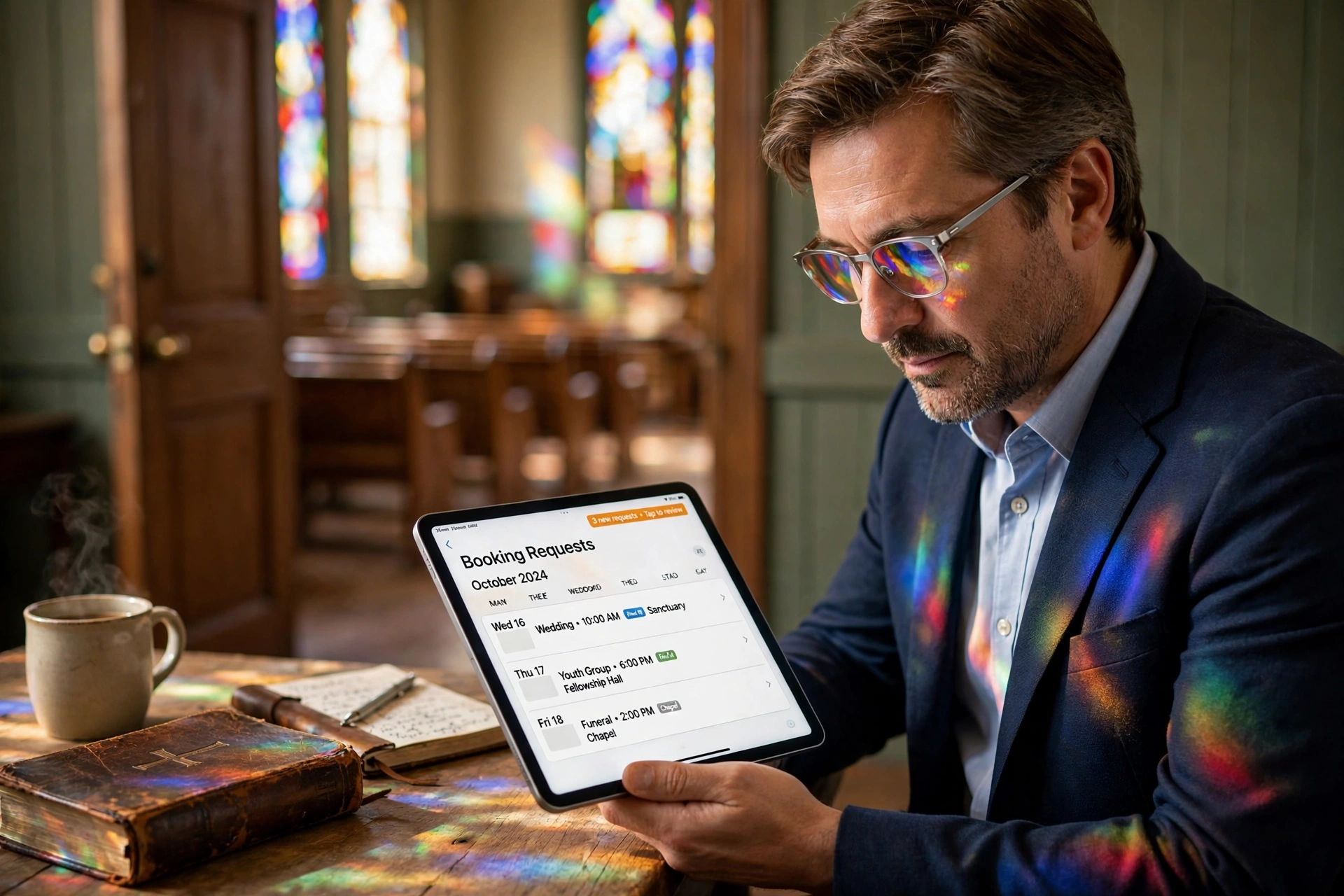
Online booking for pastors is a specialized digital interface that allows congregants to view a minister's availability and secure a time slot without the friction of back-and-forth emails or phone calls. Unlike generic business tools, these systems are designed to respect the unique rhythms of ministry, where "availability" is often subject to sudden changes due to crisis care.
📚
Definition
Online booking for pastors is a specialized scheduling layer that integrates a pastor's private calendar with a public-facing interface, allowing for automated appointment setting, reminders, and intake forms tailored for spiritual care.
Pricing for these systems generally falls into three categories: Freemium, Tiered Subscription, and Enterprise/Custom. Freemium models usually offer a single calendar and basic notifications. Tiered subscriptions, which are common for growth-oriented churches, provide advanced features like multiple user profiles (for associate pastors), payment integration for specialized workshops, and deeper analytics.
According to the Barna Group, the mental health and burnout rates among clergy have surged, with a significant percentage of pastors citing "administrative overload" as a primary stressor. This makes the cost of a scheduling tool a matter of mental health, not just a line item in the budget. When a system manages the "gatekeeping" process, it reduces the decision fatigue that leads to burnout. If a tool costs $30 a month but saves a pastor five hours of administrative coordination, the cost per hour of reclaimed time is negligible compared to the value of a rested leader.
Why Does the Investment in Professional Scheduling Matter?
The financial cost of a tool is often overshadowed by the "hidden cost" of inefficient systems. When a church relies on a secretary or a manual ledger to manage a pastor's time, the risk of double-booking or missed appointments increases. Beyond the logistics, there is a profound impact on the member experience. In 2026, people expect the same ease of access to their spiritual leader that they have with their healthcare provider or financial advisor.
Research from Lifeway Research indicates that accessibility is a key driver in congregational engagement. When a member in crisis cannot easily find a way to connect with their pastor, the perceived barrier to care increases. A professional booking system removes this barrier by providing an immediate, transparent path to a meeting.
Now, here's where it gets interesting: the ROI (Return on Investment) for online booking isn't measured in revenue, but in Ministry Efficiency. Consider the following data points:
- Reduction in "No-Shows": Automated SMS and email reminders typically reduce missed appointments by 30% to 50%.
- Time Recovery: Eliminating "scheduling ping-pong" (the 4-5 emails exchanged to find one time) can save a pastor 2-4 hours per week.
- Data Accuracy: Digital intake forms ensure the pastor knows the nature of the visit (e.g. grief counseling vs. administrative meeting) before the meeting begins, allowing for better mental preparation.
If you are using a manual system, you are essentially paying a "friction tax" every time a member tries to reach you. This tax is paid in frustration and missed opportunities for impactful pastoral care.
Practical Application: How to Implement a Booking System
Implementing a scheduling system is not as simple as turning on a software subscription; it requires a strategic approach to your boundaries. If you open your calendar to the world without constraints, you will find yourself overwhelmed. The goal is to use technology to enforce the boundaries that you, as a human, often struggle to maintain.
First, define your "Sacred Windows." These are times during the week, such as Sabbath, family dinner, or sermon preparation blocks, that are strictly off-limits. In Pastor Agenda, you can set these as non-available blocks, ensuring that no one can book a slot during your core preparation time.
Second, establish Buffer Periods. In the corporate world, a 15-minute gap between meetings is standard. In ministry, a counseling session for a grieving widow cannot simply end at 2:00 PM with a business meeting starting at 2:01 PM. You need "decompression time." Configure your system to automatically add a 15-to-30-minute buffer after every appointment.
Third, utilize Intake Questions. Instead of a blank appointment, require the user to answer three basic questions:
- What is the primary reason for the meeting?
- Is this an urgent matter?
- How long do you anticipate needing?
💡
Key Takeaway
The most effective online booking systems do not just open your calendar; they act as a digital filter that ensures you are meeting the right people for the right reasons at the right time.

Comparing Your Scheduling Options
When evaluating the cost, you must look beyond the monthly fee. Many pastors start with a generic tool, only to realize it lacks the specific privacy and organizational needs of a church.
| Option | Pros | Cons | Best For |
|---|---|---|---|
| Manual/Secretary | Personal touch, high control | High labor cost, slow response, error-prone | Very small churches with a dedicated admin |
| Generic Free Tools | Zero financial cost, quick setup | No pastoral nuance, limited branding, basic notifications | Solo practitioners or very low-volume needs |
| Professional Pastoral Tools (e.g. Pastor Agenda) | Built for ministry, boundary-focused, integrated intake | Monthly subscription fee | Growing churches prioritizing pastor health and member access |
Most guides get this wrong by suggesting that "free is always better for non-profits." That is a fallacy. A "free" tool that results in a missed funeral visit or a double-booked wedding is infinitely more expensive than a paid tool that ensures 100% accuracy.
Common Questions and Misconceptions About Booking Costs
There is a prevailing myth in church leadership that "technology replaces presence." Some believe that providing a booking link makes a pastor seem "corporate" or unavailable. This is a fundamental misunderstanding of the tool. In reality, online booking facilitates presence by removing the administrative noise that keeps a pastor away from their people.
Another misconception is that these tools are only for "big churches." I have seen pastors in congregations of fewer than 50 people struggle with burnout because they are the only point of contact for every single need. For the solo pastor, a booking system is not a luxury; it is a survival mechanism. It allows the pastor to say, "I want to give you my full attention, and the best way to ensure that is to schedule a dedicated time here," rather than trying to handle a deep spiritual crisis in the church parking lot.
Finally, many assume that the cost of the software is the only expense. The real investment is the Cultural Shift. You must communicate to your congregation that the booking system is a tool for better care, not a barrier to it. When members realize that scheduling a slot guarantees them a focused, undistracted hour with their leader, the "corporate" stigma disappears.
Frequently Asked Questions
How does online booking for pastors affect the personal relationship with congregants?
Contrary to the fear that it creates a distance, professional scheduling actually enhances the relationship. By eliminating the stress of scheduling conflicts and "forgotten" appointments, the pastor can enter the meeting fully present. When a member sees a dedicated slot for them, they feel valued and prioritized. According to guidelines from the National Association of Evangelicals, structured leadership allows for more sustainable and healthy engagement with the flock. Instead of a chaotic "first-come, first-served" approach, the pastor can balance urgent needs with routine care.
Can I integrate online booking with my existing church management software?
Most modern systems, including Pastor Agenda, are designed to work alongside your existing tools. The goal is to create a seamless flow where a member schedules a visit, the event is automatically added to the pastor's Google or Outlook calendar, and the record is updated in the church's database. This integration prevents the "fragmented calendar" problem where a pastor has three different lists of appointments across different platforms. The cost of a tool that doesn't integrate is essentially the cost of the manual labor required to sync them.
What is the average time it takes to set up a booking system for a ministry?
From a technical standpoint, a system can be live in under 30 minutes. However, the "operational setup", defining your available hours, setting buffer times, and creating intake forms, usually takes 2 to 4 hours of thoughtful planning. In my experience, pastors who rush this process often find themselves with calendars that are "too open," leading to immediate burnout. I recommend a "soft launch" where you invite a few trusted elders or deacons to test the booking flow before announcing it to the entire congregation.
Is it a security risk to put my availability online for anyone to see?
Privacy is a valid concern, but professional tools allow you to control access. You do not have to post your booking link on a public website. Instead, you can send it via email to specific members, include it in a private member directory, or put it in your email signature. Furthermore, by using intake forms, you can screen the request before it is finalized. This prevents random individuals from booking your time while ensuring that your actual congregants have a streamlined path to care.
How do I justify the cost of a paid scheduling tool to my church board?
The best way to justify the cost is to present it as a Burnout Prevention Strategy. Frame the discussion around "Sustainable Ministry." Show the board the number of hours spent on administrative coordination each month and contrast that with the hours that could be spent on sermon preparation or community outreach. When the board realizes that a small monthly fee protects the church's most valuable asset, the pastor's health and time, the cost becomes a logical investment in the church's long-term stability.
Summary and Next Steps
Determining the cost of online booking for pastors requires looking beyond the monthly subscription fee to the broader value of time recovery and mental health. Whether you choose a basic tool or a comprehensive system, the objective is to replace administrative chaos with intentional boundaries.
For leaders who are tired of the "scheduling ping-pong" and want to reclaim their time for ministry and family, Pastor Agenda provides the specialized tools needed to manage a modern church's demands. By automating the logistics of pastoral care, you can shift your focus back to what truly matters: the spiritual growth of your congregation.
If you are ready to stop managing your calendar and start leading your ministry, we invite you to explore how our platform can support your calling. Visit pastoragenda.com to begin organizing your ministry for a healthier, more sustainable future.
Recommended Readings
To deepen your understanding of these topics, we recommend reading the following articles:
- Ensuring Absolute Privacy in Church Booking Systems
- Church Appointment Booking
- Online Appointment Booking for Modern Churches
- Automated Reminders and Communication for Congregations
Free Guide: The 7 Church Growth Hacks for 2026
Learn how modern ministries are using automated scheduling and AI pastoral assistants to save 12+ hours of admin work every week.