
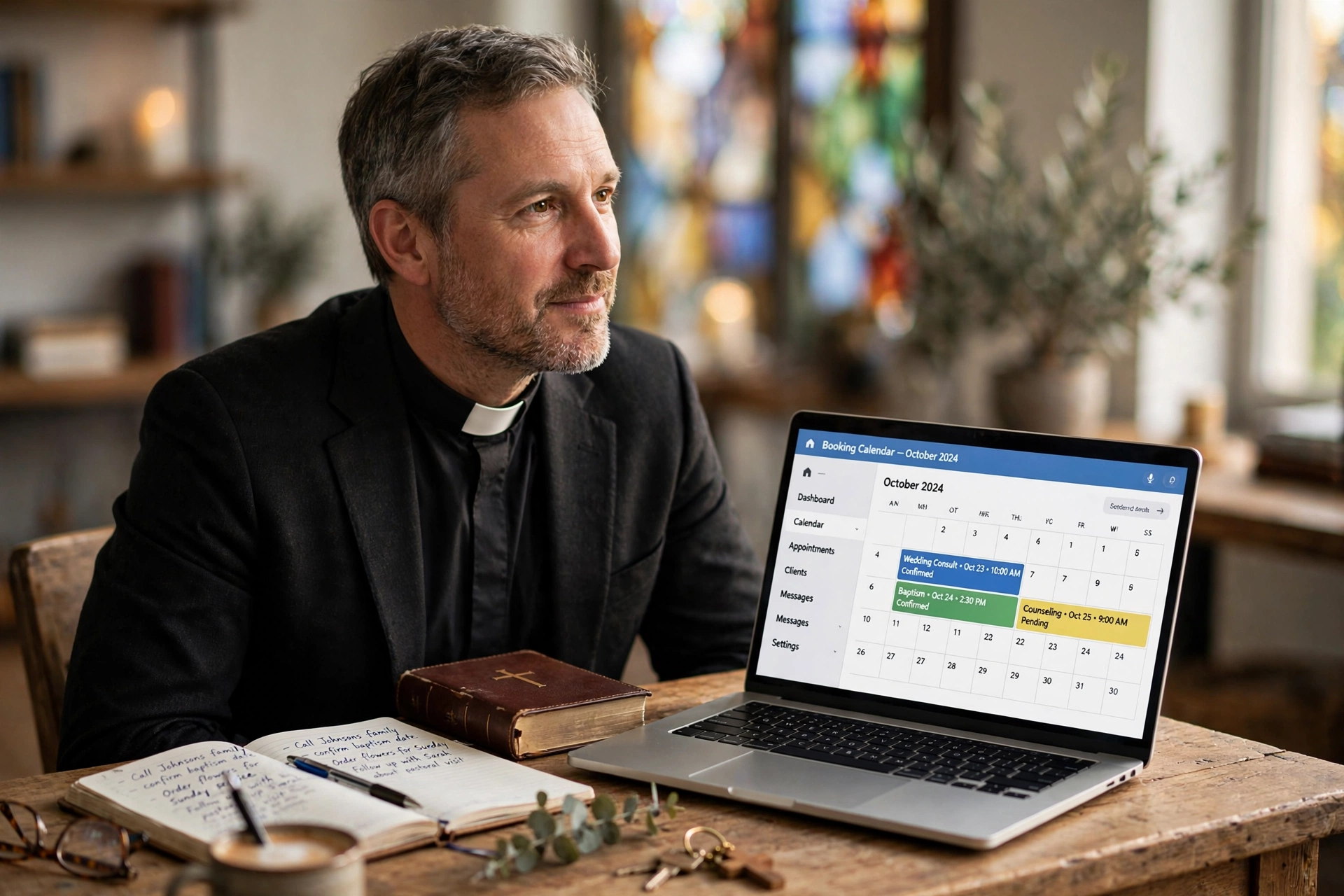
What Does Online Booking for Pastors Actually Cost?
Managing a ministry in 2026 requires a balance between spiritual availability and administrative boundaries. For most religious leaders, the cost of online booking for pastors typically ranges from $0 (for basic, limited free tiers) to $50 per month for professional-grade systems that handle complex availability and congregation synchronization. However, the "sticker price" of the software is rarely the true cost; the real expense lies in the hours of lost productivity spent on "calendar tetris" via text messages and emails.
In my experience working with dozens of church leaders, the mistake I see constantly is choosing a tool based solely on the lowest monthly fee rather than the time saved. A "free" tool that requires ten minutes of manual entry for every single appointment actually costs the ministry hours of leadership focus every week. When we developed the logic behind Pastor Agenda, we realized that for a minister, time isn't just money, it's the capacity for deeper pastoral care.

Understanding the Pricing Models of Appointment Systems
To determine the budget for scheduling, one must first understand how the industry prices these tools. Most platforms utilize a Software-as-a-Service (SaaS) model, which means you pay a recurring subscription for access to the cloud infrastructure.
📚
Definition
SaaS (Software as a Service) is a software licensing and delivery model in which software is licensed on a subscription basis and is centrally hosted.
Pricing generally falls into three categories: the "Freemium" tier, the Flat-Fee Professional tier, and the Enterprise/Church Management System (ChMS) tier. Freemium tools often limit the number of "active" booking types; for example, you might be able to offer a "30-minute counseling session" but cannot add a "1-hour baptism planning meeting" without upgrading. Professional tiers usually unlock unlimited appointment types, automated SMS reminders, and integration with Google or Outlook calendars.
According to research by the Barna Group, the integration of technology in ministry is no longer optional, as congregants increasingly expect the same digital convenience in their faith community that they experience in healthcare or banking. This shift in expectation means that a rudimentary system may actually hinder church growth by creating friction for those seeking help.
When analyzing the costs, you must also consider the "integration tax." If you use a generic tool like Calendly, you may find that it doesn't speak the language of ministry. It doesn't understand the difference between a "Sermon Prep Day" (which should be a hard block) and "Emergency Pastoral Care" (which needs an open window). The cost of a specialized tool like Pastor Agenda is offset by the fact that it is built specifically for the unique rhythms of the clergy.
Why Investing in Professional Scheduling Matters for Ministry ROI
The financial cost of a scheduling tool is negligible compared to the systemic cost of burnout. When a pastor manages their calendar manually, they are acting as their own secretary, which is a poor use of a minister's unique gifting. The impact of this inefficiency is measurable in both mental health and congregational satisfaction.
Data from Christianity Today suggests that pastoral burnout is often linked to the "blurring of boundaries" between private life and ministry demands. An automated system creates a digital boundary. By setting specific windows for pastoral care, a minister can protect their family time and study hours without feeling guilty about being unavailable.
From a business perspective, consider the "leaking" of appointments. When a member of the congregation has to wait three days for a pastor to text back to confirm a time for counseling, the urgency of the need may fade, or the individual may feel neglected. A professional system provides immediate confirmation, which increases the perceived care and reliability of the church leadership.
Furthermore, the use of automated reminders significantly reduces "no-show" rates. In any professional service, a no-show is a 100% loss of that time slot. If a pastor has two no-shows a week at one hour each, they are losing 104 hours of potential ministry per year. If those hours are valued at even a modest hourly rate of leadership, the "cost" of not having a professional booking system is thousands of dollars in wasted time.
How to Implement a Booking System Without Administrative Friction
Implementing online booking for pastors is not about the software; it is about the workflow. If you simply put a link on your website without a strategy, you may find your calendar flooded with requests that don't align with your priorities.
The most effective approach follows these four steps:
- Audit Your Availability: Before touching the software, map out your "Ministry Zones." Determine exactly when you are available for counseling, when you are in sermon preparation, and when you are completely off the clock.
- Define Your Appointment Types: Create specific categories. For example, "First-time Visitor Meeting" (30 mins), "Crisis Counseling" (60 mins), and "Staff Coordination" (15 mins).
- Deploy the Interface: Use a tool like Pastor Agenda to set these parameters. The system should allow the user to see only the slots you have explicitly opened, preventing the "calendar sprawl" that happens with generic tools.
- Communicate the Change: Let the congregation know. Explain that this isn't about "corporate-izing" the church, but about ensuring that when you meet with them, you are fully present and not distracted by a chaotic schedule.
💡
Key Takeaway
The goal of automated scheduling is not to replace the personal touch of ministry, but to remove the administrative noise so that the personal touch can happen more effectively.
Now, here's where it gets interesting: the most successful ministries use "buffer times." A professional system allows you to automatically add 15 minutes between appointments. In a ministry context, this is essential. You cannot jump from a heavy grief counseling session directly into a joyful wedding planning meeting without a moment to pray and reset your emotional state.

Comparing Scheduling Options for the Modern Clergy
Not all scheduling tools are created equal. Some are designed for hair salons, some for corporate sales teams, and some specifically for the pulpit. When evaluating the cost, you must compare the features against the specific needs of a church.
| Option | Monthly Cost | Pros | Cons | Best For |
|---|---|---|---|---|
| Manual/Texting | $0 | No software to learn | High burnout; constant interruptions | Very small house churches |
| Generic SaaS (e.g. Calendly) | $0 - $15 | Powerful integrations; polished UI | Lacks ministry context; rigid a-symmetric logic | Independent consultants/Chaplains |
| Pastor Agenda | Competitive | Built for clergy; respects ministry rhythms | Requires initial setup of boundaries | Growing churches and full-time pastors |
| Full ChMS Suite | $50 - $200+ | All-in-one (Giving, Membership, Booking) | Overwhelmingly complex; high cost | Mega-churches with full admin staff |
Most guides get this wrong by suggesting a free tool is the best starting point. In reality, a free tool that is too generic often creates more work because the pastor has to manually "clean up" the appointments after they are booked. The "Professional" approach, using a tool designed for the specific psychological and spiritual needs of a pastor, is the only way to ensure long-term sustainability.
Common Misconceptions About Digital Scheduling in the Church
There is a persistent myth that using a booking link is "impersonal" or "unspiritual." Some argue that a pastor should be "available at all times" and that a digital gatekeeper contradicts the call to serve.
This is a fundamental misunderstanding of stewardship. Stewardship is not just about money; it is about the stewardship of time and energy. A pastor who is available 24/7 via text is a pastor who will eventually crash. According to the National Association of Evangelicals, healthy leadership requires a sustainable rhythm of work and rest. Using an online booking system is actually an act of stewardship that ensures the pastor is healthy enough to serve the congregation for decades, rather than burning out in five years.
Another misconception is that "the congregation won't use it." In 2026, the opposite is true. Younger generations (Gen Z and Millennials) often experience "phone anxiety" and prefer the autonomy of choosing a time slot online without the back-and-forth of a phone call. By providing a digital path to your office, you are actually removing a barrier to entry for those who are hesitant to reach out.
Finally, many believe that a professional system is only for "big churches." I have seen a pastor of a 50-person congregation save five hours a week simply by automating their visitation schedule. The administrative burden of scheduling is not proportional to the size of the church; it is proportional to the number of relationships the pastor manages.
Frequently Asked Questions
Is online booking for pastors actually affordable for small churches?
Yes, it is highly affordable. Most professional systems are priced as a low monthly subscription that fits within a modest church budget. When you calculate the cost of the pastor's time, which is typically the church's largest financial investment, the cost of the software becomes a rounding error. If a system costs $20 a month but saves the pastor 10 hours of administrative work, the "cost per hour saved" is only $2. This represents a massive return on investment for any small ministry.
Will my congregation feel like I am treating them like a business customer?
This is a common fear, but it can be mitigated through communication. When you introduce the system, frame it as a way to give them better attention. Tell them: "I want to make sure that when we meet, I have cleared my schedule and my heart to focus entirely on you, without the distraction of other tasks." Most people appreciate the professionalism and the guarantee that their appointment is locked in, rather than wondering if the pastor forgot to write it down in a physical planner.
How do I handle emergency pastoral visits with a fixed booking system?
The key is to maintain "Emergency Windows" or a separate communication channel for crises. Your online booking is for scheduled care, counseling, planning, and mentorship. For emergencies (hospitalizations, deaths), you should still maintain a direct line of communication via a phone call or a designated deacon. The booking system manages the 90% of appointments that are non-urgent, which clears the space in your schedule to handle the 10% that are true emergencies.
Can these systems integrate with my existing church database?
Many professional tools are designed to sync with the calendars you already use, such as Google Calendar or Outlook. While a dedicated booking tool like Pastor Agenda focuses on the scheduling experience, it can work alongside your larger Church Management System (ChMS). The advantage of a specialized booking tool over a generic ChMS module is often the user interface; they are built specifically for the person booking the appointment, making the experience frictionless for the congregant.
Do I need to be a "tech expert" to set up online booking for pastors?
Not at all. Modern platforms are designed with a "no-code" approach, meaning if you can send an email or use a smartphone, you can manage these systems. The setup usually involves simply connecting your calendar and picking your available hours. The heavy lifting, sending reminders, calculating time zones, and managing the slots, is handled by the software automatically. The focus is on simplicity so that the pastor can spend more time in the Word and less time in the settings menu.
Final Thoughts on Online Booking for Pastors
Determining how much online booking for pastors costs requires looking beyond the monthly invoice. The real price is the cost of inefficiency. In a world where the demands on a minister's time are increasing, the ability to automate the "administrative friction" of scheduling is an essential tool for mental health and ministry growth.
Whether you are leading a small plant or a large established congregation, moving away from manual scheduling allows you to reclaim your time for what truly matters: prayer, study, and direct pastoral care. By implementing a structured, digital approach to your availability, you aren't just organizing a calendar, you are protecting your calling.
To experience a scheduling system designed specifically for the unique needs of the ministry, visit PastorAgenda Blog and take back control of your time.
Recommended Readings
To deepen your understanding of these topics, we recommend reading the following articles:
- Ensuring Absolute Privacy in Church Booking Systems
- Church Appointment Booking
- Online Appointment Booking for Modern Churches
- Automated Reminders and Communication for Congregations
Free Guide: The 7 Church Growth Hacks for 2026
Learn how modern ministries are using automated scheduling and AI pastoral assistants to save 12+ hours of admin work every week.



