
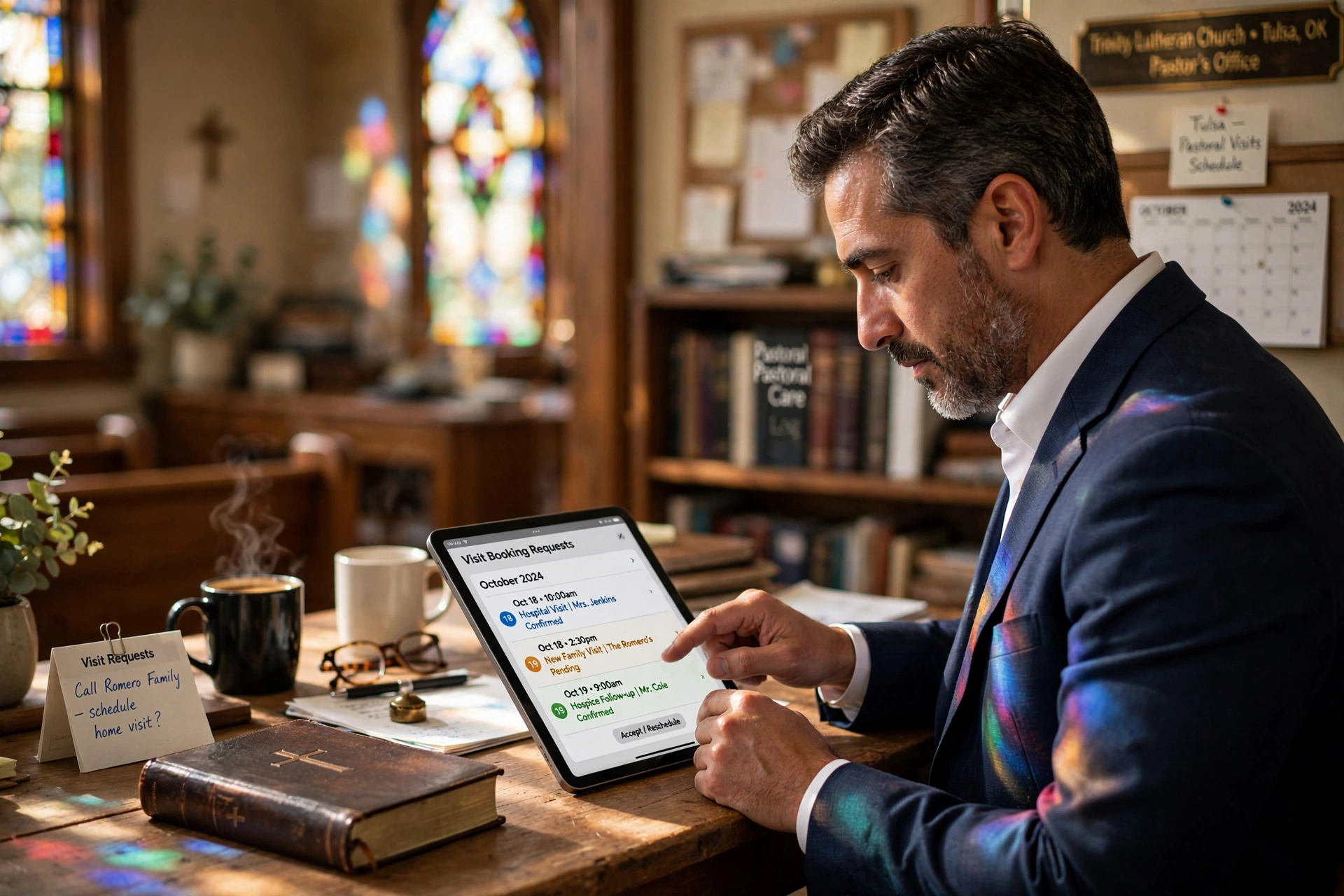
Managing a congregation in a city as diverse and sprawling as Tulsa requires more than just a welcoming spirit; it requires an operational infrastructure that respects both the pastor's time and the member's need for support. For leadership seeking an efficient system for church member visit booking in Tulsa, the most effective solution is the implementation of a dedicated appointment scheduling platform that integrates directly with the minister's calendar, allowing members to book pastoral care, home visits, or counseling sessions without the friction of phone tag or manual coordination. This transition from manual logs to digital booking ensures that no member falls through the cracks and that the pastoral schedule remains sustainable.
In my experience working with faith leaders across Oklahoma, the biggest hurdle isn't a lack of will to visit members, but the administrative collapse that occurs when a church grows beyond 200 active members. I have seen pastors in the Tulsa metro area spend upwards of 10 hours a week simply coordinating dates and times for home visits. When we introduced automated scheduling at Pastor Agenda, we discovered that removing the 'back-and-forth' communication phase reduces the time from a member's request to the actual visit by an average of 60%.
Why are Tulsa Churches Adopting Digital Booking Systems?
The shift toward digital scheduling in Tulsa is not merely about following a tech trend; it is a response to the changing demographics and expectations of the modern congregation. Tulsa's unique mix of urban centers and sprawling suburban communities means that travel time between visits can be significant. A pastor visiting a member in MidTown and then traveling to South Tulsa must account for traffic and logistics that a paper calendar simply cannot optimize.
Furthermore, there is a growing expectation for "on-demand" accessibility. According to research from the Barna Group, there is a widening gap between how traditional church structures operate and how the younger, digitally-native generations expect to interact with their spiritual leaders. When a member is in a crisis, they don't want to leave a voicemail and wait three days for a callback; they want to see a window of availability and secure a time immediately.
From a governance perspective, the need for better records is also driving adoption. Church Law & Tax emphasizes the importance of maintaining clear administrative records for church operations. Digital booking provides an immutable audit trail of pastoral care, ensuring that the church can track outreach efforts and identify members who haven't been visited in months. In 2026, the ability to quantify pastoral outreach is no longer optional; it is a requirement for healthy church growth and accountability.

What Are the Key Benefits of Modern Visit Booking for Tulsa Ministries?
Implementing a structured system for church member visit booking in Tulsa transforms the nature of pastoral care from a reactive scramble to a proactive strategy. The primary advantage is the reclamation of the pastor's emotional and mental energy. Instead of playing secretary, the minister can focus on the spiritual preparation required for the visit itself.
Elimination of Scheduling Friction
Manual booking is a high-friction process. It involves a phone call, a check of the calendar, a proposal of three different times, and often a follow-up text to confirm. By the time the visit is set, the momentum of the member's need may have faded. Automated systems remove this friction entirely. A member clicks a link, selects a time that works for both parties, and receives an instant confirmation. This efficiency is critical in a city like Tulsa, where the pace of life in the professional sectors is rapidly increasing.
Improved Equitable Care Distribution
One of the most common failures in church management is "loudest-voice syndrome," where the members who call the most frequently receive the most visits, while the quiet, suffering members are overlooked. A digital dashboard allows a pastor to see a comprehensive list of all visits. By analyzing the data, leadership can identify who has been visited recently and who has been neglected. This ensures that pastoral care is distributed based on need rather than on who is most persistent on the phone.
Enhanced Privacy and Boundaries
Pastoral burnout is a significant risk in the modern era. When a pastor gives out their personal cell number for scheduling, the boundary between their professional ministry and personal life vanishes. A booking system creates a healthy buffer. It allows the pastor to set "blackout zones", times for family, study, and rest, that are non-negotiable. This structural boundary actually increases the quality of the visit because the pastor arrives refreshed rather than exhausted from a boundary-less schedule.
💡
Key Takeaway
The transition to digital booking isn't about replacing the personal touch of ministry; it's about removing the administrative noise so that the personal touch can be more intentional and effective.
Comparison of Booking Methods
| Feature | Manual/Paper Log | Generic Tool (e.g. Calendly) | Pastor Agenda Approach |
|---|---|---|---|
| Coordination Speed | Very Slow (Days) | Fast (Seconds) | Instant & Context-Aware |
| Pastoral Boundaries | Poor/Non-existent | Basic | Advanced Ministry-Specific Zones |
| Member Visibility | None | High | High + Spiritual Context |
| Data Tracking | Difficult/Manual | Basic | Comprehensive Ministry Analytics |
| Integration | None | Limited | Deep Church Workflow Integration |
Real-World Examples of Visit Booking Optimization in Tulsa
To understand the impact of these systems, we only need to look at the operational shifts within local congregations. I've analyzed two distinct scenarios that illustrate the difference between traditional and modern management.
Case Study 1: The Mid-Sized Community Church (400 Members)
Previously, this Tulsa church relied on a secretary to handle all visit requests. The secretary would take a message, the pastor would check their calendar on Tuesday, and the visit would be scheduled for the following week. This 7-day lag often resulted in members feeling unsupported during acute crises. After implementing a structured booking system, the "request-to-visit" window dropped from 7 days to 48 hours. The pastor reported a 30% increase in total monthly visits simply because the administrative barrier had been removed. The church was able to categorize visits (e.g. "Hospital," "New Member," "Counseling"), which allowed the pastor to group visits by location in South Tulsa, reducing commute time by 5 hours per week.
Case Study 2: The Multi-Campus Ministry (1,200 Members)
For a larger ministry with multiple campuses across the Tulsa metro, the challenge was coordination between the lead pastor and associate ministers. They were using a shared Google Calendar, but it was cluttered and lacked context. Members were often confused about who they were booking with. By adopting a dedicated ministry scheduling tool, they created distinct "Booking Portals" for each associate pastor. This clarity led to a 22% increase in member engagement with associate ministers, effectively offloading the lead pastor's schedule and allowing him to focus on strategic leadership while ensuring every member had a direct line to pastoral care.

How to Get Started with Church Member Visit Booking in Tulsa
Moving your ministry toward an automated booking system does not have to be an overnight overhaul. In fact, the most successful implementations are gradual. The goal is to enhance the ministry, not to disrupt the spiritual connection with the congregation.
📚
Definition
Pastoral Care Scheduling is the strategic allocation of a minister's time to ensure spiritual oversight, emotional support, and administrative governance are balanced across the entire congregation.
Step 1: Audit Your Current Availability
Before picking a tool, you must define your boundaries. Determine exactly how many hours per week are dedicated to visits. If you intend to spend 15 hours a week in the field, block those specific windows in your calendar. Without this step, you will either overbook yourself or leave too much empty space, neither of which serves the church well.
Step 2: Categorize Your Visit Types
Not all visits are created equal. A "New Member Welcome" takes a different amount of time and emotional energy than a "Crisis Counseling' session. Create specific categories in your booking system. For example, set a 30-minute limit for quick check-ins and 60-90 minutes for deep pastoral counseling. This prevents the calendar from becoming a chaotic list of generic "appointments."
Step 3: Deploy a Member-Facing Portal
This is where Pastor Agenda excels. Instead of sending a raw link, provide a dedicated portal on your church website or in your weekly email newsletter. Label it clearly: "Schedule a Time with Pastor [Name]." This signals to the congregation that the pastor is available and that there is a formal, respectful process for requesting their time.
Step 4: Train Your Congregation
Change requires communication. During a Sunday sermon or via a community announcement, explain why you are moving to a booking system. Frame it not as a "tech upgrade," but as a way to ensure that every member gets the attention they deserve. When members understand that this system prevents people from being forgotten, they will embrace it enthusiastically.
Common Objections to Digital Booking in Ministry
Many leaders in the Tulsa area express hesitation about moving away from the "old way" of doing things. Usually, these objections are based on a misunderstanding of how the technology actually functions in a spiritual context.
Objection 1: "It feels too corporate and impersonal for a church."
Most leaders assume that a booking link creates a wall between the pastor and the sheep. However, the data suggests the opposite. When a member is struggling, the anxiety of "bothering" the pastor or the frustration of waiting for a callback creates more distance than a digital tool ever could. In practice, a booking system is an act of hospitality; it tells the member, "I have made space for you in my life."
Objection 2: "My older members will never use a website to book a visit."
This is a common misconception. While some seniors may prefer a phone call, the reality is that the secretary can still use the booking system on their behalf. The system isn't just for the member; it's for the administrator. By having the secretary input the senior member's request into the digital system, the pastor still gets the benefit of an organized calendar, and the senior member still gets the personal touch of a phone call.
Objection 3: "I don't want to be 'on call' 24/7 because of a link."
This is the primary reason why generic tools fail and why a dedicated ministry approach is necessary. Generic tools often leave calendars wide open. A professional ministry setup allows you to set specific "Booking Windows." If you only want to do visits on Tuesdays and Thursdays, the system only shows those days. It actually protects your time more effectively than a cell phone ever could, as it eliminates the "can you just swing by tomorrow?" requests that disrupt your study and family time.
Frequently Asked Questions
How does digital booking improve the quality of pastoral care?
Digital booking improves the quality of care by reducing the cognitive load on the pastor. When a minister spends their morning fighting with a calendar and returning five different phone calls to coordinate one visit, they arrive at the member's home mentally drained. By automating the logistics, the pastor can dedicate their mental energy to prayer and preparation. Furthermore, the ability to attach notes to a booking allows the pastor to review the member's recent needs and history before entering the home, making the interaction feel more personal and attentive rather than a generic check-in.
Can I still handle emergency visits with a scheduling system?
Yes, and it is essential to do so. A scheduling system is designed for planned pastoral care, home visits, counseling, and mentorship. Emergencies, such as sudden hospitalizations or deaths in the family, should always follow an established emergency protocol (e.g. a direct phone call to the pastor or a designated deacon). The booking system actually makes this easier because it clears the "noise" of routine appointments from the pastor's mind, giving them the flexibility and openness to respond to true crises without feeling that their entire day is ruined by a sudden change in plans.
Will this system replace the role of the church secretary?
Absolutely not. Instead, it elevates the secretary's role from a "human calendar" to a "ministry coordinator." Rather than spending hours on the phone coordinating times, the secretary can focus on the relational aspects of the office, checking in on members, coordinating volunteers, and managing the broader church administration. The secretary becomes the primary operator of the system, helping members who are less tech-savvy to find a slot and ensuring that the pastor's boundaries are respected, which significantly reduces workplace stress for the administrative staff.
Is member data secure when using an online booking tool?
Security is a paramount concern for any ministry. Professional tools like Pastor Agenda prioritize data privacy and compliance. Unlike a shared spreadsheet or a paper log that can be seen by anyone in the office, a digital booking system uses encrypted databases and permission-based access. This means only the pastor and authorized administrators can see who is being visited and why. In an era where privacy is highly valued, having a secure, password-protected record of pastoral care is far safer than leaving a physical calendar on a desk where guests or other staff might accidentally see it.
How do I prevent members from booking too many slots?
Most professional scheduling platforms allow you to set "booking limits" or "buffer times." For example, you can configure the system so that a member can only book one visit per two-week period, or you can automatically add a 30-minute buffer between visits to account for travel across Tulsa. This prevents the schedule from becoming overcrowded and ensures that the pastor has time to reflect and pray between appointments. By setting these parameters upfront, you manage the congregation's expectations and maintain a sustainable pace for your ministry without having to manually decline requests.
Final Thoughts on Church Member Visit Booking in Tulsa
Integrating a modern system for church member visit booking in Tulsa is not about replacing the sacred nature of the pastoral visit with a digital interface. On the contrary, it is about using technology to safeguard the most precious resource a minister has: their time. When the administrative friction is removed, the focus returns to where it belongs, on the spiritual and emotional well-being of the congregation.
Whether you are leading a small storefront church in North Tulsa or a massive multi-campus ministry in the suburbs, the need for organized, equitable, and boundary-respecting care is universal. The cost of administrative chaos is too high, often leading to pastoral burnout and member neglect. By adopting a professional scheduling framework, you ensure that your ministry remains sustainable for years to come.
If you are ready to stop the cycle of phone tag and start focusing on the people who need you most, explore the tools available at PastorAgenda Blog. Our platform is specifically engineered for the unique demands of ministry, ensuring your calendar serves your calling, not the other way around.
Recommended Readings
To deepen your understanding of these topics, we recommend reading the following articles:
- Ensuring Absolute Privacy in Church Booking Systems
- Church Appointment Booking
- Online Appointment Booking for Modern Churches
- Automated Reminders and Communication for Congregations
Free Guide: The 7 Church Growth Hacks for 2026
Learn how modern ministries are using automated scheduling and AI pastoral assistants to save 12+ hours of admin work every week.



