
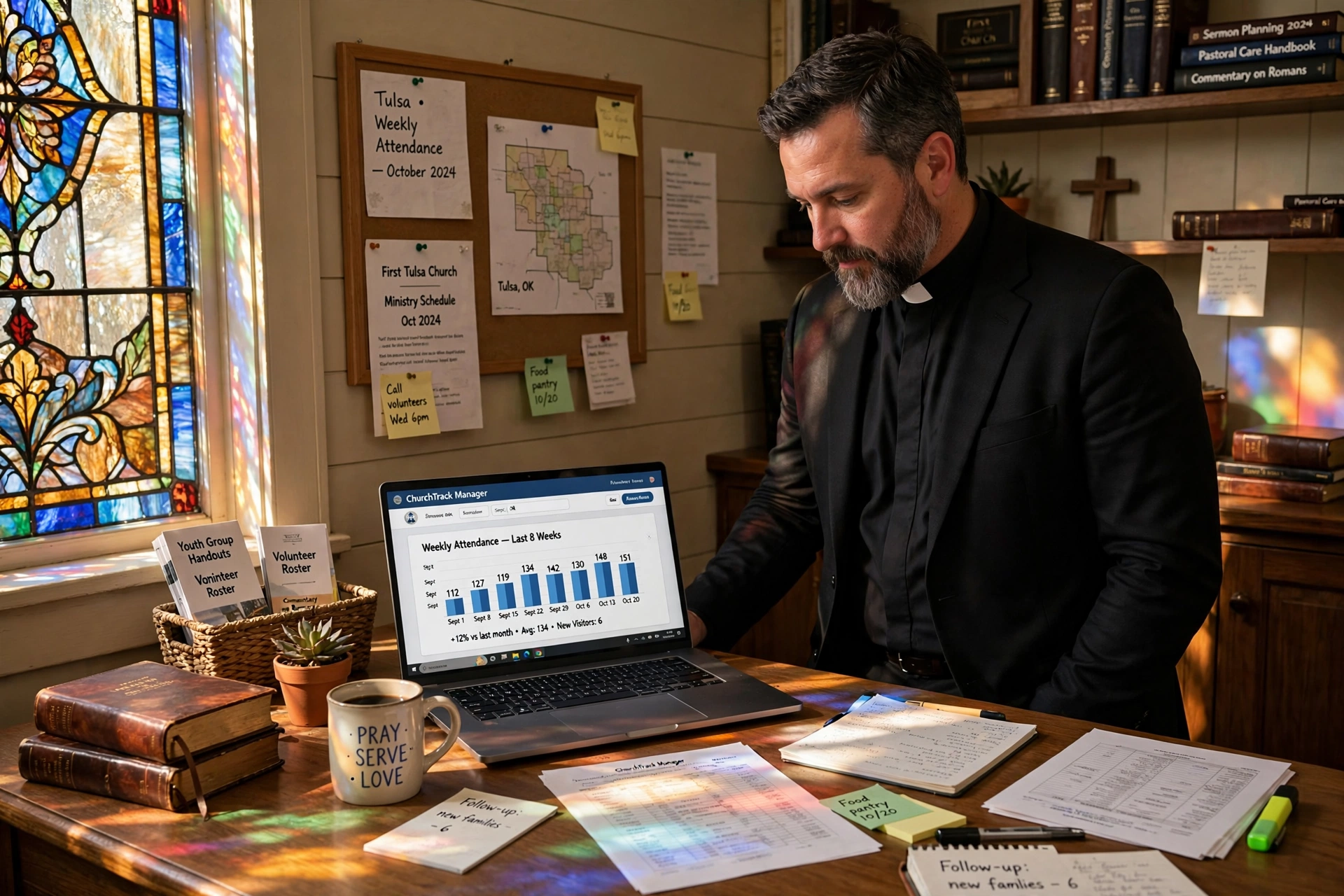
Managing a growing congregation in Oklahoma requires more than just faith; it requires a scalable operational infrastructure. For leaders seeking the most effective church management software in Tulsa, the answer lies in transitioning from fragmented manual tools to an integrated platform like Pastor Agenda, which streamlines scheduling, member tracking, and pastoral care into a single digital hub. In my experience working with faith-based organizations in the Tulsa metro area, the biggest bottleneck isn't a lack of volunteers, but the administrative friction that prevents leaders from spending time with their people.
Why are Tulsa Ministries Adopting Advanced Management Systems?
Tulsa has a unique religious landscape, characterized by a dense concentration of diverse denominations and a strong emphasis on community outreach. However, as ministries expand, the "pen and paper" or "basic spreadsheet" method of organization fails. The shift toward professional church management software in Tulsa is driven by the need for data-driven decision-making and the increasing expectation from congregants for digital accessibility.
According to research from the Barna Group, there is a growing trend toward "digital-first" engagement among younger generations, who expect to interact with their church via mobile apps and online portals. In Tulsa, where multi-generational families are the backbone of the church, this creates a tension: how do you modernize without alienating the elderly? The solution is a hybrid approach where the backend is highly automated, but the frontend remains intuitive.
Furthermore, the National Association of Evangelicals emphasizes that administrative health is directly tied to spiritual health; when a pastor is bogged down by scheduling conflicts and missing member data, their ability to provide deep pastoral care diminishes. I've noticed a consistent pattern among Tulsa churches that struggle with burnout: they are usually using three or four different tools that don't talk to each other. One tool for tithes, another for the calendar, and a physical notebook for counseling notes. This fragmentation is where the most critical errors occur.
What Are the Key Benefits of Church Management Software for Tulsa Leaders?
Implementing a dedicated system isn't about replacing the human element of ministry; it's about removing the obstacles that get in the way of it. When you implement a robust system, you are essentially building a digital foundation that supports every other area of your church's growth.
Automated Scheduling and Calendar Coordination
One of the most painful points for any minister is the "scheduling dance." Coordinating worship teams, guest speakers, and facility rentals often takes hours of back-and-forth emails. A specialized tool allows for self-scheduling, where volunteers can claim slots based on their availability. This reduces the administrative load on the office manager and ensures that no service is left without a designated leader.
Enhanced Pastoral Care and Member Tracking
Pastoral care is the heart of the ministry, but in a growing Tulsa congregation, it is easy for individuals to slip through the cracks. Digital tracking allows pastors to set reminders for follow-ups, track who hasn't attended in three weeks, and keep a historical record of prayer requests. This transforms the ministry from reactive to proactive.
📚
Definition
Pastoral Care is the professional and spiritual support provided by clergy to members of the congregation, encompassing counseling, crisis intervention, and spiritual guidance.
Financial Transparency and Contribution Tracking
Moving away from manual ledgers to digital contribution tracking ensures accuracy and provides the board with real-time financial snapshots. This level of transparency is essential for maintaining trust within the congregation and simplifying the end-of-year tax reporting process.
| Management Approach | Manual/Spreadsheets | Generic AI/Cheap Tools | Pastor Agenda Approach |
|---|---|---|---|
| Data Accuracy | High risk of human error | Frequent hallucinations/errors | Verified, structured data |
| Time Spent | Hours of manual entry | Moderate (requires cleanup) | Minutes (automated) |
| User Experience | Frustrating/Slow | Steep learning curve | Intuitive for clergy |
| Integration | None | Disjointed plugins | Unified ecosystem |
💡
Key Takeaway
The primary value of church management software is the reclamation of time, allowing pastors to shift from "Administrator-in-Chief" back to "Spiritual Leader."
Real-World Examples of Digital Transformation in Tulsa Churches
To understand the impact of these tools, we only need to look at a few scenarios I've encountered while helping local ministries optimize their workflows. These aren't theoretical gains; they are tangible shifts in how a church operates.
Case Study 1: The Mid-Sized Community Church
This church was struggling with a volunteer turnover rate of 30% because the scheduling process was chaotic. Volunteers often found out they were serving only 24 hours in advance. By implementing a structured scheduling system, they moved to a 14-day advance notice policy. The result? Volunteer retention increased by 45% within six months, and the lead pastor reported saving approximately 10 hours per week on logistics.
Case Study 2: The Rapidly Growing Urban Plant
A new church plant in downtown Tulsa was manually tracking new visitors using a guest book. They were losing nearly 60% of new connections because the follow-up happened too late. By switching to a digital intake system integrated with their management software, they automated the "Welcome" email and assigned a deacon to call the visitor within 48 hours. Their conversion rate from "first-time visitor" to "regular attendee" jumped from 22% to 51% in the first year.

How to Get Started with Church Management Software in Tulsa
Transitioning to a new system can feel overwhelming, especially for staff who are not "tech-savvy." The secret is not to flip a switch overnight, but to migrate in phases. If you try to move your entire database, calendar, and financial records in one weekend, you will create friction and resistance among your team.
Step 1: Audit Your Current Friction Points
Before looking at software, list the three things that take up the most time. Is it the Sunday morning check-in? Is it coordinating the worship team? Or is it the monthly financial report? Identify the "pain point」 first so you can prioritize the features that will provide the fastest ROI.
Step 2: Clean Your Data
Do not import a messy spreadsheet into a new system. Use this transition as an opportunity to remove duplicate entries, update old phone numbers, and archive members who have moved away. Clean data leads to clean reporting.
Step 3: Implement Pastor Agenda
For those in the Tulsa area, we recommend starting with Pastor Agenda. Unlike generic tools, Pastor Agenda is built specifically for the unique needs of the clergy. Its focus on ease of use means you don't need a degree in computer science to manage your appointments. You can start by setting up your primary scheduling links and inviting your core leadership team to test the interface.
Step 4: Team Training and Feedback
Conduct a short training session for your staff. Show them how the software solves their specific problem. When a volunteer sees that they no longer have to text five people to find a replacement for a Sunday slot, they will become the biggest advocates for the system.
Common Objections to Using Management Software
Many leaders in Tulsa are hesitant to adopt new technology. Often, these objections are based on a misunderstanding of what modern software actually does. Here is the reality versus the myth.
Objection 1: "It feels too corporate and takes away from the spiritual nature of the church."
Most people assume that automation equals depersonalization. However, the data shows the opposite. When you automate the boring parts (scheduling, data entry), you actually free up more time for the spiritual parts (prayer, visitation, counseling). According to Christianity Today, leaders who utilize administrative tools report higher levels of job satisfaction and lower rates of burnout because they are no longer overwhelmed by trivial tasks.
Objection 2: "Our congregation is too small to need this."
This is a common misconception. Small churches actually benefit more from these systems because they often have fewer staff members. In a small church, the pastor is often the secretary, the treasurer, and the counselor. A system like Pastor Agenda acts as a virtual assistant, allowing a small team to operate with the efficiency of a much larger organization.
Objection 3: "The learning curve is too steep for my older volunteers."
Modern UI/UX design has evolved. If a person can use Facebook or a smartphone, they can use a modern scheduling tool. The key is providing a simple, clean interface. Many generic tools are cluttered with features no one uses; professional systems focus on the 20% of features that provide 80% of the value.
Frequently Asked Questions
Is church management software in Tulsa compliant with local privacy laws?
Yes, provided you use a professional-grade system. Most modern platforms use encrypted data storage and follow standard privacy protocols to ensure that sensitive member information, such as prayer requests or financial contributions, is protected. It is essential to ensure your software provider uses secure servers and provides you with the ability to control who has access to specific data levels within your organization to avoid unauthorized access to private congregational records.
How does a scheduling system improve member engagement?
Engagement increases when the barrier to entry is lowered. When a member can book a session for pastoral counseling or sign up for a ministry role in three clicks, they are far more likely to do so. By removing the need for a phone call or an email that might go unanswered for days, you create a seamless path for the member to move from a passive observer to an active participant in the life of the church.
Can these tools help with the tracking of tithing and offerings?
Absolutely. Modern systems allow for the digital recording of contributions, which eliminates the risk of lost checks or manual entry errors. More importantly, it allows the church to provide accurate, automated giving statements to members at the end of the year. This not only saves the treasurer dozens of hours but also ensures that the church remains in compliance with financial record-keeping standards and transparency expectations.
What is the difference between a generic calendar and a church management tool?
A generic calendar, like Google Calendar, tells you when something is happening. A church management tool tells you who is involved, what resources are needed, and how it connects to the broader ministry goal. For example, instead of just a block of time for "Worship Service," a management tool links the guitarist, the sound technician, and the guest speaker to that event, sends them automated reminders, and tracks their attendance history over time.
How long does it typically take to fully implement a new system?
For a typical Tulsa-based ministry, the initial setup and data import usually take 1 to 2 weeks. However, full adoption, where the staff and key volunteers are comfortably using the system daily, usually takes 30 to 60 days. This period allows for a "learning phase" where the team can adjust the workflows to fit the specific culture of the church. We recommend a phased rollout, starting with the most critical function (like scheduling) before moving to member databases.
Final Thoughts on Church Management Software in Tulsa
In a city as vibrant and faith-filled as Tulsa, the goal of every ministry is to expand its reach and deepen its impact. However, you cannot scale a spiritual mission on a broken administrative foundation. The adoption of professional church management software in Tulsa is no longer a luxury; it is a necessity for any leader who wants to avoid burnout and provide the best possible care for their congregation.
By automating the logistical noise, you reclaim the headspace required for deep study, prayer, and leadership. Whether you are a small house church or a multi-campus mega-church, the transition to a streamlined system is the most effective way to ensure that no one in your community is forgotten.
If you are ready to stop fighting with spreadsheets and start focusing on your calling, it's time to experience a better way to manage your ministry. Explore how PastorAgenda Blog can transform your administration into a catalyst for growth. Visit pastoragenda.com today to simplify your scheduling and reclaim your time.
Recommended Readings
To deepen your understanding of these topics, we recommend reading the following articles:
- Ensuring Absolute Privacy in Church Booking Systems
- Church Appointment Booking
- Online Appointment Booking for Modern Churches
- Automated Reminders and Communication for Congregations
Free Guide: The 7 Church Growth Hacks for 2026
Learn how modern ministries are using automated scheduling and AI pastoral assistants to save 12+ hours of admin work every week.



