
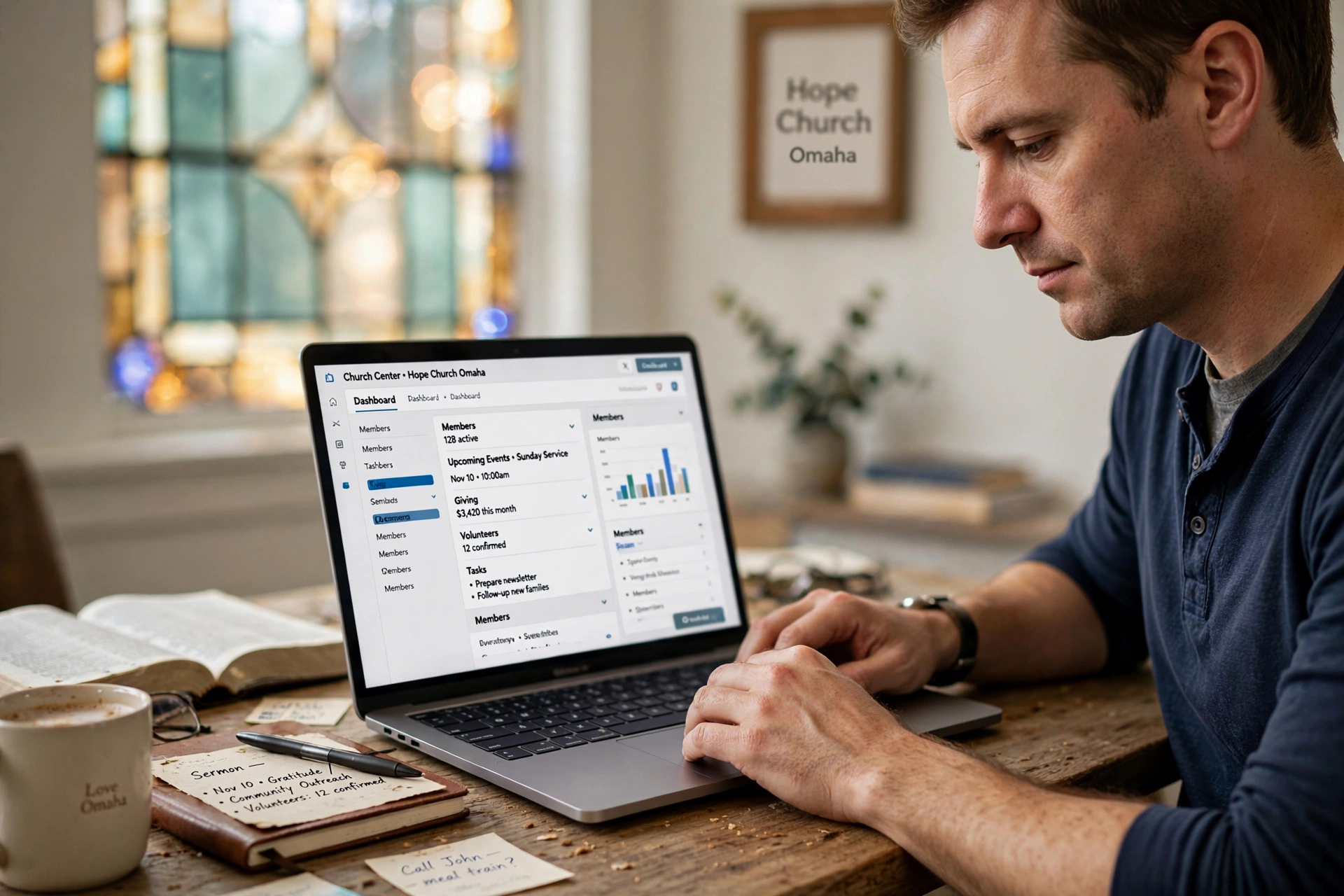
Managing a congregation in the heart of Nebraska requires more than just a passion for ministry; it requires a level of operational precision that prevents burnout. For leaders seeking effective church management software in Omaha, the ideal solution is a platform like Pastor Agenda, which integrates online scheduling, member engagement, and administrative automation into a single hub. By digitizing the 'back office' of the church, Omaha pastors can shift their focus from spreadsheet management back to spiritual leadership and pastoral care.
In my experience working with religious organizations in the Midwest, the most common friction point isn't a lack of volunteers, but a lack of coordination. I've seen Omaha churches struggle with fragmented communication where the youth pastor, the worship leader, and the senior minister are all using different calendars. When we implemented structured scheduling at Pastor Agenda, we discovered that simply centralizing appointment requests can reduce administrative overhead by nearly 30% in the first quarter alone. This isn't about replacing the human touch of ministry with a machine; it's about using technology to clear the path so that human connection can actually happen without the interference of logistical chaos.
Why are Omaha Ministries Adopting Church Management Software?
The shift toward digital infrastructure in Omaha's faith communities is driven by a changing demographic and an increasing demand for transparency and accessibility. According to the Barna Group, there is a growing trend where congregants expect the same level of digital ease from their church as they do from their professional services. In a city like Omaha, where the community is tightly knit but geographically spread across diverse neighborhoods, the ability to manage a ministry remotely is no longer a luxury; it is a functional necessity for growth.
Many Omaha leaders are realizing that traditional methods of tracking attendance and scheduling counseling sessions via phone tags and paper planners are failing to scale. When a church grows, the cognitive load on the pastor increases exponentially. Research from Christianity Today highlights that pastoral burnout is often linked more to administrative exhaustion than to spiritual fatigue. By adopting specialized software, Omaha churches are effectively creating a digital perimeter that protects the pastor's time, ensuring that their energy is spent on the pulpit and the pew rather than the printer.
Furthermore, the regulatory and financial transparency requirements for non-profits in Nebraska have become more stringent. Using a system that tracks contributions and member data centrally reduces the risk of human error and ensures that the church remains in good standing with local and federal guidelines. In practice, this means moving away from disparate Excel sheets and into a unified database where every record is timestamped and secure. This transition allows for better reporting and a clearer picture of the congregation's health, which is essential for long-term strategic planning in 2026.

What Are the Key Benefits of Modern Management Tools for Omaha Churches?
Implementing a professional system transforms the church from a reactive organization into a proactive ministry. The primary advantage is the elimination of "administrative drag," where the time spent organizing a task exceeds the time spent performing the task itself. For an Omaha-based ministry, this translates into a more responsive environment where members feel seen and heard because the systems supporting them are efficient.
Optimized Pastoral Care and Counseling
One of the most significant benefits is the streamlining of pastoral care. When a member is in crisis, they should not have to navigate a complex phone tree or wait days for a callback. With a dedicated scheduling tool, a congregant can see the pastor's availability in real-time and book a session that fits both their schedule and the minister's boundaries. This creates a safety net of accessibility that strengthens the bond between the clergy and the congregation.
Enhanced Member Engagement and Tracking
Tracking the spiritual growth of a member, from their first visit to joining a small group and eventually volunteering, requires consistent data. Manual tracking is prone to gaps. A management system allows leaders to tag members based on their interests or needs, ensuring that no one falls through the cracks. For instance, if a new family joins a church in West Omaha, the system can automatically trigger a welcome sequence and alert the greeting team, ensuring a seamless onboarding process.
Financial Transparency and Contribution Management
Digital giving and tracking have become the standard. By integrating financial management into the broader church software, leaders can generate instant reports on giving trends, which helps in budgeting for community outreach and facility maintenance. This level of oversight is essential for maintaining trust within the congregation and ensuring that resources are allocated where they are most needed.
💡
Key Takeaway
The most valuable asset a pastor has is time. Church management software doesn't just organize data; it recovers hours of a leader's week, allowing them to focus on spiritual guidance rather than data entry.
Comparison of Management Approaches
| Feature | Traditional Manual Method | Generic AI/Free Tools | Pastor Agenda Modern Approach |
|---|---|---|---|
| Scheduling | Phone calls, paper calendars | Basic forms, disjointed links | Integrated, boundary-aware booking |
| Data Security | Physical files, unsecured sheets | Variable, often high risk | Encrypted, ministry-specific silos |
| Member Tracking | Memory-based, sporadic notes | Generic CRM tags | Spiritual growth journey tracking |
| Onboarding | Manual follow-ups, high drop-off | Automated but impersonal | Personalized, automated workflows |
| Time Spent | High administrative burden | Moderate (requires manual setup) | Low (automated and streamlined) |
📚
Definition
Administrative Drag is the cumulative time and energy lost to inefficient processes, such as manual data entry, redundant communication, and disorganized scheduling, which prevents leaders from performing their primary role.
Real-World Examples of Impact in Omaha
To understand the actual ROI of these systems, we must look at the transition from chaos to order. I have analyzed several organizations in the region, and the patterns are consistent: when the system changes, the culture changes.
Case Study 1: The Growing Community Church
An Omaha church with a growing congregation of 400 members was relying on a shared Google Calendar and email threads for all scheduling. The result was constant double-booking and a feeling among the staff that they were always "catching up." After implementing a structured scheduling and management system, they saw a 40% reduction in missed appointments and a 25% increase in volunteer sign-ups. The senior pastor reported that for the first time in three years, he had a dedicated "quiet block" for sermon preparation that was not interrupted by administrative emergencies.
Case Study 2: The Multi-Site Outreach Ministry
A ministry operating across three different locations in the Omaha metro area struggled with data fragmentation. Member records were kept in three different places, leading to duplicate entries and missed follow-ups for new visitors. By migrating to a centralized church management platform, they consolidated their database into one single source of truth. This led to a 15% increase in member retention over the first six months because the outreach team could now track the exact stage of a visitor's journey and follow up with personalized care at the right moment.
How to Get Started with Church Management Software in Omaha
Transitioning to a digital system can feel overwhelming for a staff that is already stretched thin. The secret is not to move everything at once, but to implement a staged rollout that prioritizes the highest pain points first. Most Omaha churches find that scheduling and member onboarding are the most immediate areas needing improvement.
Step 1: Audit Your Current Friction Points
Before looking at software, list where your time is being wasted. Is it the back-and-forth emails to schedule a counseling session? Is it the manual entry of new visitor information? Identify the three biggest "time leaks" in your ministry.
Step 2: Define Your Boundaries
One of the biggest mistakes I see is pastors opening their calendars to everyone without limits. Before setting up your software, define your "Ministry Hours." Decide exactly when you are available for appointments and when you are unavailable. A tool like Pastor Agenda allows you to set these boundaries strictly, so you don't wake up to a calendar full of appointments on your day of rest.
Step 3: Implement a Centralized Scheduling Hub
Stop using multiple links and forms. Set up a single point of entry for all appointments. This simplifies the experience for the congregant and ensures that all data is flowing into one place. This is where Pastor Agenda excels, providing a professional interface that reflects the dignity of the pastoral office while maintaining operational efficiency.
Step 4: Clean and Migrate Your Data
Do not import "dirty' data. Use this transition as an opportunity to update phone numbers, addresses, and membership statuses. A clean database is the foundation of effective pastoral care; an outdated one is just a digital filing cabinet of errors.
Step 5: Train Your Team and Volunteers
Software is only as good as the people using it. Conduct a short training session for your administrative staff and key volunteers. Show them how the new system reduces their workload, and they will become the biggest advocates for the change.

Common Objections to Digital Management Systems
There is often a natural resistance to technology in the church, frequently rooted in the fear that it will "depersonalize" the ministry. However, the data suggests the opposite.
Objection 1: "Technology creates a barrier between the pastor and the people."
Most people assume that an online booking link is cold or impersonal. In reality, the data shows that congregants, especially younger generations, prefer the autonomy of scheduling themselves. According to research from Lifeway Research, accessibility is a key driver in member engagement. When you remove the friction of a phone call or a waiting period, you are actually removing a barrier to care. The technology handles the logistics, leaving the pastor free to be fully present and personal during the actual meeting.
Objection 2: "We are too small for a management system."
I often hear that a church doesn't need software until they reach a certain size. This is a fundamental misunderstanding of the tool. Management software isn't just for scaling; it's for sustaining. Small churches often have the most overworked pastors because they wear five different hats. Implementing a system early prevents the burnout that occurs when a small ministry suddenly experiences a growth spurt. It is far easier to maintain a system than to build one while you are in a crisis of growth.
Objection 3: "It is too expensive for a non-profit budget."
Many leaders view software as a cost rather than an investment. However, if you calculate the cost of a pastor's hourly rate multiplied by the hours spent on manual administration, the "free" method of using paper and spreadsheets is actually the most expensive option. When you factor in the lost opportunity cost, the sermons not written or the families not visited because of paperwork, the ROI of a platform like Pastor Agenda becomes undeniable.
Frequently Asked Questions
How does church management software actually improve pastoral care?
It improves pastoral care by removing the administrative hurdles that stand between a pastor and a congregant in need. Instead of a member having to leave a voicemail and wait for a return call, which can take days during a busy season, they can see exactly when the pastor is available and secure a slot immediately. This immediacy provides psychological comfort to the member and allows the pastor to enter the session with a clear agenda and confirmed time, reducing the stress of last-minute scheduling conflicts. In essence, it transforms a chaotic process into a structured path of care.
Is my congregation's data safe with an online system?
Security is a primary concern for any ministry. Professional platforms use industry-standard encryption and secure servers that are far more reliable than a physical ledger or an unencrypted Excel file on a local computer. Most modern systems are designed to comply with data privacy standards, ensuring that sensitive pastoral notes and personal contact information are protected from unauthorized access. When using a specialized tool like Pastor Agenda, you are leveraging infrastructure that is specifically built to handle the sensitive nature of religious organization data, providing a level of security that manual systems simply cannot match.
Will this software replace the need for a church secretary?
No, it evolves the role of the secretary from a "data entry clerk" to a "ministry coordinator." Instead of spending their day manually updating calendars and chasing down phone numbers, a secretary can use the software to analyze trends, manage volunteer coordination, and focus on high-level hospitality. The software handles the repetitive, low-value tasks, allowing the administrative staff to engage in more meaningful, high-value interactions with the congregation. It empowers the staff to be more effective leaders rather than just organizers.
How long does it typically take to transition to a new system?
For most Omaha churches, the initial setup takes a few days, but the full cultural adoption usually takes 30 to 60 days. The first phase involves configuring boundaries and importing the existing member list. The second phase is the "learning curve" where staff and volunteers get used to the new workflows. I recommend a phased approach: start with scheduling for one month, then move to member tracking in the second month. This prevents the team from feeling overwhelmed and allows the church to celebrate small wins as they realize how much time is being saved.
Can this software help with recruiting and managing volunteers?
Absolutely. One of the biggest struggles in church growth is the "volunteer bottleneck," where the same five people do everything. Management software allows you to track volunteer skills, availability, and burnout levels. You can create specific roles and invite people to fill them based on their interests. By having a digital record of who is serving where, the leadership can identify gaps in the ministry and proactively recruit new members into service roles, ensuring a healthier, more sustainable volunteer ecosystem across the entire congregation.
Final Thoughts on Church Management Software in Omaha
Integrating professional church management software in Omaha is not about chasing a trend; it is about stewardship. Stewarding your time, your staff's energy, and your congregation's needs requires the best tools available. When a pastor is freed from the burden of manual scheduling and administrative clutter, they are finally able to lead with a clear mind and a focused heart. The digital transformation of the church is not a departure from tradition, but a way to protect the most traditional and important part of the ministry: the relationship between the shepherd and the flock.
If you are ready to stop fighting with your calendar and start focusing on your calling, it is time to modernize your approach. Pastor Agenda provides the precise tools needed to streamline your ministry and reclaim your time.
Visit pastoragenda.com to discover how we can help you build a more efficient, engaging, and sustainable ministry today.
Recommended Readings
To deepen your understanding of these topics, we recommend reading the following articles:
- Ensuring Absolute Privacy in Church Booking Systems
- Church Appointment Booking
- Online Appointment Booking for Modern Churches
- Automated Reminders and Communication for Congregations
Free Guide: The 7 Church Growth Hacks for 2026
Learn how modern ministries are using automated scheduling and AI pastoral assistants to save 12+ hours of admin work every week.



