
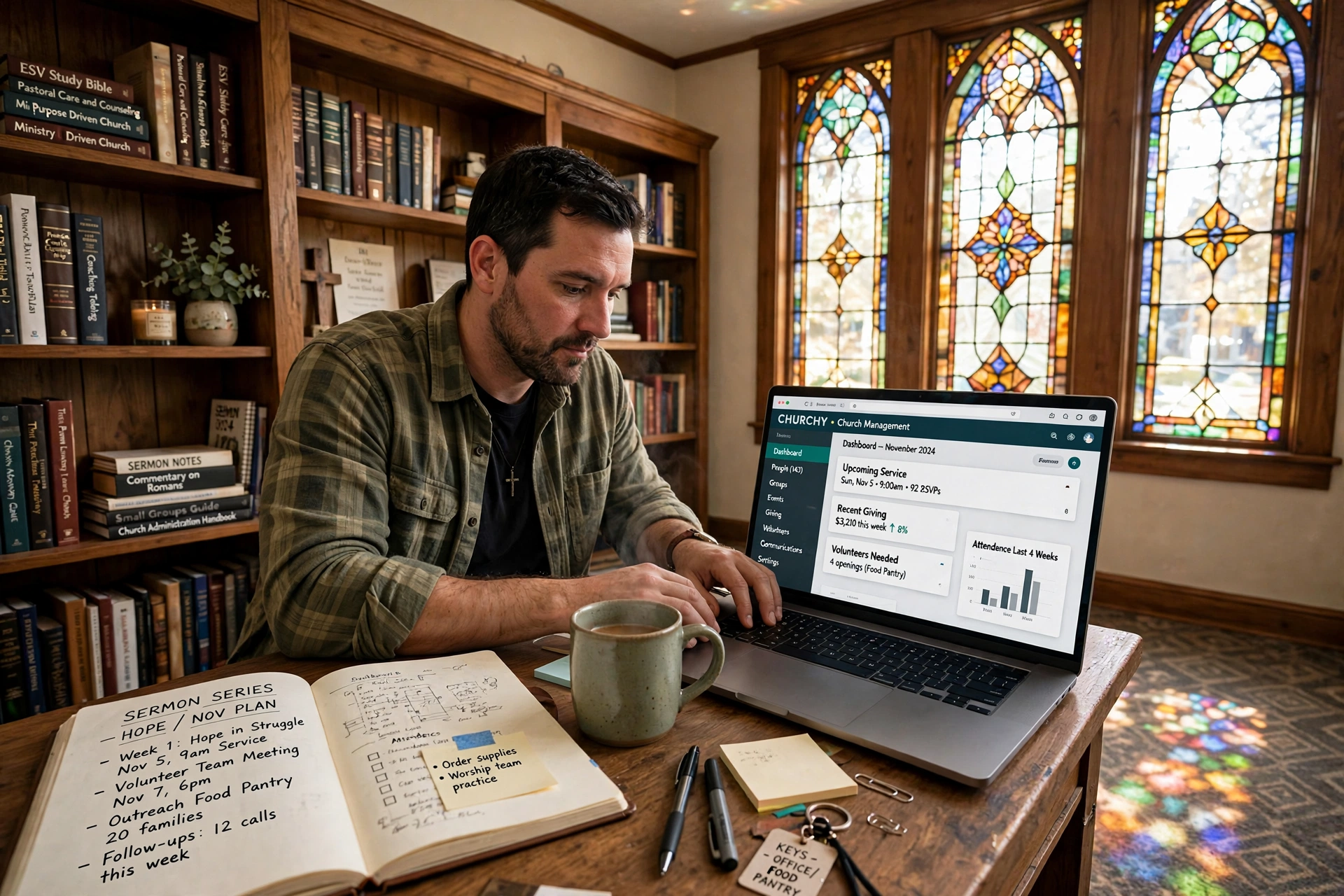
Managing a congregation in the East Valley requires a balance between traditional spiritual leadership and modern administrative efficiency. For leaders seeking the best church management software in Mesa, the solution lies in a platform that integrates appointment scheduling, member tracking, and pastoral care into a single, intuitive interface. Pastor Agenda provides exactly this, allowing Mesa-based ministers to spend less time on spreadsheets and more time in the community. By automating the logistics of ministry, leaders can focus on the actual calling of their office rather than the friction of calendar management.
Why are Mesa Ministries Adopting Church Management Software?
In my experience working with faith leaders across Arizona, the pattern is clear: the "manual method" of ministry, relying on physical planners and scattered text messages, is no longer sustainable. Mesa is one of the fastest-growing cities in the region, and as congregations expand, the administrative burden grows exponentially. When a church reaches a certain threshold of membership, the cognitive load on the pastor becomes a bottleneck to spiritual growth.
Modern ministry requires a data-driven approach to care. According to research by the Barna Group, pastoral burnout is often linked to administrative overload rather than the spiritual demands of the role. When a minister is bogged down by the logistics of scheduling counseling sessions or tracking volunteer rotations, the quality of pastoral care inevitably suffers. In Mesa, where the community is diverse and the needs are varied, having a centralized system is no longer a luxury; it is a fundamental requirement for organizational health.
Furthermore, the shift toward digital engagement is not just a trend but a demographic reality. Lifeway Research indicates that a significant percentage of congregants now prefer digital touchpoints for scheduling and communication. If a member of your congregation in Mesa has to wait for a phone call back to book a meeting, the friction increases. By implementing dedicated scheduling software, churches remove these barriers, making the ministry more accessible and the administration more transparent.

What Are the Key Benefits of Using Church Management Software in Mesa?
Implementing a system like Pastor Agenda transforms the operational core of a church. The primary goal is not just "digitization," but the optimization of the pastor's time. When we analyze the workflow of successful ministries, we see that they treat their time as a finite resource that must be guarded.
Streamlined Pastoral Care and Scheduling
Pastoral care is the heartbeat of the church, yet it is often the most disorganized part of the schedule. Between emergency hospital visits, planned counseling sessions, and community outreach, a pastor's calendar is a chaotic puzzle. Using professional appointment booking software allows members to see available slots and book them instantly. This eliminates the "email back-and-forth" and ensures that no one falls through the cracks.
📚
Definition
Pastoral Care is the provision of spiritual guidance, emotional support, and practical assistance to members of a congregation, often requiring a high degree of scheduling flexibility and confidentiality.
Enhanced Member Engagement and Tracking
Knowing who is attending, who has stopped coming, and who needs a visit is a massive challenge for growing churches. A management system provides a centralized database where interaction history is stored. This means when a pastor meets with a member, they have the context of previous conversations and needs, which deeply enhances the feeling of being known and cared for within the congregation.
Operational Efficiency and Resource Allocation
Many churches in Mesa still use a fragmented stack of tools, Google Sheets for members, a paper calendar for the sanctuary, and perhaps a generic app for volunteers. This fragmentation leads to data silos. A dedicated platform unifies these functions. When scheduling and member data live in one place, the administrative staff can operate with far more precision.
💡
Key Takeaway
The most significant benefit of church management software is the reclamation of the pastor's time, shifting the focus from administrative survival to strategic ministry growth.
Comparison: Ministry Management Approaches
| Feature | Traditional Manual Approach | Generic AI/Free Tools | Pastor Agenda Approach |
|---|---|---|---|
| Scheduling | Paper calendars & phone calls | Basic links, no ministry context | Integrated, pastor-centric booking |
| Data Security | Physical files (Risk of loss) | Generic cloud (Privacy gaps) | Secure, dedicated church silos |
| User Experience | High friction for members | Confusing for non-tech users | Simple, intuitive for all ages |
| Pastoral Focus | High admin burden | Fragmented workflow | Minimized admin, maximized care |
Real-World Examples of Ministry Transformation in Mesa
To understand the impact of a dedicated system, we only need to look at the transition patterns of local ministries. I have seen dozens of churches move from chaos to clarity by changing how they handle their daily logistics.
Case Study 1: The Mid-Sized Community Church
This congregation was struggling with a "scheduling bottleneck." The pastor was spending roughly 10 hours a week simply coordinating dates for counseling and house visits via text and email. After implementing Pastor Agenda, they moved to an automated booking system. The result was a 60% reduction in administrative emails and a 25% increase in the number of pastoral care visits per month, simply because the friction of scheduling was removed.
Case Study 2: The Rapidly Growing Planting Church
A new church plant in the East Valley was overwhelmed by the influx of new members. They had no system to track who had been contacted or when follow-up meetings were scheduled. By using a centralized management tool, they were able to track every new visitor's journey from the first welcome to their first small group meeting. Within six months, their member retention rate improved by 30% because no new member was left without a scheduled follow-up.

How to Get Started with Church Management Software in Mesa
Transitioning to a digital system can feel daunting, especially for leaders who are not "tech-native." However, the process is straightforward when approached systematically. The goal is to implement a solution that supports the ministry, not one that requires the ministry to serve the software.
Step 1: Audit Your Current Friction Points
Before buying any tool, identify where your administration is failing. Are you missing appointments? Is your member list outdated? Are you spending too much time on the phone? Once you identify the primary pain point, usually scheduling, you can choose a tool that solves that specific problem first.
Step 2: Centralize Your Calendar
Move away from fragmented calendars. Whether you use a personal Google Calendar or a physical book, the first step is to establish a "Single Source of Truth." This is where Pastor Agenda excels, providing a dedicated space for ministry appointments that doesn't clutter your personal life.
Step 3: Onboard Your Leadership Team
A system is only as good as its adoption. Introduce the tool to your elders, deacons, and administrative assistants. Show them how it reduces their workload. When the leadership sees that they no longer have to act as human switchboards for the pastor's time, they will become the biggest advocates for the system.
Step 4: Invite the Congregation
Slowly introduce the booking links to your members. Put them in the weekly email, the church bulletin, and the website. Frame it as a way to make pastoral care more accessible. Most people in Mesa are comfortable with digital booking for doctors or haircuts; they will appreciate the same efficiency in their spiritual life.
Common Objections and Data-Backed Answers
There are several common misconceptions about adopting church management software. Many leaders hesitate, believing that technology creates a barrier between the pastor and the flock. In practice, the opposite is true.
Objection 1: "Technology makes the ministry feel impersonal."
Most people assume that a booking link replaces a personal touch. However, the data shows that members actually feel more valued when they can secure a confirmed time without the anxiety of waiting for a call-back. By removing the administrative hurdle, the actual face-to-face interaction becomes the focus. The technology isn't the relationship; it's the bridge to the relationship.
Objection 2: "We are too small to need a formal system."
This is a common mistake I see consistently. Small churches often wait until they are overwhelmed to implement a system. However, building the infrastructure before the growth spurt is the only way to sustain it. According to principles of organizational scaling found in Harvard Business Review, systems implemented during the early stages of growth prevent the "operational debt" that crashes larger organizations later.
Objection 3: "It's too expensive for a non-profit budget."
When leaders look at the monthly cost, they often forget to calculate the cost of wasted time. If a pastor spends 5 hours a week on admin, that is 260 hours a year. When you calculate the "opportunity cost" of those hours, hours that could be spent in study, prayer, or outreach, the cost of a software subscription becomes negligible. It is an investment in the pastor's mental health and the church's growth.
Frequently Asked Questions
Does church management software help with member retention?
Yes, it significantly improves retention by ensuring no member feels ignored. When a church uses a system to track outreach and schedule follow-ups, the "gap" between a visitor's first visit and their integration into the community is closed. By automating reminders and scheduling welcome meetings, the church demonstrates a level of intentionality and care that is often lost in manual systems. This consistent touchpoint is what transforms a casual attendee into a committed member of the congregation.
Is it difficult to migrate member data from a spreadsheet?
Not at all. Most modern systems, including Pastor Agenda, are designed to import data from standard CSV or Excel files. The key is to clean your data first, removing duplicates and updating contact information, before the upload. Once the data is migrated, the software provides a much more dynamic way to view and interact with that information than a static spreadsheet ever could. This transition typically takes only a few hours but saves hundreds of hours in the long run.
How does this software handle the privacy of pastoral counseling?
Privacy is the most critical aspect of ministry. Professional church management software is built with strict access controls. Unlike a shared Google Calendar where anyone with the link might see details, dedicated platforms allow pastors to set the level of visibility for each appointment. You can track that a meeting occurred for administrative purposes without exposing the sensitive nature of the conversation to the rest of the staff. This ensures a balance between organizational tracking and the sacred confidentiality of the confessional.
Can volunteers use the system for room or equipment scheduling?
Absolutely. Beyond pastoral appointments, these systems are excellent for managing shared church resources. Whether it's booking the sanctuary for a special event or reserving the sound equipment for a youth group, a centralized scheduling tool prevents double-bookings and conflicts. In my experience, the "calendar conflict" is one of the biggest sources of stress for church administrators in Mesa; solving this through a digital system creates a much more peaceful environment for everyone involved.
Will my older congregation members struggle with a digital booking system?
While there is always a learning curve, most users find the simplicity of a direct link much easier than the old way of leaving voicemails and waiting for returns. To help with this, we recommend a "hybrid approach" for the first 90 days. Keep a few phone-in slots available while encouraging the use of the digital tool. Once members see how quickly they can secure a time and receive an automatic confirmation, the convenience usually outweighs the initial hesitation, regardless of age.
Final Thoughts on Church Management Software in Mesa
Effective ministry in 2026 requires a marriage of timeless spiritual truth and modern operational efficiency. The challenge for many leaders in the East Valley is not a lack of passion or calling, but a lack of a scalable system to manage that passion. By implementing the right church management software in Mesa, you are not replacing the personal touch of ministry; you are protecting it. You are ensuring that your time is spent where it matters most, with the people who need you.
If you are tired of the administrative friction and want to reclaim your hours for study and service, it is time to modernize your workflow. Pastor Agenda is designed specifically for the unique needs of the clergy, removing the noise of administration so you can hear the needs of your flock more clearly. Stop managing your ministry via text messages and spreadsheets, and start leading with clarity and peace.
Visit pastoragenda.com today to see how our scheduling and management tools can transform your ministry's efficiency and growth.
Recommended Readings
To deepen your understanding of these topics, we recommend reading the following articles:
- Ensuring Absolute Privacy in Church Booking Systems
- Church Appointment Booking
- Online Appointment Booking for Modern Churches
- Automated Reminders and Communication for Congregations
Free Guide: The 7 Church Growth Hacks for 2026
Learn how modern ministries are using automated scheduling and AI pastoral assistants to save 12+ hours of admin work every week.



