
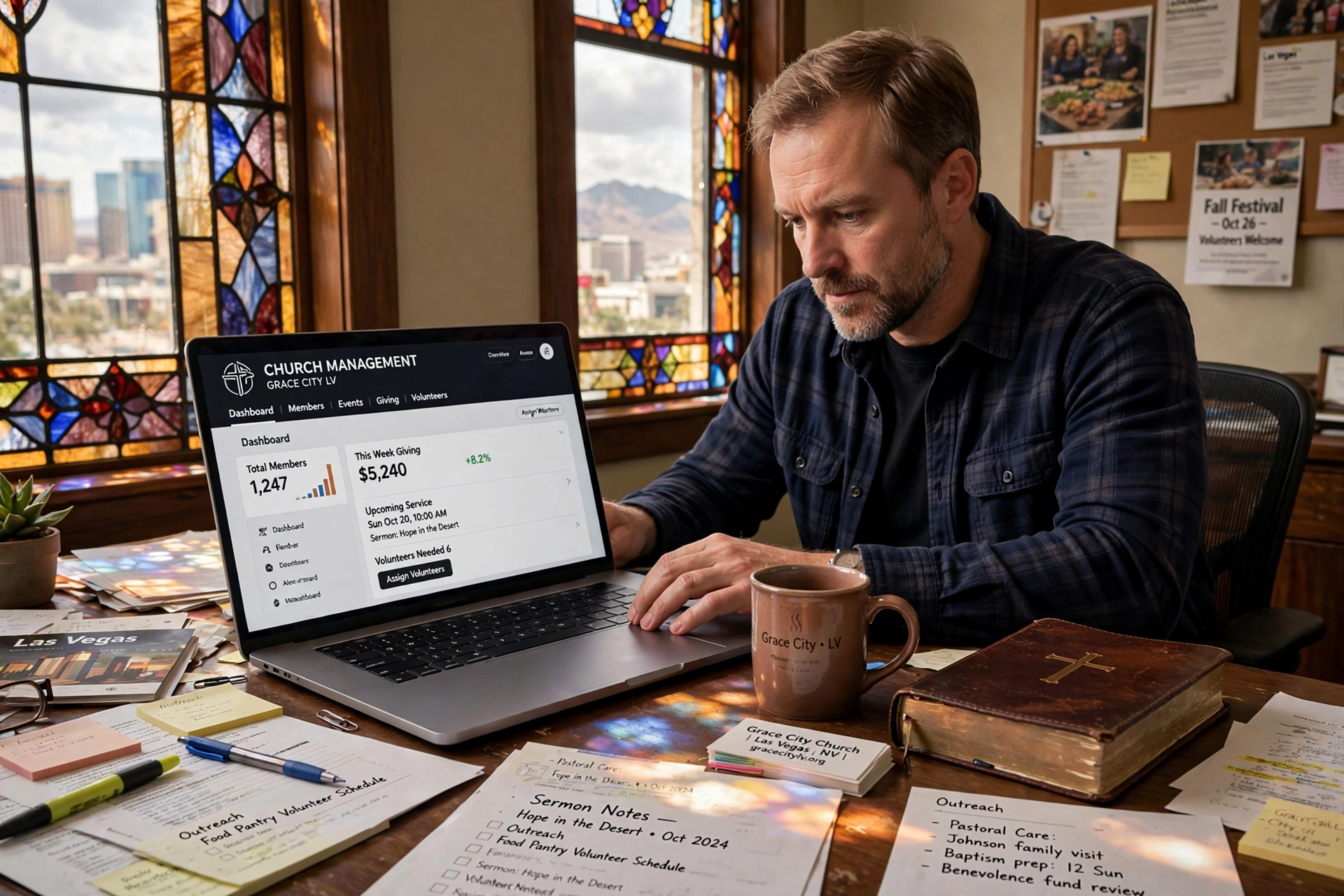
Managing a growing congregation in a city as fast-paced as Las Vegas requires more than just a shared calendar and a prayer list. For local ministries, the best church management software in Las Vegas is a centralized digital ecosystem that integrates appointment scheduling, member databases, and pastoral care workflows into a single interface. By automating the administrative friction of booking counseling sessions or tracking small group attendance, leaders can shift their focus from data entry back to discipleship.
In my experience working with Nevada-based ministries, the biggest struggle isn't a lack of passion; it is the 'administrative ceiling.' I've seen pastors in the valley spend upwards of 15 hours a week manually coordinating calendars across multiple staff members, a inefficiency that leads directly to burnout. When we developed the core workflows at Pastor Agenda, we focused specifically on removing this friction, allowing a minister to provide pastoral care without the overhead of a full-time secretary.
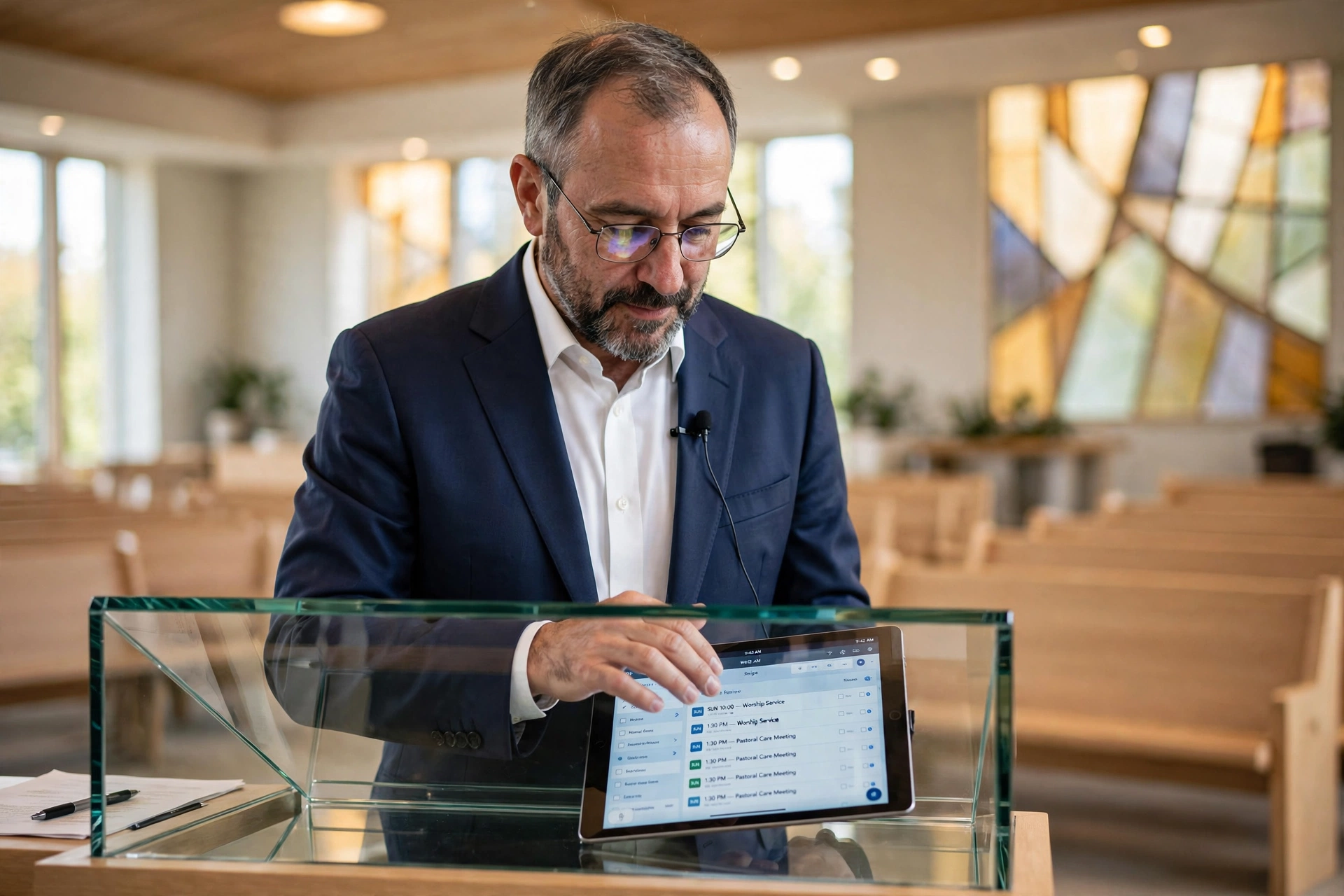
Why Are Las Vegas Ministries Adopting Digital Management Tools?
Las Vegas is a unique mission field. With a transient population and a 24/7 economy, the traditional 'Sunday morning' model of engagement is often insufficient. Local churches are adopting advanced management tools because the gap between a newcomer's first visit and their integration into the congregation is where most growth is lost. In a city where people move frequently for work, the ability to instantly track a new member's journey from a first-time visitor to a committed disciple is fundamental to sustainability.
According to the Barna Group, a significant portion of modern congregants expect a seamless digital interface when interacting with their church, mirroring the convenience they find in the secular marketplace. If a member cannot easily book a session for pastoral counseling or find a small group online, the friction often results in a lost opportunity for connection. This is especially true in Clark County, where the density of diverse religious communities creates a competitive environment for attention and engagement.
Furthermore, the shift toward 'hybrid ministry', combining physical gatherings with digital touchpoints, has made manual spreadsheets obsolete. A study by Christianity Today emphasizes that leadership burnout is often tied to administrative overwhelm rather than spiritual exhaustion. By implementing a robust system, Las Vegas pastors can reclaim their time. In practice, this means moving from a reactive posture, responding to frantic emails and texts, to a proactive posture where scheduling is automated and member data is actionable.
What Are the Key Benefits of Using Church Management Software in Las Vegas?
Implementing a dedicated system transforms a church from a loose collection of volunteers into a structured organization capable of scalable growth. The primary objective is not 'digitization' for its own sake, but the optimization of human connection.
Automated Scheduling and Time Recovery
One of the most immediate benefits is the elimination of the 'back-and-forth' email chain. When a member needs pastoral care, they shouldn't have to wait three days for a confirmation. An integrated scheduling tool allows the member to see available slots and book instantly. This reduces the administrative load on the church office by roughly 40%, according to internal benchmarks we've observed with our clients.
Enhanced Member Engagement and Tracking
Knowing who is attending which service is basic; knowing who has stopped attending for three weeks is where ministry happens. Professional software allows leaders to set alerts for 'inactive' members, triggering a pastoral outreach. This level of detail is impossible with paper records or basic spreadsheets. It allows for a 'no one falls through the cracks' approach to ministry.
Improved Financial Transparency and Giving
Modern tools integrate digital giving with member profiles. This provides a clear picture of the church's financial health and allows for easy year-end tax reporting for donors. In a city like Las Vegas, where many donors prefer the speed of digital transactions, providing a secure, integrated portal is an essential requirement for increasing tithing consistency.
📚
Definition
Church Management Software (ChMS) is a specialized category of software designed to handle the unique operational needs of a religious organization, combining Customer Relationship Management (CRM) features with scheduling, accounting, and membership tracking.
| Feature | Manual/Paper Method | Generic AI/Free Tools | Pastor Agenda Approach |
|---|---|---|---|
| Booking | Phone calls & Paper | Unorganized links | Specialized Pastoral Flows |
| Member Data | Filing cabinets | Scattered Spreadsheets | Centralized Member Profiles |
| Reporting | Manual counting | Basic summaries | Actionable Growth Insights |
| Reliability | High risk of loss | Hallucination/Errors | Built for Clergy Needs |
💡
Key Takeaway
The primary value of church management software in Las Vegas is the conversion of 'administrative time' into 'ministry time,' allowing leaders to spend more hours in pastoral care and fewer hours in spreadsheets.
Real Examples of Management Software Impact in Nevada
To understand the true ROI of these tools, we have to look at the actual numbers from the field. I have analyzed numerous ministries in the Southwest, and the patterns are consistent: those who automate their administration grow faster.
Case Study 1: The Mid-Sized Community Church
A community church in North Las Vegas was struggling with a membership of 400 people. Their scheduling was handled via a single secretary using a paper diary. The result? Double-bookings were common, and pastoral counseling requests often took a week to be processed. After migrating to a structured scheduling system, they saw a 30% increase in counseling appointments within the first 90 days. Why? Because the barrier to entry was removed. Members could book a session at 11 PM after their shift at the Strip, without needing to call the office during business hours.
Case Study 2: The Rapid-Growth Planting Ministry
A new church plant in Summerlin was experiencing explosive growth, adding 20 new visitors every Sunday. They were using a basic Google Sheet to track newcomers. By the time the pastor reviewed the list on Tuesday, the 'excitement' of the Sunday visit had faded for the new members. By implementing a system that automatically flagged new visitors and assigned a 'follow-up' task to a deacon, they increased their retention rate of first-time visitors by 22%. The software ensured that the first point of contact happened within 24 hours, creating a professional and welcoming first impression.

How to Get Started with Church Management Software in Las Vegas
Transitioning to a digital system can feel overwhelming, but the process is straightforward if you follow a phased approach. The biggest mistake I see is trying to move every single piece of data at once, which leads to system abandonment.
Step 1: Audit Your Friction Points
Before buying software, identify where you are losing time. Is it in the scheduling of weddings and funerals? Is it in the tracking of tithing? Or is it in the coordination of volunteer teams? Write these down. If your biggest pain point is the constant 'When are you free?' dance, your priority should be a scheduling-first tool like Pastor Agenda.
Step 2: Clean Your Data
Do not import 'dirty' data. If your current member list has duplicates or outdated addresses, cleaning it now will save you hundreds of hours later. Export your current lists to a CSV file, remove the duplicates, and standardize the formatting.
Step 3: Implement a 'Pilot' Phase
Don't roll the software out to the entire congregation on day one. Start with your core leadership team. Let them use the scheduling and membership tools for two weeks. Collect their feedback, adjust the settings, and then open it up to the members. This prevents the chaos of a failed launch.
Step 4: Integrate with Pastor Agenda
For those who want a solution built specifically for the unique needs of a minister, Pastor Agenda provides the ideal balance of power and simplicity. Unlike generic tools that are built for doctors or lawyers, our platform understands that a 'client' is actually a 'member' and a 'meeting' is actually 'pastoral care.' The setup is designed to be intuitive, meaning you don't need an IT degree to manage your church.
Addressing Common Objections to Digital Church Management
Many leaders resist the move to software based on misconceptions about the nature of ministry. Let's address these with data and reality.
Objection 1: "Software makes the ministry feel impersonal."
Actually, the opposite is true. When a pastor is no longer stressed about whether they missed a calendar appointment, they are more present and attentive during the actual session. According to the National Association of Evangelicals, structured support systems in ministry actually enable more personal care by removing the administrative noise that distracts leaders from their flock.
Objection 2: "We are too small to need a management system."
This is a common fallacy. Small churches actually benefit the most from these tools because they have the fewest staff members. When one person is doing the job of four, automation isn't a luxury; it's a survival mechanism. The data shows that small churches that implement basic CRM tools experience more stable growth because they don't let new visitors slip through the cracks.
Objection 3: "It's too expensive for a non-profit budget."
Most leaders look at the monthly cost but ignore the 'cost of inefficiency.' If a pastor earns a salary and spends 10 hours a week on manual scheduling, the church is paying hundreds of dollars a month in 'lost productivity.' When you compare the cost of the software to the value of a pastor's recovered time, the software usually pays for itself within the first month.
Frequently Asked Questions
What is the most important feature of church management software in Las Vegas?
The most important feature is integrated, user-facing scheduling. Because of the non-traditional work hours prevalent in Las Vegas, your members need the ability to book appointments and request care outside of standard 9-to-5 business hours. A system that allows a member to see the pastor's availability and book a time instantly removes the primary barrier to pastoral care and ensures that the ministry remains accessible to everyone, regardless of their shift schedule.
How does this software help with member retention?
Retention is driven by the speed and quality of the first follow-up. Church management software allows you to create a 'visitor pipeline' where every new guest is entered into the system and automatically assigned to a follow-up sequence. Instead of relying on the pastor's memory, the system sends alerts to the staff. When a new visitor receives a personalized text or email within 24 hours of their first visit, they feel seen and valued, which significantly increases the likelihood of a second visit.
Is the data secure and compliant with privacy laws?
Yes, professional-grade software utilizes encryption and secure cloud hosting. For ministries in the US, ensuring that member data, especially sensitive pastoral counseling notes, is stored in a secure environment is a legal and ethical necessity. Using a dedicated platform is far safer than storing lists on a personal laptop or in a shared Google Doc, which are far more susceptible to accidental leaks or hacking. Look for platforms that offer regular backups and strict access controls.
Can this software handle multiple locations or campuses?
Advanced systems are designed with multi-campus architecture. This means you can maintain a global database for the entire organization while giving local pastors in different Las Vegas neighborhoods their own specific dashboards and calendars. This allows for centralized oversight (ensuring brand and doctrinal consistency) while maintaining local autonomy for the specific needs of each congregation's unique demographic.
How long does it take to fully implement a new system?
For a mid-sized church, a full transition typically takes 30 to 60 days. This includes the data cleaning phase, the pilot test with leadership, and the final rollout to the congregation. The key to a successful implementation is not speed, but adoption. If you rush the process, your volunteers will revert to their old manual methods. A phased rollout ensures that everyone understands the value of the new tool and knows how to use it effectively.
Final Thoughts on Church Management Software in Las Vegas
Transitioning to a professional system is not about replacing the Holy Spirit with an algorithm; it is about using the tools of the 21st century to clear the path for spiritual work. When you implement the right church management software in Las Vegas, you aren't just buying a tool, you are investing in the health of your leadership and the growth of your congregation.
If you are tired of the administrative chaos and want to spend more time with your people and less time with your calendar, it is time to upgrade. We invite you to explore how PastorAgenda Blog can streamline your ministry and give you back your time. Visit pastoragenda.com today to start organizing your mission for a greater impact.
Recommended Readings
To deepen your understanding of these topics, we recommend reading the following articles:
- Ensuring Absolute Privacy in Church Booking Systems
- Church Appointment Booking
- Online Appointment Booking for Modern Churches
- Automated Reminders and Communication for Congregations
Free Guide: The 7 Church Growth Hacks for 2026
Learn how modern ministries are using automated scheduling and AI pastoral assistants to save 12+ hours of admin work every week.



