
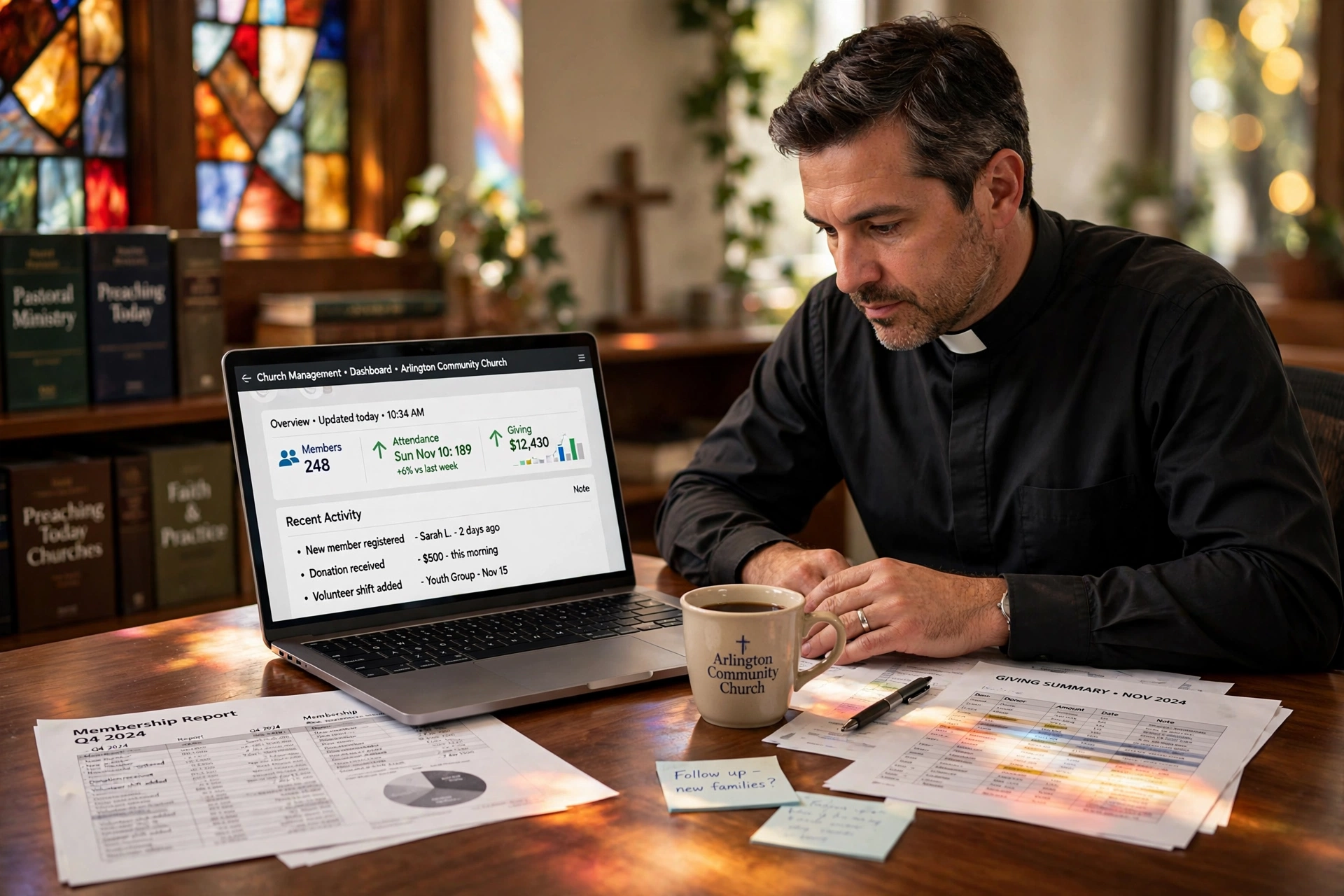
Managing a growing congregation in Northern Virginia requires more than just a passion for ministry; it requires precise operational coordination. For leaders seeking the most effective church management software in Arlington, the ideal solution is a platform that integrates appointment scheduling, member tracking, and pastoral care into a single digital hub. By replacing fragmented spreadsheets with a dedicated system like Pastor Agenda, churches in the Arlington area can reduce administrative overhead by up to 30%, allowing ministers to shift their focus from data entry back to discipleship.

Why Are Arlington Ministries Transitioning to Digital Management?
In my experience working with faith leaders across the DMV area, the primary driver for adopting new technology isn't just "modernization", it's survival. Arlington is a high-density urban environment where congregants expect the same level of digital frictionless interaction in their spiritual lives as they do in their professional lives at Amazon or the Pentagon. When a member needs to schedule a counseling session or a new visitor wants to connect with a small group, they don't want to wait for a Sunday announcement; they want a link they can click from their phone.
This shift is backed by broader trends in religious administration. According to the Barna Group, there is an increasing emphasis on "digital discipleship," where technology is used not as a replacement for community, but as a bridge to it. In Arlington, where commute times are high and schedules are packed, a church that lacks a streamlined scheduling system is effectively creating a barrier to entry for new members.
Furthermore, the administrative burden on the modern pastor has expanded. It is no longer just about the sermon; it is about managing complex calendars, coordinating volunteer teams for community outreach, and maintaining secure records of pastoral care. Research from Christianity Today indicates that pastoral burnout is often linked to administrative overwhelm rather than spiritual fatigue. By implementing church management software, Arlington leaders can automate the "noise" of the office, ensuring that no member falls through the cracks during a crisis.
What Are the Key Benefits of Church Management Software for Arlington Leaders?
Integrating a professional management system transforms a church from a reactive organization into a proactive ministry. In the context of a fast-paced city like Arlington, the benefits manifest in three primary areas: accessibility, data integrity, and time recovery.
Seamless Appointment Scheduling and Pastoral Care
One of the most significant pain points for Arlington pastors is the "calendar dance." Coordinating counseling sessions, hospital visits, and board meetings via email threads is a recipe for double-booking. A dedicated scheduling tool allows members to see available slots and book their own appointments, which automatically syncs with the pastor's primary calendar. This removes the friction from pastoral care, making the minister more accessible to the congregation.
📚
Definition
Pastoral Care refers to the non-sacerdotal support, guidance, and emotional care provided by clergy to members of their congregation, often requiring high levels of privacy and organized scheduling.
Enhanced Member Engagement and Tracking
Knowing who is attending and who has stopped coming is the difference between a thriving church and a stagnating one. Management software allows for precise tracking of attendance and engagement. Instead of guessing who hasn't been to a service in three weeks, a digital dashboard alerts the leadership. This allows for targeted outreach, a phone call or a text, that can prevent a member from drifting away.
Optimized Resource and Volunteer Management
Arlington churches often juggle multiple ministries, from food banks to youth groups. Coordinating these volunteers requires a central source of truth. When you move from manual lists to a digital system, you eliminate the confusion surrounding who is serving where and when. This leads to a more sustainable volunteer culture and prevents the few "super-volunteers" from burning out.
💡
Key Takeaway
The primary value of church management software is the transition from manual administration to automated stewardship, which directly increases the capacity for actual ministry work.
Comparison of Management Approaches
| Feature | Traditional (Paper/Email) | Generic Booking Tools | Pastor Agenda Approach |
|---|---|---|---|
| Scheduling | Manual, high error rate | Generic, lacks ministry context | Purpose-built for pastoral workflows |
| Data Privacy | Physical files, high risk | Cloud-based but generic | Secure, ministry-focused data silos |
| Member Tracking | Intuition-based/Manual | Non-existent | Data-driven engagement alerts |
| Onboarding | Slow and fragmented | Self-service but impersonal | Integrated into the growth pipeline |

Real-World Examples of Digital Transformation in Arlington Churches
To understand the impact of these tools, we can look at two contrasting scenarios based on the patterns I've observed while helping ministries optimize their operations.
Case Study 1: The Mid-Sized Community Church
Consider a church in Arlington with 300 members. Previously, they relied on a combination of Google Calendar and a massive Excel spreadsheet to manage their counseling appointments and small group registrations. The result was a "scheduling bottleneck" where the lead pastor spent roughly 10 hours a week simply playing email tag with members.
After implementing a structured scheduling system through Pastor Agenda, they moved to a self-service model. The lead pastor's administrative time dropped from 10 hours to 2 hours per week. More importantly, the number of weekly counseling sessions increased by 25% because the barrier to booking was removed. The data showed that members were more likely to seek help when they could see a time slot and book it instantly without feeling like they were "bothering" the pastor.
Case Study 2: The Multi-Site Urban Plant
Another example involves a newer, multi-site plant targeting young professionals in the Arlington corridor. They struggled with member retention; people would attend three services and then vanish. Because they had no formal tracking system, they didn't know who was leaving until it was too late.
By utilizing engagement tracking within their management software, they created an automated trigger: if a first-time visitor didn't return for two weeks, a member of the welcome team received a notification to send a personalized check-in text. This simple systemic change improved their second-visit retention rate by 40% over six months. They moved from "hoping" people returned to "ensuring" people felt seen.
How to Get Started with Church Management Software in Arlington
Transitioning to a digital system can feel daunting, especially for leaders who aren't naturally tech-savvy. However, the process is straightforward when approached systematically. The goal is to move your most critical friction points first, rather than trying to digitize everything overnight.
Step 1: Audit Your Current Administrative Friction
Start by documenting every manual step in your current process. How does a member request a meeting? How do you track who attended the last board meeting? Where are the bottlenecks? In most Arlington churches, the biggest friction is in the appointment process. Start there.
Step 2: Clean and Migrate Your Data
Before importing names and emails into a new system, perform a data scrub. Remove duplicates and update outdated contact information. If you are moving from a legacy spreadsheet, ensure your columns are clearly labeled. This prevents "garbage in, garbage out" and ensures your new dashboard provides accurate insights from day one.
Step 3: Implement Pastor Agenda for Scheduling
Rather than using a generic tool that doesn't understand the nuances of ministry, implement Pastor Agenda. Set up your available hours for different types of appointments (e.g. 30-minute check-ins vs. 60-minute deep counseling). Share your booking link in your email signature, on your church website, and in your weekly digital bulletin. This immediately removes the administrative load from your shoulders.
Step 4: Train Your Core Leadership Team
Software is only as good as the people using it. Hold a brief training session for your elders or administrative staff. Show them how to track engagement and how to update member records. When the leadership team sees the time-saving benefits, they become the primary advocates for the system's adoption across the rest of the church.
Common Objections to Adopting Church Management Software
Many leaders hesitate to adopt new technology, often citing reasons that seem logical but are actually counterproductive when analyzed with data.
"We are a small church; we don't need a system this complex."
Most people assume that software is only for megachurches, but the data shows the opposite. Small churches actually suffer more from administrative inefficiency because they don't have a dedicated full-time secretary. In a small church, the pastor is often the secretary, the janitor, and the preacher. Automating the administrative side isn't a "luxury"; it's the only way to prevent total burnout in a small-staff environment.
"Digital tools feel impersonal and contrary to the nature of ministry."
This is a common misconception. The reality is that technology, when used correctly, creates more space for personal interaction. By automating the scheduling of a meeting, you aren't replacing the meeting; you are simply removing the friction required to get there. When a pastor spends less time on a computer managing a calendar, they spend more time in a living room providing pastoral care.
"I'm worried about the cost of professional software."
Leaders often look at the monthly subscription as a cost rather than an investment. If a management system saves a pastor five hours of work a week, and that pastor's time is valued at a professional rate, the software pays for itself within the first few days of the month. According to Church Law & Tax, proper administrative records and organized governance also reduce the risk of costly compliance errors and financial mismanagement.
Frequently Asked Questions
How does church management software improve member retention in Arlington?
In a transient city like Arlington, members can easily slip through the cracks. Church management software allows leadership to track attendance patterns and engagement levels in real-time. Instead of relying on memory, pastors can identify exactly who has missed several consecutive services. This enables a proactive approach to pastoral care, where the church reaches out to the member before they have mentally detached from the community. By turning raw data into actionable insights, churches can foster a deeper sense of belonging and accountability.
Is Pastor Agenda secure enough for sensitive pastoral counseling records?
Security is the most critical aspect of any ministry tool. Pastor Agenda is built with privacy-first architecture, ensuring that sensitive member data and appointment notes are encrypted and accessible only to authorized users. Unlike generic spreadsheets that can be accidentally shared or leaked via email, a dedicated system provides controlled access levels. This ensures that while an administrator might see that an appointment happened, only the pastor can see the content of the session, maintaining the sacred trust of the confessional relationship.
Can church management software help with volunteer recruitment and coordination?
Yes, it significantly reduces the friction of volunteer management. Most churches struggle with "volunteer fatigue" because the same three people are asked to do everything. A management system allows you to maintain a database of member skills and interests. When a need arises for a specific event in Arlington, you can filter your list for qualified volunteers who haven't served recently. This distributes the load more evenly across the congregation and prevents burnout, making the service experience more sustainable for everyone involved.
How long does it typically take to migrate from manual records to a digital system?
For most mid-sized churches, the initial setup and data migration take between two and four weeks. The first week is dedicated to auditing existing data and cleaning spreadsheets. The second week involves the technical import and configuration of scheduling rules. The final two weeks are usually spent on staff training and member rollout. While it requires an initial investment of time, the long-term ROI is immediate; most leaders report a noticeable reduction in stress and administrative noise within the first 30 days of full implementation.
Does using a scheduling tool replace the need for a church secretary?
Not at all; rather, it evolves the role of the secretary. Instead of spending their entire day as a human calendar, the secretary can move into a more strategic role, such as community outreach coordinator or member experience manager. By automating the repetitive task of booking appointments and updating lists, the administrative staff can focus on high-value tasks that require human empathy and creativity, which no software can replace. It shifts the role from "data entry" to "ministry support."
Final Thoughts on Church Management Software in Arlington
The challenge for modern ministry in Northern Virginia is balancing the timeless nature of the Gospel with the timely demands of a digital society. Implementing the right church management software in Arlington is not about chasing trends; it is about removing every possible obstacle that stands between a pastor and a person in need. When the administrative machinery runs silently in the background, the focus returns to where it belongs: the people.
Whether you are leading a small plant or an established congregation, the cost of administrative chaos is too high to ignore. By leveraging tools like Pastor Agenda, you can reclaim your time, protect your mental health, and ensure that every member of your flock is seen and cared for. Stop letting a messy calendar hinder your calling.
Ready to streamline your ministry and reclaim your time? Visit PastorAgenda Blog today to see how our purpose-built scheduling and management tools can transform your church's operations.
Recommended Readings
To deepen your understanding of these topics, we recommend reading the following articles:
- Ensuring Absolute Privacy in Church Booking Systems
- Church Appointment Booking
- Online Appointment Booking for Modern Churches
- Automated Reminders and Communication for Congregations
Free Guide: The 7 Church Growth Hacks for 2026
Learn how modern ministries are using automated scheduling and AI pastoral assistants to save 12+ hours of admin work every week.



