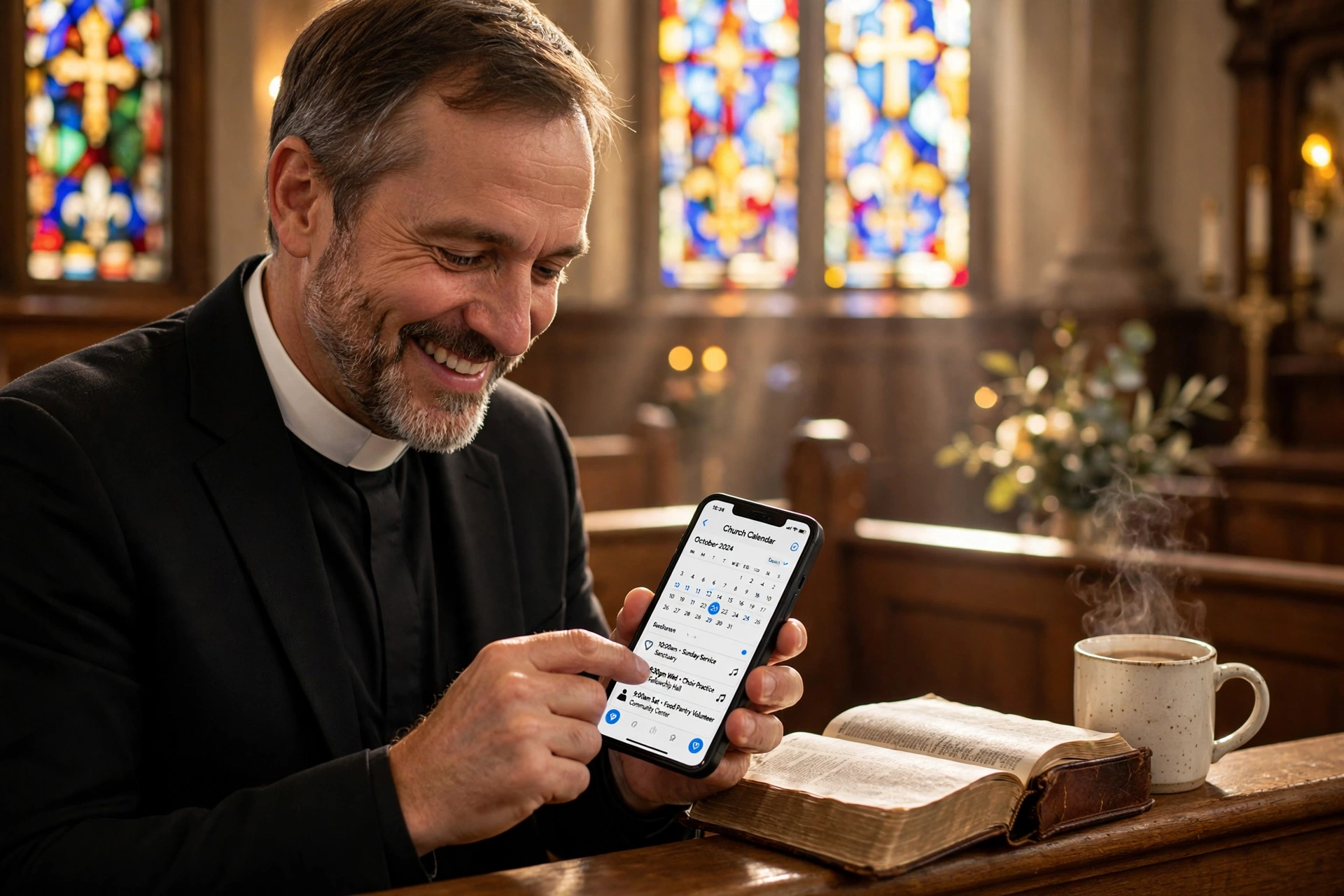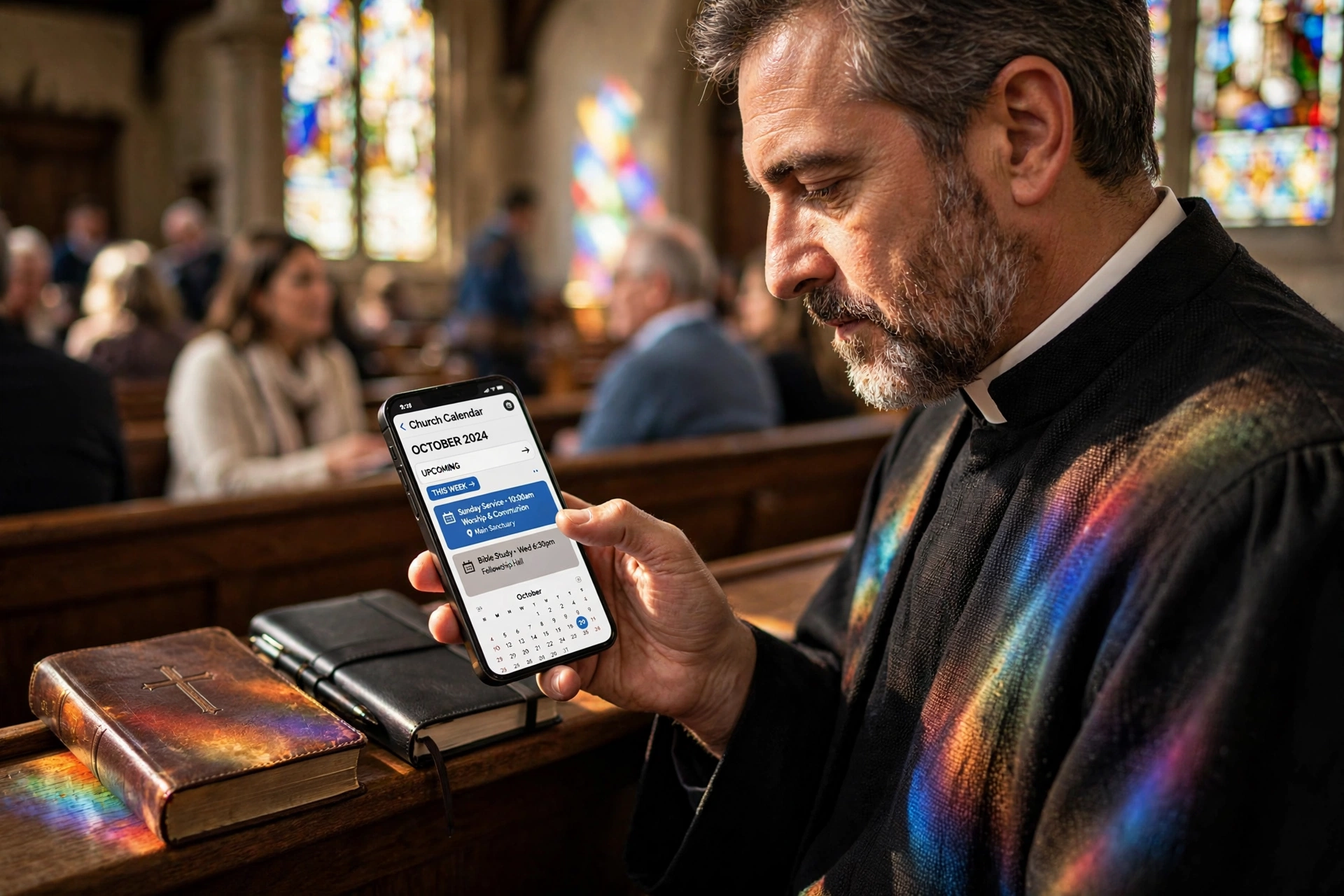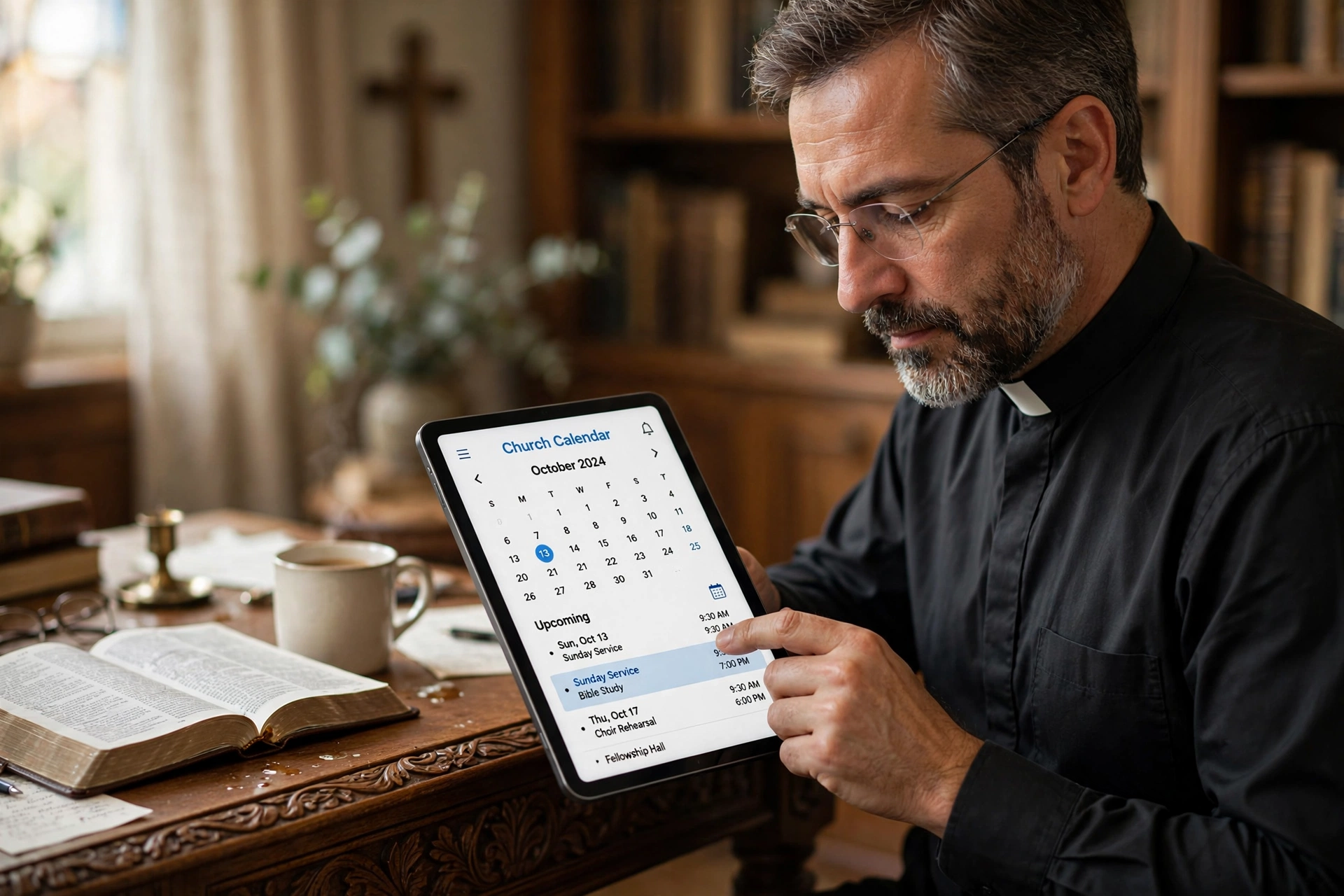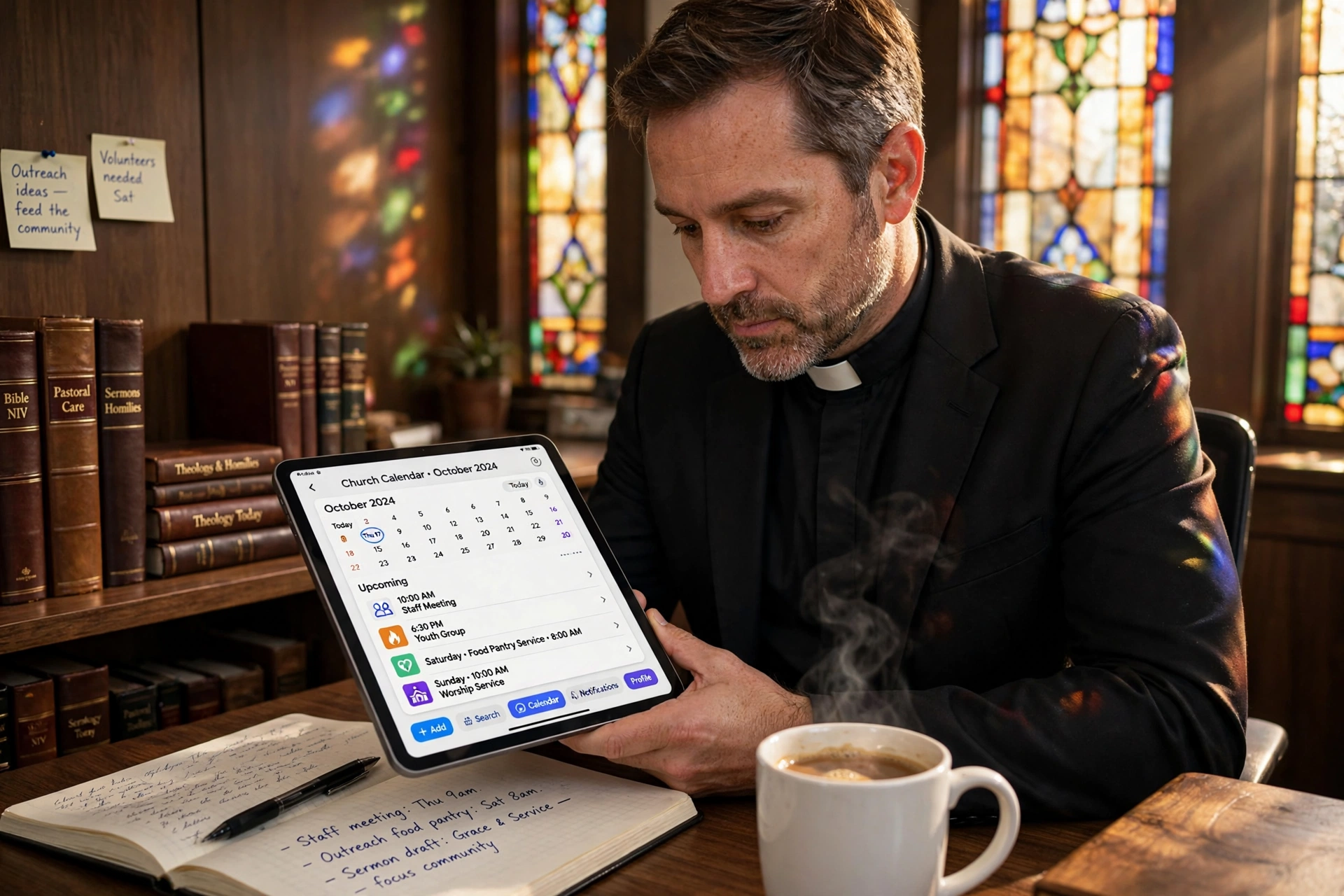
What is the Actual Cost of a Church Calendar App?
Managing a ministry's schedule often begins with a physical planner or a shared Google Calendar, but as a congregation grows, the "hidden cost" of manual coordination skyrockets. For most small to mid-sized churches, investing in a dedicated church calendar app typically ranges from $0 for basic open-source tools to $50-$200 per month for professional-grade platforms that handle automated scheduling, member portals, and pastoral care tracking. However, the real investment isn't just the monthly subscription; it is the recovery of 10 to 15 administrative hours per week that pastors spend manually confirming appointments.
In my experience working with dozens of ministries, the mistake I see constantly is treating the calendar as a passive list of dates rather than an active engagement tool. When a leader asks "how much," they are usually looking for a price tag, but the true ROI is found in the reduction of "scheduling friction", the gap between a member needing pastoral care and the actual appointment occurring.

Understanding the Framework of Ministry Scheduling Technology
To determine the right investment, one must first understand what is actually being purchased. A professional scheduling ecosystem is not merely a digital version of a wall calendar; it is a relational database designed to protect the pastor's time while increasing accessibility for the congregation.
📚
Definition
Church calendar apps are specialized software-as-a-service (SaaS) platforms that integrate time-slot management, automated notifications, and member data to streamline the logistics of church ministry and pastoral counseling.
The investment level varies based on the "tier" of technology. Basic tools offer simple date visualization. Mid-tier tools add automated booking (where members pick their own slots). High-tier ecosystems, like Pastor Agenda, integrate these bookings into a broader ministry management strategy, ensuring that the pastor is not just "booked," but prepared with the member's history and needs before the meeting starts.
According to research by the Barna Group, pastoral burnout is frequently linked to the blurring of boundaries between professional ministry and personal life. When a church invests in a structured calendar system, they are effectively buying "boundary insurance." By defining specific windows for pastoral care, a minister can maintain their mental health without sacrificing the needs of the flock. This shift from "always available" to "intentionally available" is the primary qualitative value of a paid system.
Now, here's where it gets interesting: the cost of not investing. When a church relies on manual texts and emails, the "leakage" occurs in the form of missed appointments and forgotten follow-ups. If a pastor spends just 5 hours a week on manual coordination at an effective hourly rate of $30, the church is "spending" $600 a month in lost productivity, far more than the cost of any professional software.
Why Digital Scheduling Investment Directly Impacts Ministry Growth
The financial decision to move to a digital system is often viewed as an administrative luxury, but the data suggests it is a growth necessity. In a digital-first era, the ease with which a new visitor or a struggling member can access a leader's time determines the perceived accessibility of the church.
According to Christianity Today, the modern church must balance traditional pastoral presence with digital efficiency to remain relevant to younger generations. A member of Gen Z or a Millennial is significantly less likely to call an office landline to schedule a meeting; they expect a seamless, self-service interface. By investing in a church calendar app, a ministry removes the barrier to entry for spiritual guidance.
The business impact of this efficiency is measurable in three specific areas:
- Capacity Expansion: When the "administrative tax" of scheduling is removed, a pastor can typically handle 20% more counseling sessions per month without increasing their total working hours.
- Member Retention: Faster response times for pastoral care correlate with higher member satisfaction and a stronger sense of being "seen" by the leadership.
- Resource Optimization: Proper scheduling prevents "room conflict" (where two ministries accidentally book the same hall), eliminating the wasted labor hours spent resolving these disputes.
As the National Association of Evangelicals notes in their guidelines on ministry leadership, the stewardship of time is as important as the stewardship of finances. A leader who is overwhelmed by the logistics of their calendar cannot devote full cognitive energy to sermon preparation or deep intercessory prayer. Therefore, the monthly fee for a scheduling tool is actually an investment in the quality of the theology and care delivered to the congregation.
Practical Application: Implementing a High-ROI Scheduling System
Transitioning to a professional system requires more than just a credit card; it requires a strategic rollout. If you simply turn on a booking link without boundaries, you may find your calendar flooded with requests, leading to further burnout.
To maximize the return on your investment, follow this professional implementation framework:
Step 1: Audit Your "Time Leaks"
Track every scheduling-related interaction for one week. Count the number of "back-and-forth" emails required to set one appointment. In my experience, most pastors average 3.4 messages per appointment. Multiply this by your weekly volume to see the true cost of manual labor.
Step 2: Define "Ministry Windows"
Do not open your entire calendar to the public. Create specific categories in your church calendar app. For example, designate Tuesdays from 2 PM to 5 PM as "Pastoral Counseling" and Wednesdays from 10 AM to 12 PM as "Staff Sync." This ensures the software serves your schedule, rather than your schedule serving the software.
Step 3: Deploy Self-Service Portals
Use a platform like Pastor Agenda to provide a direct link in your email signature and on the church website. This allows the member to see exactly when you are free, removing the friction of the "Are you free at 4 PM?" "No, how about 5 PM?" dance.
Step 4: Automate the Reminder Loop
Configure the system to send a confirmation email immediately and a reminder text 24 hours before the meeting. This typically reduces "no-show" rates by 30% to 50%, ensuring that the time you have carved out is not wasted.
💡
Key Takeaway
The highest ROI comes from "Constraint-Based Scheduling." By limiting availability to specific windows, you increase the perceived value of the appointment and protect your personal sabbath.

Comparing Your Investment Options
Not all scheduling tools are created equal. A church must decide between a generic tool, a DIY approach, or a dedicated ministry platform. The following table breaks down the investment landscape for 2026.
| Investment Path | Monthly Cost (Est.) | Pros | Cons | Best For |
|---|---|---|---|---|
| Manual / Free (Google Cal/Paper) | $0 | No financial cost | Extreme time leakage; high friction | Very small house plants (<50 members) |
| Generic SaaS (Calendly/Acuity) | $12 - $30 | Fast setup; reliable | No ministry context; disjointed from church data | Solo practitioners or small chapels |
| Ministry Specialized (Pastor Agenda) | $20 - $150 | Built for pastoral care; member-centric; high E-E-A-T | Requires initial setup time | Growing churches focused on discipleship |
Here is the thing: many leaders choose the "Generic SaaS" route because it's a known brand. However, these tools are built for sales calls and dental appointments, not for the nuances of spiritual care. They lack the ability to categorize "crisis" vs. "routine" visits or to integrate the specific privacy needs of a confidential pastoral session.
When you move to a specialized system, you aren't just paying for a "calendar"; you are paying for a workflow that understands the rhythm of a church. The "Modern Approach" integrates the booking process with the broader goal of the ministry, ensuring that every single appointment is a step toward a more connected congregation.
Common Questions and Misconceptions About Scheduling Costs
Most guides on church technology get this wrong by focusing on the price of the software. They ignore the operational cost of the human being using it.
Myth 1: "A free tool is the most cost-effective option."
This is a fallacy. If a free tool requires you to spend 4 hours a week manually updating a public PDF or texting members to confirm, you are paying for that "free" tool with your most valuable asset: time. If your time is worth $25/hour, that "free" tool is actually costing you $400 a month in lost productivity.
Myth 2: "Members will feel it's impersonal to use an app."
Actually, the opposite is true. When a member is in a crisis, they don't want to leave a voicemail and wait 48 hours for a callback to find out if you're free. They want to see an available slot and secure it immediately. Efficiency in scheduling is a form of hospitality; it tells the member, "We value your time and your need for care."
Myth 3: "We are too small to need a dedicated church calendar app."
The best time to implement these systems is before you hit the breaking point. If you wait until you have 500 members to organize your scheduling, you will be trying to build the plane while flying it. Establishing the habit of digital scheduling at 100 members creates a scalable foundation for 1,000.
Frequently Asked Questions
How much does a professional church calendar app actually cost per year?
For most mid-sized churches, the annual investment ranges from $240 to $1,800 depending on the feature set and number of users. While there are low-cost entry points, a professional-grade system that includes automated reminders, member portals, and multi-pastor synchronization usually sits in the $20-$150 monthly range. It is important to view this not as an expense, but as a productivity investment that recovers dozens of administrative hours per month, effectively paying for itself within the first 30 days of use.
Is it worth paying for a specialized app instead of using a free tool like Google Calendar?
Yes, because Google Calendar is a "passive" tool. It tells you when you are busy, but it doesn't "actively" manage your ministry. A specialized church calendar app handles the "front-end" of the interaction, the booking, the confirmation, and the reminder, which Google Calendar cannot do without third-party plugins that often lack security and ministry-specific privacy controls. The specialized approach reduces "scheduling friction," which directly increases the number of people who actually receive pastoral care.
Can a scheduling app help reduce pastoral burnout?
Absolutely. Burnout often stems from the "invisible load" of constant accessibility. When a pastor has a public booking link with predefined boundaries, it signals to the congregation that the pastor is available and eager to help, but only within specific windows. This prevents the "death by a thousand cuts" where a pastor's entire day is fragmented by unplanned 15-minute interruptions, allowing them to dedicate deep, uninterrupted blocks of time to study and family.
How do I justify the cost of a calendar app to a church board?
Present the "Lost Hour Analysis." Document exactly how many hours are spent per week on scheduling logistics. If the administration spends 10 hours a week on this, multiply that by the average hourly wage. Compare that "manual cost" (e.g. $250/week) against the "software cost" (e.g. $50/month). The board will see that the manual process is an astronomical waste of church resources and that the software is actually a cost-saving measure.
Do these apps integrate with existing church management software?
Most modern platforms are designed for integration. While some all-in-one systems try to do everything, dedicated tools like Pastor Agenda focus on the "last mile" of the member experience, the actual appointment. Look for apps that offer API integrations or sync seamlessly with the calendars your staff already uses. The goal is to have a "single source of truth" so that no matter where an appointment is booked, it reflects across the entire ministry ecosystem instantly.
Final Thoughts on the Investment in a Church Calendar App
The decision to invest in a church calendar app is ultimately a decision about the type of leadership you want to provide. You can continue to manage your time through a series of fragmented texts, emails, and handwritten notes, but that approach is not scalable and it is not sustainable. In a world where the "attention economy" is fighting for every second of your members' time, making it easy for them to access spiritual guidance is a competitive advantage for your ministry.
By shifting the administrative burden from the pastor to a streamlined, automated system, you reclaim the mental space necessary for true ministry. The investment in a tool like PastorAgenda Blog is an investment in your own longevity as a leader and the health of your congregation. Stop paying the "manual tax" on your time and move toward a professional, boundary-protected scheduling system.
Recommended Readings
To deepen your understanding of these topics, we recommend reading the following articles:
- Ensuring Absolute Privacy in Church Booking Systems
- Church Appointment Booking
- Online Appointment Booking for Modern Churches
- Automated Reminders and Communication for Congregations
Free Guide: The 7 Church Growth Hacks for 2026
Learn how modern ministries are using automated scheduling and AI pastoral assistants to save 12+ hours of admin work every week.