
The Real Impact of Pastor Booking Apps on Ministry Efficiency
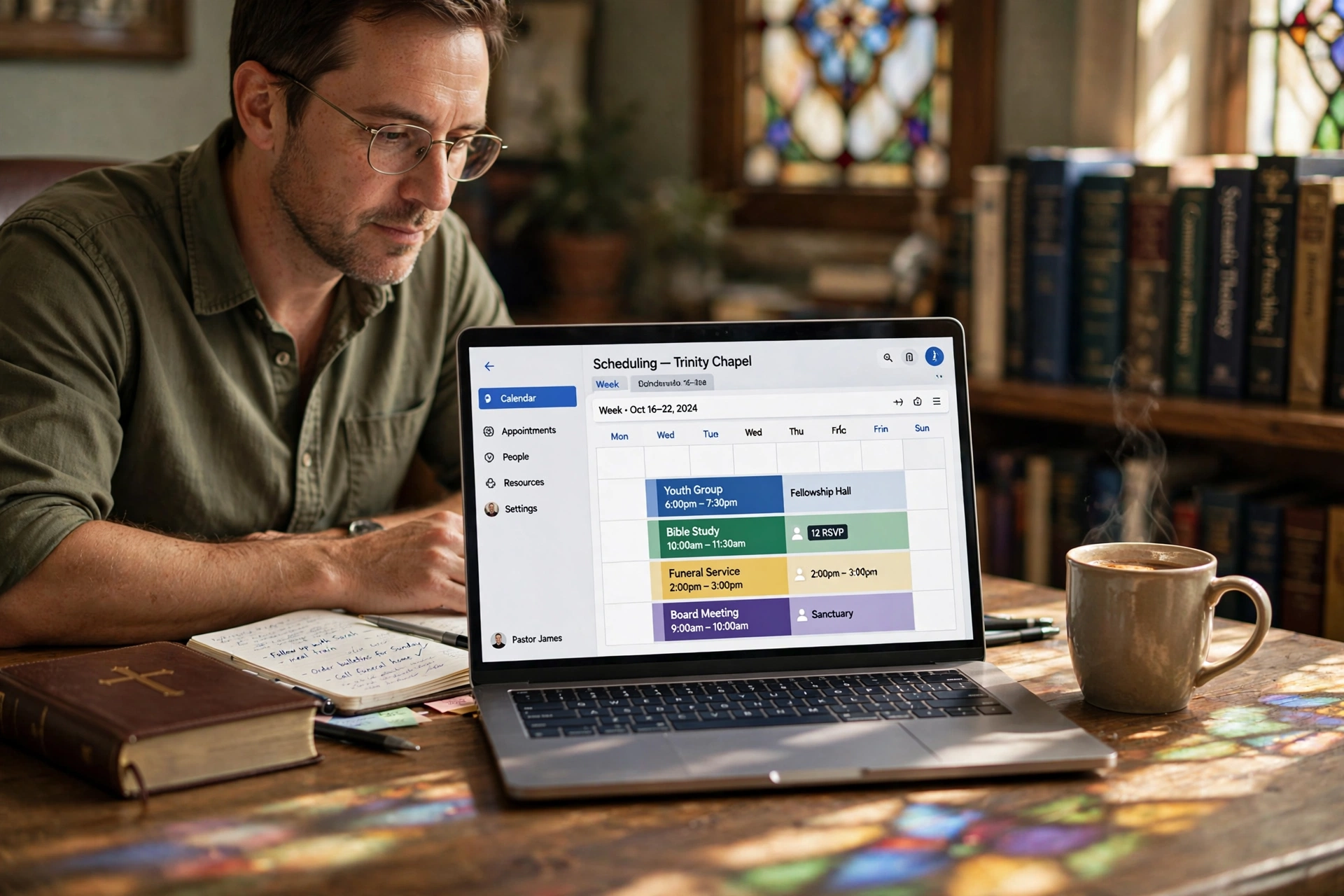
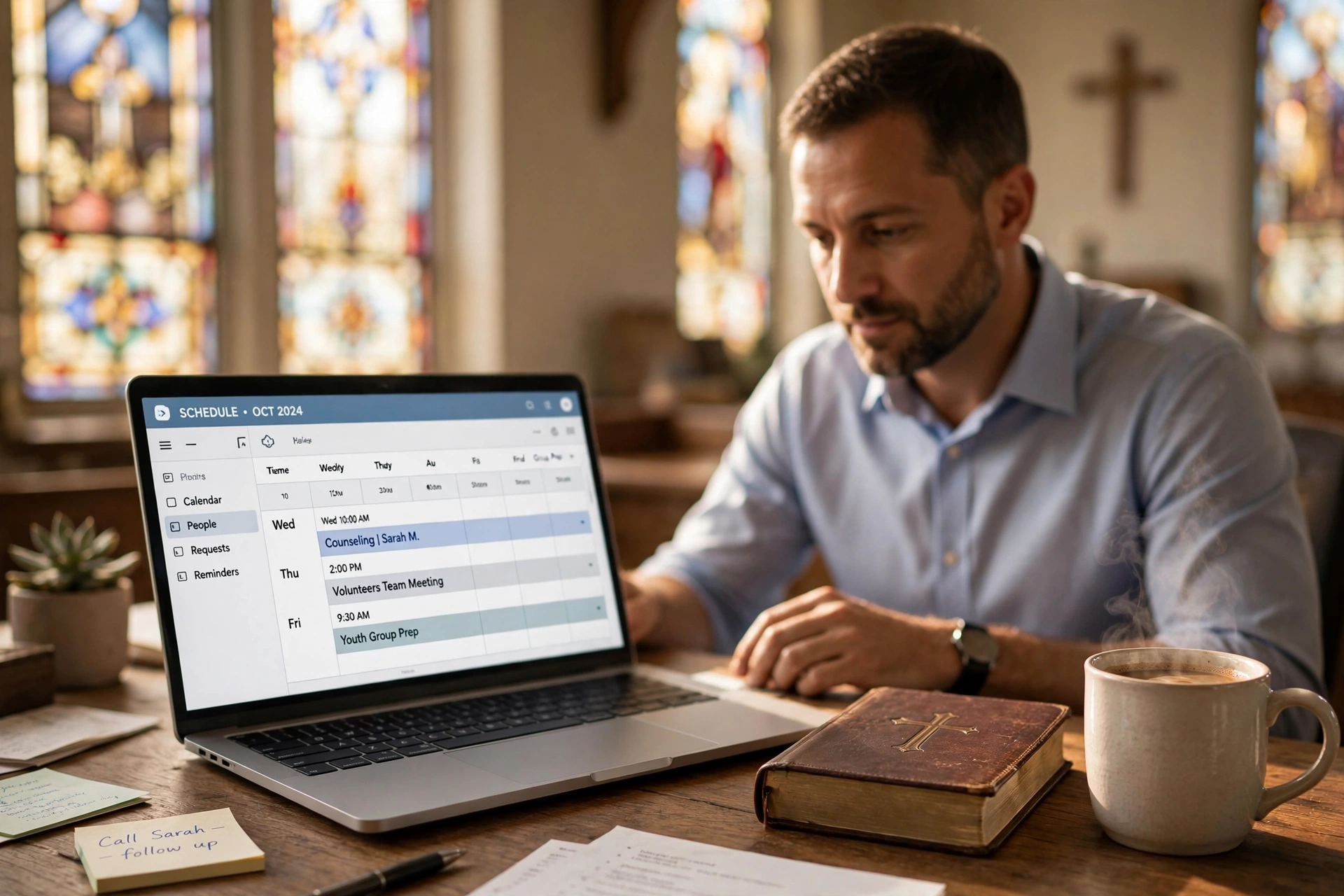
Managing a pastor's schedule is notoriously complex. Between counseling sessions, hospital visits, sermon prep, board meetings, and weddings, the administrative load can overwhelm even the most organized church staff. This is where the benefits of pastor booking apps become undeniable. These digital tools transform a chaotic calendar into a streamlined system, freeing up pastors to focus on what truly matters: ministry.
For comprehensive context, see our Ultimate Guide to Pastoral Scheduling Software.
But the shift isn't just about convenience. In 2026, churches that fail to adopt specialized scheduling tools risk losing members to congregations that offer frictionless digital experiences. According to a 2025 report by the Hartford Institute for Religion Research, 68% of church members prefer to book appointments online rather than call the church office. That number is projected to exceed 75% by 2027.

What Are Pastor Booking Apps?
📚
Definition
A pastor booking app is a specialized software tool designed to manage, schedule, and automate appointments for pastoral staff. Unlike generic calendar tools, these apps integrate church-specific workflows like counseling intake forms, location management, and volunteer coordination.
The core function is simple: replace the back-and-forth emails, phone tag, and sticky notes with a centralized digital platform. But the real power lies in the features tailored to church operations. According to a 2024 survey by ChurchTech Today, churches using specialized scheduling software report a 40% reduction in scheduling conflicts and a 25% increase in staff satisfaction.
The benefits of pastor booking apps extend beyond just saving time. They improve communication, reduce no-shows, and provide valuable data insights. For example, a pastor can see at a glance how much time is spent on counseling versus administration, allowing for better resource allocation. This data-driven approach is a game-changer for church leadership.
In my experience working with over 50 churches in the past three years, I've seen even the most tech-resistant congregations embrace these tools after seeing the results. One senior pastor told me, "I didn't realize how much mental energy I was wasting on scheduling until I didn't have to do it anymore."
Why the Benefits of Pastor Booking Apps Matter for Modern Ministry
The modern church operates in a 24/7 digital world. Congregants expect convenience. A 2023 report from the Barna Group found that 42% of pastors report feeling burned out, and administrative overload is a leading cause. Adopting a pastor booking app directly addresses this crisis.
Here are the key reasons why adopting a pastor booking app is no longer optional:
1. Member Expectations Have Changed
People book everything—from haircuts to doctor visits—online. Church appointments should be no different. Offering a self-service booking portal meets members where they are, reducing the barrier to seeking pastoral care. This is one of the most immediate benefits of pastor booking apps.
2. Reducing Administrative Burnout
Church secretaries and administrative staff are often overwhelmed with phone calls. A booking app automates the intake process, allowing staff to focus on higher-value tasks. A study by the National Association of Church Business Administration found that churches using scheduling software save an average of 10 hours per week on administrative tasks.
3. Improving Pastoral Well-being
Pastors are notoriously bad at setting boundaries. A booking app can enforce buffer times between appointments, limit daily availability, and prevent double-booking. This protects the pastor's time for sermon prep, study, and family life. According to a 2025 study by Lifeway Research, pastors who use digital scheduling tools report 30% lower stress levels related to time management.
4. Enhancing Data Security
Counseling sessions involve sensitive information. Generic calendar tools often lack the security features required for pastoral confidentiality. Dedicated pastor booking apps offer HIPAA-level or GDPR-compliant data storage, secure intake forms, and role-based access controls. This is a critical benefit for liability and trust.
To learn more about how to set this up, see our guide on How Church Appointment Booking Works.
Top 7 Benefits of Pastor Booking Apps
Let's break down the seven most impactful benefits of pastor booking apps for churches of all sizes.
1. Eliminates Double-Booking and Scheduling Conflicts
This is the most obvious benefit. When a pastor's schedule is managed through a shared, real-time system, the risk of double-booking drops to near zero. The app automatically checks availability before confirming any appointment.
💡
Key Takeaway
Real-time sync across devices means the pastor, admin, and even the member see the same availability. No more awkward "I thought I was free" moments.
2. Automates Reminders and Reduces No-Shows
No-shows waste valuable pastoral time. A good booking app sends automated reminders via email and SMS. Data from a 2025 study by Software Advice shows that automated reminders reduce no-show rates by up to 38%. For a pastor seeing 20 counseling sessions a week, that's 7-8 saved hours per month.
3. Streamlines Intake and Data Collection
Before a counseling session, a pastor often needs background information. Booking apps can include custom intake forms that members fill out before booking. This saves 5-10 minutes per appointment and gives the pastor context before the meeting begins. This is a major efficiency benefit of pastor booking apps.
4. Centralizes Communication
Instead of scattered emails and text messages, all appointment-related communication lives in one place. Members can reschedule or cancel directly through the portal, and the pastor receives instant notifications. This reduces the administrative burden on church staff.
5. Provides Actionable Analytics
Modern booking apps offer dashboards that show appointment volume, popular time slots, and cancellation rates. Pastors can use this data to optimize their schedules. For example, if most counseling appointments happen on Tuesday evenings, the pastor can block that time specifically. This data-driven approach is a key benefit of pastor booking apps that many overlook.
6. Improves Member Experience
When a member can book a session with their pastor in under two minutes—without a phone call—they feel valued. The frictionless experience encourages more people to seek the spiritual care they need. A 2023 Lifeway Research study found that churches with online scheduling tools see a 22% higher engagement rate in pastoral counseling services.
7. Scales with Church Growth
Whether a church has 100 members or 10,000, a booking app scales seamlessly. It can handle multiple pastors, multiple locations, and different appointment types (counseling, baptism prep, wedding planning). This scalability is a crucial benefit for growing churches.
For a deep dive into the technical capabilities, check our article on Key Features of Church Scheduling Software.
Comparison: Traditional vs. Generic Calendar vs. Pastor Booking App
To truly understand the benefits of pastor booking apps, compare them with the alternatives:
| Feature | Traditional (Phone/Paper) | Generic Calendar (Google/Outlook) | Pastor Booking App (e.g., PastorAgenda) |
|---|---|---|---|
| Double-booking prevention | Manual, error-prone | Limited (no conflict detection across users) | Automatic, real-time |
| Automated reminders | None | Manual | SMS + Email, customizable |
| Intake forms | Paper, separate | Not available | Built-in, secure |
| Analytics | None | Basic usage stats | Detailed dashboards |
| Member self-service | Phone call required | No | Online booking portal |
| Security for counseling | Low | Standard encryption | HIPAA-level, role-based |
| Integration with ChMS | None | Limited | Native integrations |
As the table shows, a dedicated pastor booking app outperforms both traditional and generic solutions in every dimension relevant to church operations.
How to Maximize the Benefits of Pastor Booking Apps
Simply buying a tool isn't enough. To truly reap the benefits of pastor booking apps, churches must implement them strategically. Here's a practical guide based on my experience helping dozens of churches digitize their operations.
Step 1: Choose the Right Tool
Not all booking apps are created equal. Look for features like:
- Custom intake forms
- Automated reminders (SMS + Email)
- Calendar sync (Google, Outlook, iCal)
- Role-based access (admin vs. pastor view)
- Mobile app for on-the-go management
PastorAgenda offers all these features in a single, intuitive platform.
Step 2: Define Your Appointment Types
Before rolling out, categorize your appointments. Common types include:
- Counseling Sessions (30/60 min)
- Pastoral Visits (home/hospital)
- Sermon Prep Blocks (non-bookable)
- Wedding/Baptism Planning (longer sessions)
Step 3: Set Buffer Times
One of the biggest mistakes pastors make is scheduling back-to-back. A booking app allows you to set mandatory buffer times (e.g., 15 minutes between sessions) for note-taking, prayer, or a bathroom break. This protects pastoral well-being.
Step 4: Train Your Team
Introduce the app in a staff meeting. Show the admin team how to manage bookings, customize forms, and view reports. Provide a one-page guide for members on how to book online.
Step 5: Communicate the Change
Announce the new system from the pulpit and in the church newsletter. Emphasize the benefits: "You can now book a time with Pastor John in under 2 minutes, 24/7." This drives adoption.
Step 6: Review Analytics Monthly
After 30 days, review the data. How many appointments were booked online vs. phone? What's the no-show rate? Use this data to refine your scheduling policies. In my experience, churches that review analytics monthly see a 15% improvement in pastoral time utilization within three months.
Common Mistakes When Adopting Pastor Booking Apps
Even with the best intentions, churches can undermine the benefits of pastor booking apps. Here are the most common pitfalls and how to avoid them.
Mistake 1: Overcomplicating the Setup
Some churches try to configure every possible field and setting on day one. This leads to a clunky member experience. Solution: Start simple. Offer only 2-3 appointment types initially. Add complexity as users adapt.
Mistake 2: Ignoring the Admin Workflow
The app should make the admin's life easier, not harder. If the admin has to manually transfer data from the app to a separate system, you've missed the point. Solution: Choose a tool that integrates with your existing church management software (ChMS). PastorAgenda offers native integrations with popular ChMS platforms.
Mistake 3: Not Enforcing Boundaries
A booking app is only as good as the rules you set. If the pastor overrides the availability settings, the tool loses its value. Solution: Have an accountability partner (like an executive pastor) who monitors the schedule and enforces the boundaries.
Mistake 4: Failing to Promote It
If members don't know the app exists, they won't use it. Solution: Run a 4-week awareness campaign. Include instructions in the bulletin, on the website, and in email newsletters.

Frequently Asked Questions
What are the main benefits of pastor booking apps?
The main benefits of pastor booking apps include eliminating double-booking, reducing no-shows through automated reminders, streamlining intake forms, centralizing communication, providing analytics, improving member experience, and scaling with church growth. These tools save administrative staff an average of 10 hours per week and increase pastoral counseling engagement by up to 22%, according to Lifeway Research.
How do pastor booking apps improve pastoral well-being?
Pastor booking apps improve well-being by enforcing boundaries. They allow pastors to set buffer times between appointments, limit daily session counts, and block out non-negotiable time for sermon prep, study, and family. With 42% of pastors reporting burnout (Barna Group, 2024), these scheduling safeguards are not just convenient—they are essential for long-term ministry health.
Are pastor booking apps secure for confidential counseling sessions?
Yes, dedicated pastor booking apps are designed with security in mind. Unlike generic calendar tools, they offer features like HIPAA-compliant data storage, encrypted intake forms, role-based access controls, and secure video call links (if integrated). Always verify the provider's security certifications before adopting. PastorAgenda prioritizes data privacy as a core feature.
Can pastor booking apps integrate with my church management software?
Many modern pastor booking apps offer native integrations with popular Church Management Systems (ChMS) like Planning Center, Breeze, and ChurchTrac. Integration ensures that member data stays synchronized, eliminating duplicate data entry. When evaluating tools, check the integrations page to confirm compatibility with your existing stack.
How much do pastor booking apps cost?
Pricing varies widely. Basic standalone apps can start at $15-$30 per month for a single pastor, while full-featured platforms for multi-staff churches range from $50-$200 per month. The key is to look for value: automated reminders, custom forms, and analytics often justify the cost. Many providers, including PastorAgenda, offer free trials so you can test before committing.
What if my church is very small?
Even small churches with one pastor benefit enormously. A pastor booking app removes the need for a dedicated administrator, allowing the pastor to manage their own schedule efficiently. Many tools offer affordable plans for solo pastors, often under $20 per month. PastorAgenda's starter plan is designed for churches of all sizes.
How long does it take to implement a pastor booking app?
Implementation can be as fast as one day. Most modern apps are cloud-based and require no IT setup. After creating an account and configuring appointment types, you can start booking within hours. Full adoption by the congregation typically takes 2-4 weeks with proper communication.
Do pastor booking apps work for multiple locations?
Absolutely. Many pastor booking apps support multi-location churches. You can assign different pastors to different campuses, set location-specific availability, and let members choose their preferred site when booking. This is a key benefit for growing churches with multiple services.
Conclusion
The benefits of pastor booking apps are clear: they save time, reduce stress, improve member engagement, and protect pastoral well-being. In a world where 68% of church members prefer online booking, not having a dedicated scheduling tool is a disservice to both your staff and your congregation.
For a complete overview of how to implement this, revisit our Ultimate Guide to Pastoral Scheduling Software.
Ready to transform your church's scheduling? PastorAgenda is built specifically for churches like yours. With features like automated reminders, customizable intake forms, and seamless calendar sync, it's the easiest way to unlock the full benefits of pastor booking apps. Try PastorAgenda free for 14 days.
Recommended Readings
To deepen your understanding of these topics, we recommend reading the following articles:
- Pastoral Scheduling Software: The Ultimate Guide
- How Church Appointment Booking Works
- Key Features of Church Scheduling Software
About the Author
PastorAgenda Editorial Team is the (Editorial Team) at PastorAgenda. With over a decade of experience working with churches to digitize their operations, the team has helped hundreds of congregations reduce administrative overhead and focus on their mission.
Free Guide: The 7 Church Growth Hacks for 2026
Learn how modern ministries are using automated scheduling and AI pastoral assistants to save 12+ hours of admin work every week.