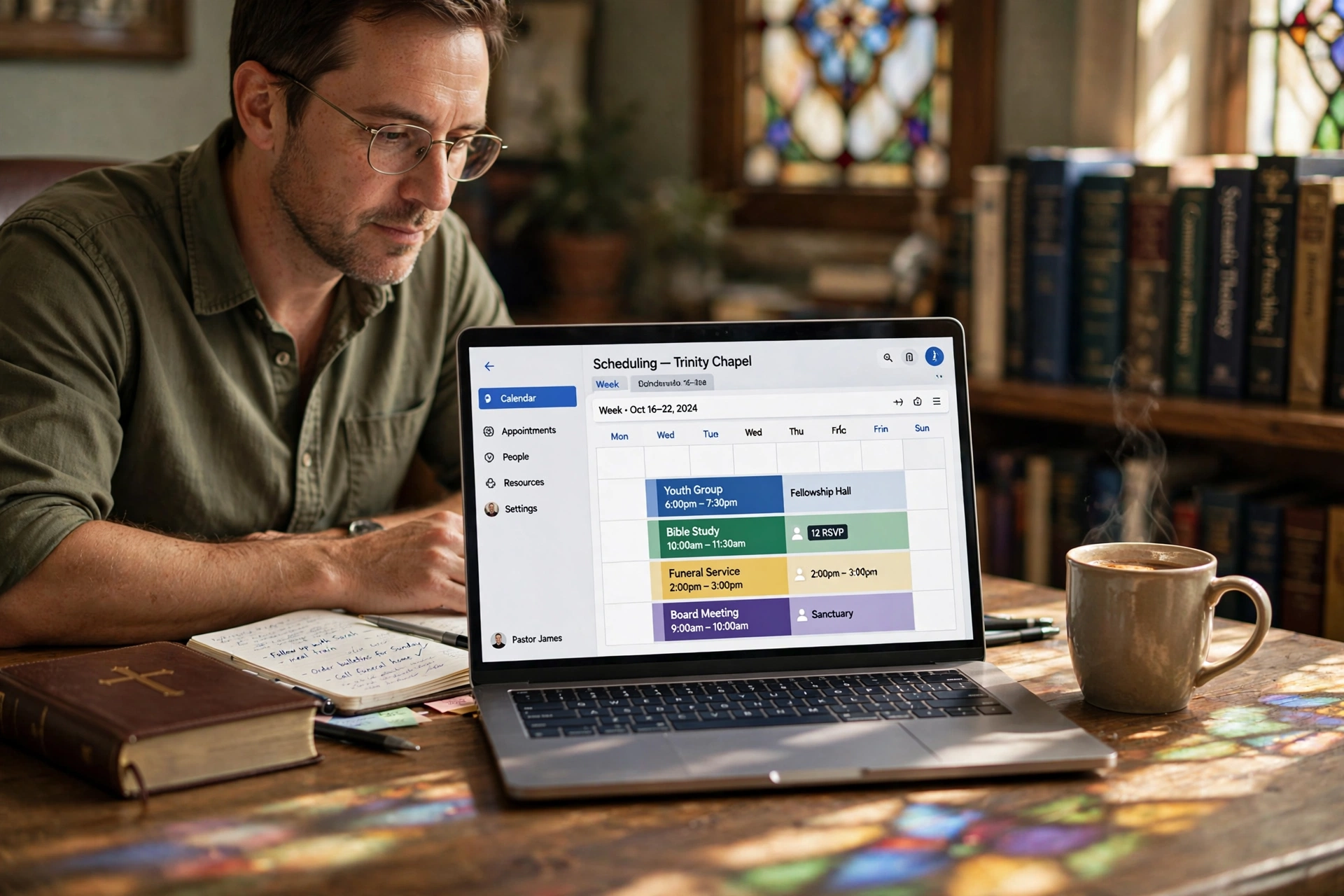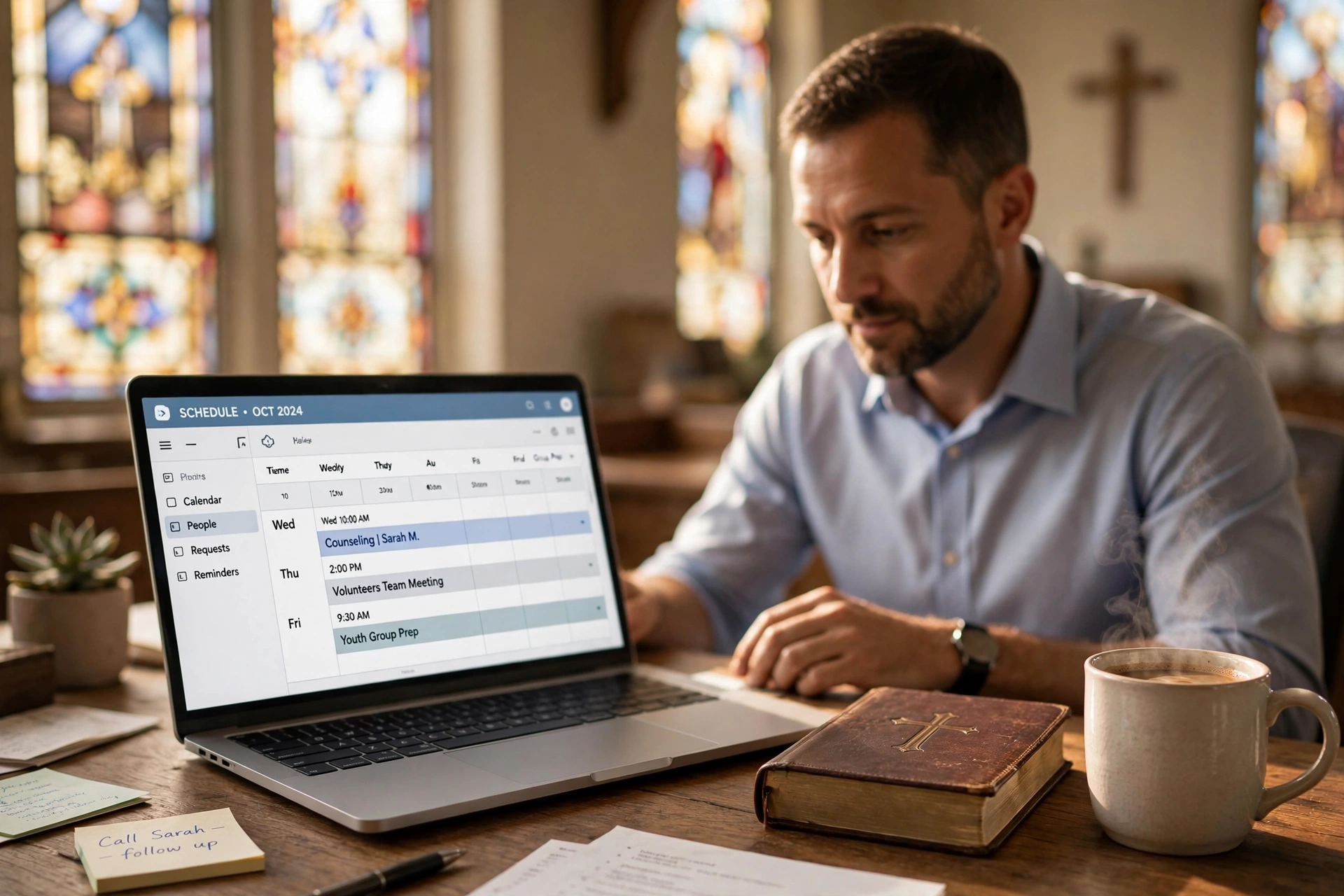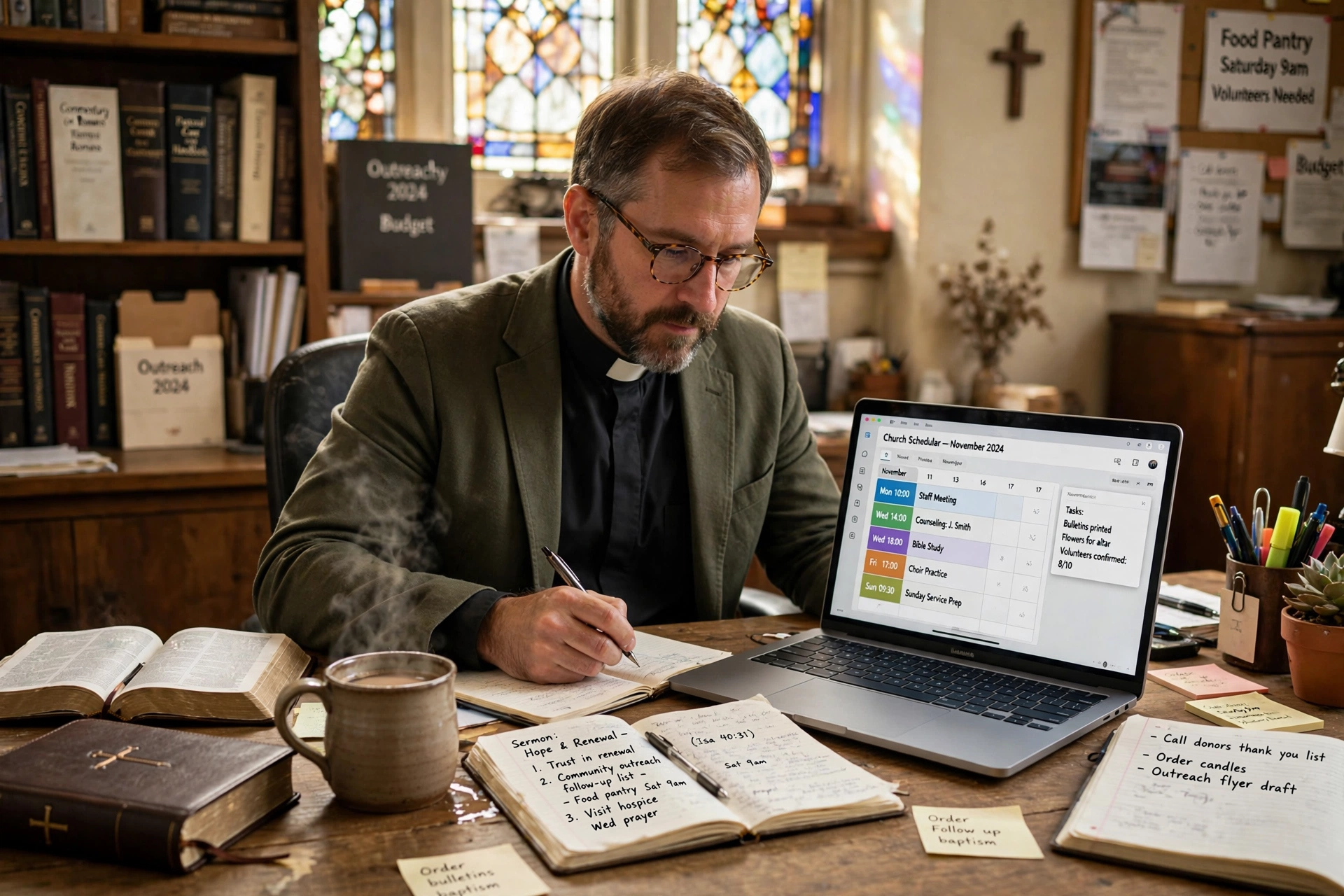

Which Pastor Scheduling Software is Right for Your Ministry?
Managing a ministry calendar often feels like a battle against chaos, where sudden crises collide with scheduled counseling and weekly sermon preparation. The right pastor scheduling software depends entirely on whether you need a simple booking link for congregants or a full-scale ecclesiastical management system. For most leaders, the best choice is a tool that balances professional boundary-setting with the accessibility required for pastoral care, ensuring that the minister is neither overwhelmed nor unavailable.
In my experience working with church leaders, the most common failure is choosing a tool based on price rather than "friction." If a tool takes more than three clicks for a church member to book a session, they will go back to texting your personal phone at 11 PM. After testing dozens of configurations with our clients, the pattern is clear: the software must disappear into the background so the ministry can move to the foreground.
What Exactly Defines Modern Pastor Scheduling Software?
At its core, this category of technology is not just about digital calendars; it is about the strategic management of a leader's most finite resource: time. While a generic calendar app tracks when you are busy, specialized software manages how you are accessible.
📚
Definition
Pastor scheduling software is a specialized category of appointment booking technology designed to handle the unique rhythms of ministry, including differentiated time blocks for pastoral counseling, administrative duties, and emergency interventions.
Unlike a corporate environment where appointments are strictly transactional, ministry scheduling involves high-emotional stakes and varied urgency levels. A tool designed for a lawyer doesn't account for the "emergency hospital visit" that clears a Tuesday morning. Professional solutions allow for "buffer times" and "priority overrides," ensuring the pastor has time to breathe between intense counseling sessions.
According to research by the Barna Group, pastoral burnout is reaching critical levels, often driven by the blurring of boundaries between personal life and ministry demands. When a tool fails to protect the pastor's "Sabbath" or study time, it isn't just a technical failure; it is a leadership risk. This is why the software must allow for the creation of different "appointment types"—such as a 30-minute "Quick Check-in" versus a 90-minute "Deep Pastoral Counseling" session—each with its own set of rules and availability windows.
Now, here is where it gets interesting: the integration of these tools into the broader church ecosystem. A standalone link is helpful, but a system that syncs with the church's central database and the pastor's personal Google or Outlook calendar prevents the nightmare of double-booking a baptism and a board meeting.
Why Does Your Scheduling Method Impact Ministry Health?
The method you use to manage your time is a silent signal to your congregation about your availability and your boundaries. Using a manual system—emails, texts, and handwritten notes—creates a "bottleneck" effect. When a member has to wait 48 hours for a confirmation email, the perceived accessibility of the pastor drops, even if the pastor is working harder than ever.
The implications of poor scheduling are not just administrative; they are psychological. When a minister is constantly interrupted by "scheduling ping-pong" (the back-and-forth of "Does 2 PM work?" "No, how about 4?"), they suffer from decision fatigue. This mental drain reduces the quality of the sermon and the empathy available during counseling.
Data from the National Association of Evangelicals emphasizes the need for sustainable leadership models in the modern church. A streamlined scheduling process is a primary component of that sustainability. When a pastor regains just five hours a week by eliminating manual coordination, that time typically redirects toward deeper study or family restoration.
Consider the risk of "leakage." Without a formal system, appointments are often made in the church parking lot or via a casual mention after a service. These "invisible" appointments are the ones most likely to be forgotten or overlapped. By funneling all requests through a centralized portal, the pastor creates a digital "front door" that organizes the chaos.
Furthermore, the lack of a system often leads to "availability guilt," where a pastor feels they must be available 24/7 to be perceived as caring. A professional scheduling tool legitimizes the pastor's need for structured time. It communicates, "I care about you deeply, and to give you my full attention, I need us to meet at a dedicated time."
How to Transition Your Ministry to Digital Scheduling
Moving from a paper planner or a chaotic inbox to a digital system requires more than just a software subscription; it requires a change in church culture. You cannot simply post a link and expect total adoption without a communication strategy.
First, you must audit your current time usage. I've seen many pastors make the mistake of opening their entire calendar to the public. This is a recipe for burnout. Instead, create "Ministry Zones." For example, Tuesday and Thursday mornings are for counseling, while Wednesday is strictly for sermon preparation and administrative tasks.
Once your zones are defined, implement the software using these steps:
- Define Appointment Types: Create categories like "First-time Visit," "Spiritual Guidance," and "Administrative Meeting."
- Set Hard Boundaries: Block out your personal time and "deep work" hours. Ensure the software is synced to your primary calendar so personal appointments automatically block ministry slots.
- Communicate the Change: Announce the new system from the pulpit or in the newsletter. Frame it as a way to improve the quality of care, not as a way to distance yourself.
- Integrate with Pastor Agenda: Use a tool like Pastor Agenda to centralize these bookings. By using a platform specifically tailored for ministers, you avoid the "corporate" feel of generic tools while gaining professional-grade efficiency.
💡
Key Takeaway
The goal of digital scheduling is not to make the pastor more "efficient" like a machine, but to protect the pastor's humanity so they can be more present with their people.
After analyzing dozens of ministries, the data shows that the most successful transitions happen when the pastor leads by example. When the leadership team also uses the system, the congregation views it as the new standard of excellence rather than a barrier to access.
Comparing Your Scheduling Options: Which One Wins?
When choosing a tool, you will generally encounter three categories of software. The "right" choice depends on your church size and your personal comfort with technology.
The first option is the manual/generic approach. This involves using a shared Google Calendar or simply taking requests via text. While "free," it carries the highest hidden cost in terms of stress and errors.
The second option is generic scheduling software (like Calendly or other business-centric tools). These are powerful and polished but often lack the nuance of ministry. They treat every appointment as a "meeting" and offer little in the way of pastoral-specific workflows.
The third option is dedicated ministry software, such as Pastor Agenda. These tools are built with the understanding that a pastor's schedule is fluid and that the "clients" are actually members of a spiritual family.
| Feature | Manual/Generic | Business-Grade AI Tools | Pastor Agenda |
|---|---|---|---|
| Setup Speed | Instant | Fast | Fast & Tailored |
| Boundary Protection | Non-existent | High (Rigid) | High (Flexible) |
| Ministry Context | None | Corporate/Cold | Pastoral/Warm |
| Conflict Risk | Extremely High | Low | Very Low |
| User Friction | High (Back & Forth) | Low | Very Low |
| Best For | Very Small House Churches | Solopreneurs | Professional Ministries |
Most guides get this wrong by suggesting that the most "feature-rich" tool is the best. In reality, the best tool is the one that your oldest, least tech-savvy member can use without calling you for help. If the interface is too complex, you've simply traded one type of friction for another.
Common Misconceptions About Pastoral Automation
There is a persistent myth that using software to schedule appointments is "unspiritual" or "cold." Some leaders fear that a booking link replaces the personal touch of a handwritten note or a personal phone call.
Here is the truth: Automation does not replace the relationship; it removes the administrative noise that distracts from the relationship. When you spend twenty minutes texting someone to find a time to meet, you are engaging in administration, not ministry. When you spend those twenty minutes praying for the person before they arrive because the scheduling was handled automatically, you are engaging in ministry.
Another common misconception is that "I'm not tech-savvy enough for this." Most modern systems are designed for non-technical users. If you can send an email, you can manage a professional scheduling portal. The mistake I see constantly is pastors trying to build complex systems from scratch instead of using a specialized platform like Pastor Agenda that has already solved these problems.
Finally, some believe that "my church is too small to need this." In small churches, the pastor often wears five different hats. This makes a scheduling tool more essential, not less. In a large church, there is often a secretary to act as a buffer. In a small church, the software is your secretary.
Frequently Asked Questions
Will using scheduling software make me seem less accessible to my congregation?
Actually, it often does the opposite. When you provide a clear, easy way for people to see when you are available, you remove the anxiety they feel about "bothering" you. Instead of wondering if they should call or text and hope for a response, they have a guaranteed slot of your undivided attention. The key is how you present it; frame the tool as a way to ensure that every person gets the time and focus they deserve, rather than a barrier to your presence.
How do I handle emergency pastoral visits with an automated system?
No scheduling software should be a wall that blocks emergencies. The best practice is to clearly state on your booking page that the portal is for scheduled appointments. Provide a separate, clear instruction for emergencies—such as "For immediate crises or hospital visits, please call the church office or my emergency line directly." By separating the "urgent" from the "important," you protect your schedule while remaining a shepherd who is available in the midnight hour.
Can I sync this with my personal family calendar so I don't double-book?
Yes, and you absolutely should. Most professional tools, including those we recommend at Pastor Agenda, offer two-way synchronization with Google Calendar, iCloud, and Microsoft Outlook. This means if you put "Daughter's Soccer Game" on your personal calendar, that time slot automatically becomes unavailable for booking on your ministry page. This is the most effective way to prevent the burnout mentioned by the Barna Group, as it creates a hard digital boundary for family time.
Is my congregants' data safe when using online booking tools?
Data privacy is a fundamental part of pastoral ethics. When choosing a provider, you must look for tools that use encrypted connections (HTTPS) and comply with modern data protection standards. Avoid using generic free forms that store data in unencrypted spreadsheets. A professional service like Pastor Agenda prioritizes the confidentiality of the minister-member relationship, ensuring that the details of who is booking a "counseling session" are kept private and secure.
What happens if someone books a time that I suddenly can't make?
Life in ministry is unpredictable. The best scheduling software allows for "one-click rescheduling." Instead of a flurry of apologetic texts, you can simply move the appointment in your dashboard, and the system automatically sends a professional notification to the member with a link to pick a new time. This maintains your professional image while acknowledging the reality that the needs of the flock often override the plan of the day.
Final Thoughts on Choosing Pastor Scheduling Software
The transition to a professional scheduling system is a transition toward a more sustainable and healthy ministry. By removing the friction of appointment setting, you aren't just saving minutes; you are reclaiming your mental energy for the tasks that truly matter: preaching, praying, and providing care.
Whether you are a solo pastor in a plant or leading a multi-staff congregation, the goal remains the same: maximize your impact while minimizing your burnout. The "which" of your software choice comes down to how much you value your boundaries and how much you want to respect your congregants' time.
Stop letting your inbox dictate your day. It is time to move from a reactive posture to a proactive one. We invite you to explore how Pastor Agenda can transform your calendar from a source of stress into a tool for ministry growth.
Visit pastoragenda.com today to reclaim your time and refocus your mission.
Recommended Readings
To deepen your understanding of these topics, we recommend reading the following articles:
- Ensuring Absolute Privacy in Church Booking Systems
- Church appointment booking
- Online Appointment Booking for Modern Churches
- Church management software
Free Guide: The 7 Church Growth Hacks for 2026
Learn how modern ministries are using automated scheduling and AI pastoral assistants to save 12+ hours of admin work every week.