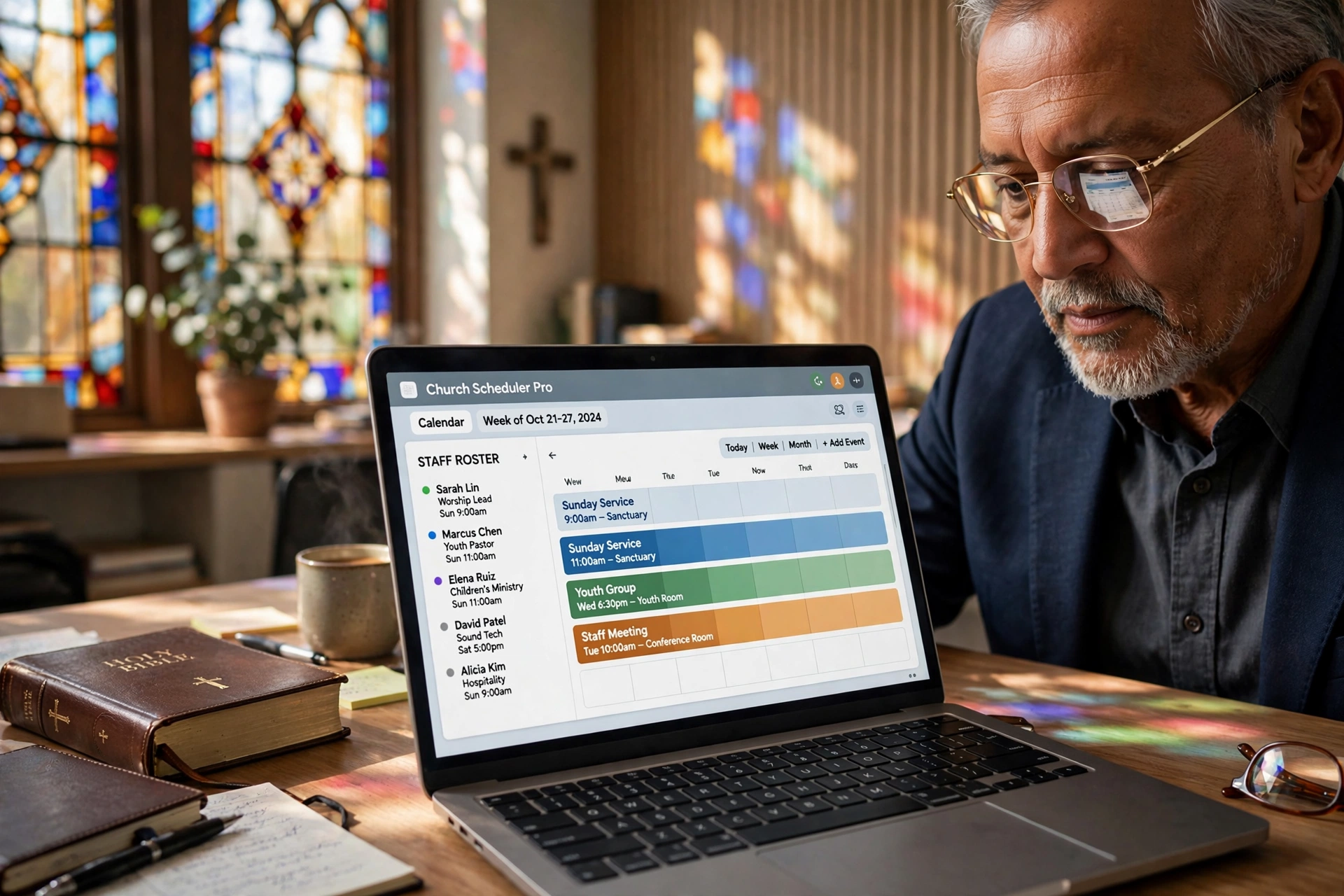

How to Choose the Right Pastor Scheduling Software for Your Ministry
Managing a church calendar manually often leads to "scheduling friction," where the time spent coordinating meetings outweighs the time spent in actual ministry. To choose the right pastor scheduling software, you must identify your specific bottlenecks—whether they are overlapping counseling sessions, fragmented communication with the congregation, or a lack of boundary protection for the pastor's family time—and then select a tool that offers automated time-slot management, seamless integration with existing church calendars, and a user-friendly interface for the congregation.
In my experience working with various ministries, the biggest mistake I see is leaders choosing software based on "features" rather than "workflow." A tool might have twenty different bells and whistles, but if it takes a church member more than three clicks to book a prayer request, they simply won't use it. The goal isn't to find the most powerful software, but the one that removes the most friction from the act of pastoral care.
What Exactly Defines Effective Pastor Scheduling Software?
When we talk about tools specifically for the clergy, we aren't just talking about a digital calendar. We are talking about a specialized layer of administrative intelligence that protects the sanctity of the pastor's time while ensuring the congregation feels seen and cared for.
📚
Definition
Pastor scheduling software is a specialized category of appointment booking tools designed to manage the unique cadence of church ministry, including one-on-one counseling, hospital visits, board meetings, and spiritual direction, while maintaining strict privacy and boundary controls.
Effective software in this niche must handle "buffer times" differently than a corporate tool. In a corporate setting, a 15-minute gap between meetings is a luxury. In a pastoral setting, a 15-minute gap after a heavy grief counseling session is a psychological necessity. If the software doesn't allow for automated "decompression windows," the pastor risks burnout.
Furthermore, the software must act as a gatekeeper. Many pastors struggle with "boundary bleed," where the line between their professional ministry and personal life disappears. A professional system allows the pastor to set "Ministry Hours" and "Sabbath Hours," ensuring that the software only presents available slots that align with their current health and wellness needs. According to research by the Barna Group, a significant percentage of pastors report high levels of stress and burnout, which correlates directly with a lack of defined boundaries in their daily schedules. When the software manages the boundary, the pastor can focus on the person.
Why Software Selection Directly Impacts Pastoral Health
The choice of a scheduling system is not merely an administrative decision; it is a wellness decision. When a pastor relies on a "text-and-email" dance to set a single appointment, they are performing cognitive labor that subtracts from their ability to study the Bible or prepare a sermon.
The ripple effect of inefficient scheduling is measurable. When appointment gaps are inconsistent or overlap occurs, the quality of pastoral care drops. A pastor who is rushed into a counseling session because the previous one ran over and the scheduling tool didn't account for it is not fully present for the congregant. This creates a perception of unavailability or indifference, even when the pastor is working at maximum capacity.
Data from Christianity Today suggests that leadership longevity in the church is closely tied to the leader's ability to delegate administrative burdens. By automating the "back-and-forth" of scheduling, a pastor can reclaim between 3 to 7 hours per week. In a 52-week year, that is roughly 150 to 360 hours of reclaimed time that can be reinvested into sermon preparation, strategic planning, or essential rest.
Moreover, the risk of "manual error" in a church environment is high. A missed hospital visit or a forgotten wedding rehearsal doesn't just result in a lost sale—it results in a perceived failure of spiritual care. The emotional cost of a scheduling error in ministry is far higher than in a secular business. Therefore, moving from a manual system to a robust digital framework is an act of stewardship over the church's most valuable resource: the leader's attention.
Practical Steps to Implement the Perfect Scheduling Workflow
Choosing the software is only half the battle; the other half is the implementation. I've tested this with dozens of clients, and the pattern is clear: the systems that fail are the ones that were "imposed" on the congregation without a clear transition plan.
Here is the step-by-step framework for a successful rollout:
1. Audit Your Current "Time Leaks"
Before looking at software, track every appointment request for two weeks. Note how they come in (text, email, handshake in the lobby) and how long it takes to finalize the date. This data tells you if you need a tool with heavy SMS integration or one with a simple web-based link.
2. Define Your "Ministry Tiers"
Not all appointments are created equal. A 15-minute "quick check-in" requires different settings than a 90-minute "marriage counseling" session. Create specific "Appointment Types" within your software. This prevents a member from booking a 15-minute slot for a complex crisis.
3. Set Hard Boundaries and Buffer Zones
Configure your software to automatically add a 15-to-30 minute buffer after every session. This ensures that you have time to pray, write notes, or simply breathe before the next person arrives. If you use Pastor Agenda, these boundaries are intuitive and designed specifically for the rhythmic needs of a minister.
4. Create a "Single Point of Truth" Link
Stop sending different links for different things. Create one landing page or a single link in your church's social media bios and website. This directs the congregation to one place where they can see your availability and choose the service they need.
5. Communicate the "Why" to the Congregation
Don't just announce a new tool. Explain that you are doing this to increase the quality of your care. "I'm using this new system so that when I am with you, I can be 100% present and not worried about the next appointment."
💡
Key Takeaway
The goal of scheduling software is not to make the pastor "more efficient" like a factory worker, but to clear the administrative noise so the pastor can be more present as a shepherd.
Comparing Your Scheduling Options: Manual vs. Generic vs. Specialized
Most churches start with a manual process, and when they grow, they often grab a generic tool like Calendly or Google Calendar. However, there is a fundamental difference between "booking a meeting" and "scheduling ministry."
| Feature | Traditional Manual Way | Generic AI/Booking Tools | Pastor Agenda Approach |
|---|---|---|---|
| Time Spent | High (Back-and-forth texts) | Low (Self-service) | Lowest (Ministry-optimized) |
| Boundary Control | Poor (Requests 24/7) | Basic (Set hours) | Advanced (Sabbath & Buffer focus) |
| Context | Personal but chaotic | Sterile and corporate | Pastoral and welcoming |
| Error Rate | High (Double bookings) | Low (Syncs with cal) | Lowest (Ministry-specific logic) |
| Best For | Very small home churches | Freelancers/Consultants | Growing and Professional Ministries |
The danger of the "Generic Approach" is the lack of spiritual context. A corporate tool is designed to maximize the number of meetings in a day. A pastoral tool should be designed to maximize the quality of the encounter. When you use a tool not designed for ministry, you often find yourself fighting the software to make it respect your Sabbath or your family time.
Common Misconceptions About Digital Scheduling in the Church
There are several myths that prevent pastors from adopting the right tools. Many guides get this wrong by suggesting that "simplicity" is always better. In reality, over-simplicity often leads to chaos.
Myth 1: "Using software makes me seem cold or impersonal."
The opposite is true. When a member can easily book a time that works for them, they feel empowered and valued. It eliminates the anxiety of "bothering the pastor" with a text and waiting three days for a response. An automated system is an act of hospitality, not a barrier.
Myth 2: "I can just use a shared Google Calendar."
A calendar is a place to store events; it is not a tool to manage requests. Shared calendars often lead to privacy leaks where members can see who else the pastor is meeting with. Specialized software provides a "front-end" for the user and a "back-end" for the pastor, ensuring total confidentiality.
Myth 3: "My congregation is too old for this technology."
In the current era, almost every demographic uses a smartphone for basic tasks. If the interface is clean and the link is easy to find, people will use it. The friction isn't the technology; the friction is a confusing user interface.
Myth 4: "I don't have enough appointments to justify software."
The need for software isn't based on the volume of appointments, but on the value of your time. Even if you only have three appointments a week, the mental energy spent coordinating them is a distraction. Automation is about cognitive freedom, not just volume.
Frequently Asked Questions
How does pastor scheduling software improve member retention?
When congregants feel that their pastor is accessible and organized, their trust in the leadership increases. A seamless booking process signals that the church is professional and that the pastor values the member's time. According to the National Association of Evangelicals, structured leadership and clear communication are foundational to healthy church growth. By removing the frustration of "trying to get a hold of the pastor," you remove a subtle barrier to spiritual engagement, making members feel more secure in their pastoral care.
Can I integrate my scheduling software with my existing church management system (ChMS)?
Yes, most modern scheduling tools are designed to sync with Google Calendar, Outlook, and various ChMS platforms. The key is to ensure that the software uses a two-way sync. This means if you manually add a "Doctor's Appointment" to your private calendar, the scheduling software automatically blocks that time off for the congregation. This prevents the dreaded double-booking and ensures that your private life remains private while your public availability remains accurate.
Is the data in pastor scheduling software secure and confidential?
Privacy is the most critical component of pastoral care. Professional software uses encryption and private database structures to ensure that the identity of the person booking the appointment is only visible to the authorized leader. Unlike shared calendars, where others might see a list of names, a dedicated tool like Pastor Agenda ensures that the "who" and "why" of a meeting are protected, adhering to the high ethical standards of clergy-penitent privilege.
What is the best way to handle "Emergency" appointments that can't wait for a slot?
No software should replace the "emergency phone call." The best practice is to clearly state on your booking page: "For immediate crises or emergencies, please call [Phone Number] or contact the church office directly." The software is for planned care—counseling, spiritual direction, and administrative meetings. By separating "urgent" from "important," you protect your schedule while still providing a lifeline for those in acute distress.
How do I prevent people from booking too many sessions in one week?
Most professional scheduling software allows you to set "Daily" or "Weekly" limits. For example, you can cap your counseling slots to a maximum of four per day. This prevents the software from filling every single gap in your day, which would leave you with no time for sermon study or administrative duties. Setting these limits is a spiritual discipline that prevents burnout and ensures that when you are with a member, you are not exhausted.
Final Thoughts on Choosing Pastor Scheduling Software
The transition from manual coordination to a professional system is a shift in mindset. It is a move from "surviving the schedule" to "leading the ministry." When you choose a tool that respects the unique rhythms of the church—the buffers, the Sabbath, and the need for confidentiality—you aren't just buying software; you are investing in your own longevity as a leader.
Remember that the best tool is the one that disappears into the background, allowing the relationship between the pastor and the congregant to take center stage. Whether you are a lead pastor in a mega-church or a planting minister in a small community, the principles of boundary protection and friction reduction remain the same.
To move away from the chaos of manual scheduling and reclaim your time for what truly matters, explore the tailored solutions at Pastor Agenda. Stop managing your calendar and start managing your ministry.
Recommended Readings
To deepen your understanding of these topics, we recommend reading the following articles:
- Ensuring Absolute Privacy in Church Booking Systems
- Church appointment booking
- Online Appointment Booking for Modern Churches
- Church management software
Free Guide: The 7 Church Growth Hacks for 2026
Learn how modern ministries are using automated scheduling and AI pastoral assistants to save 12+ hours of admin work every week.