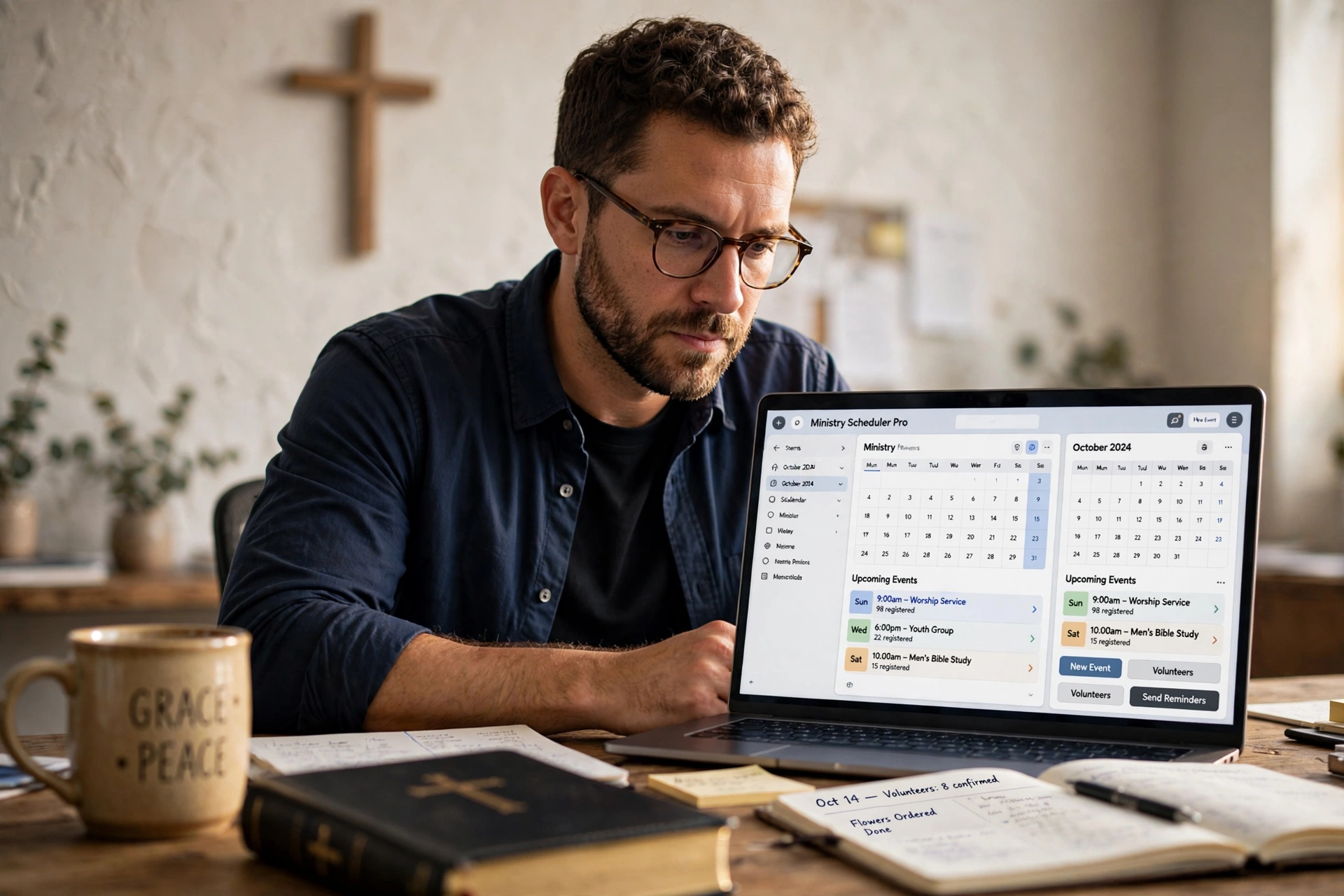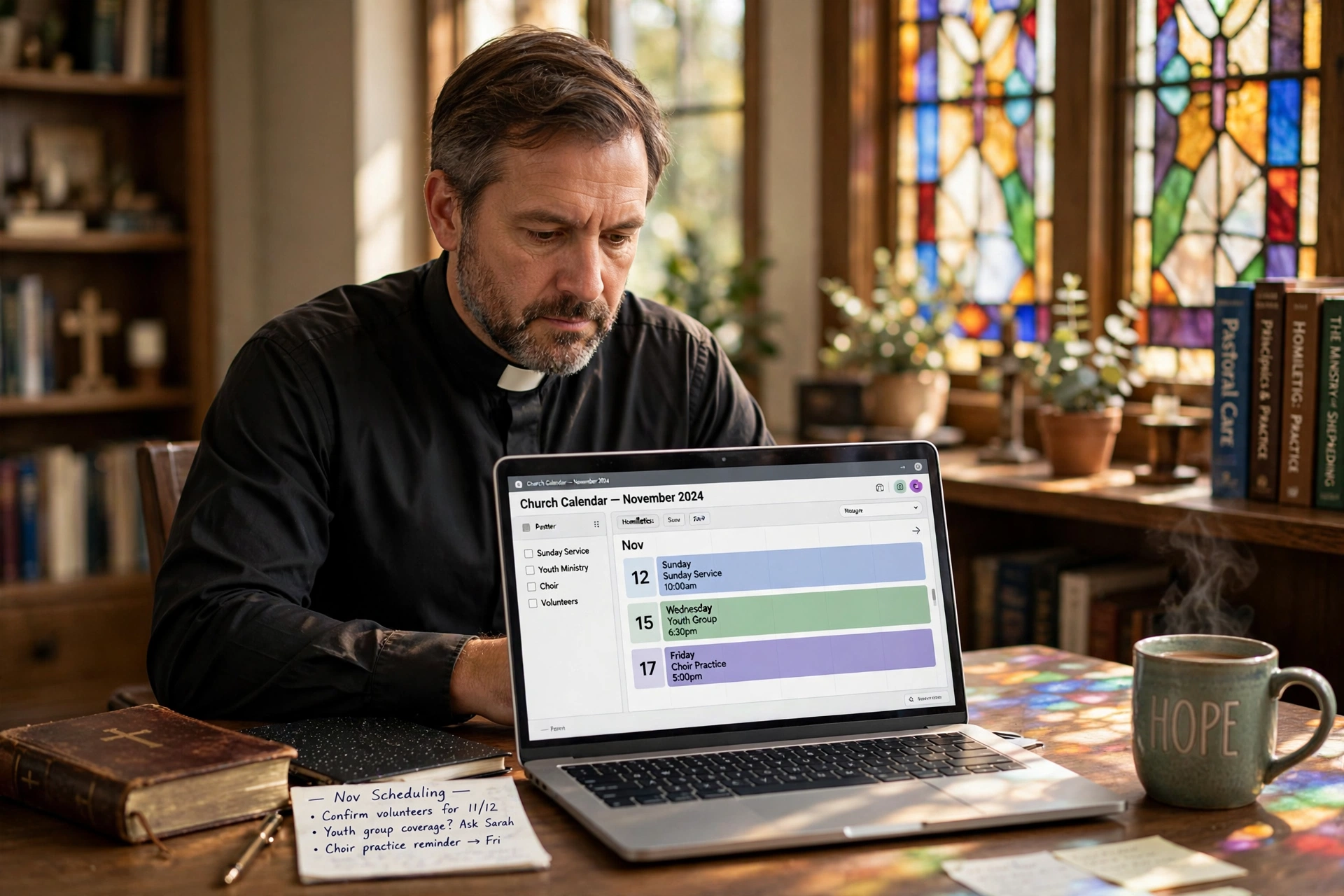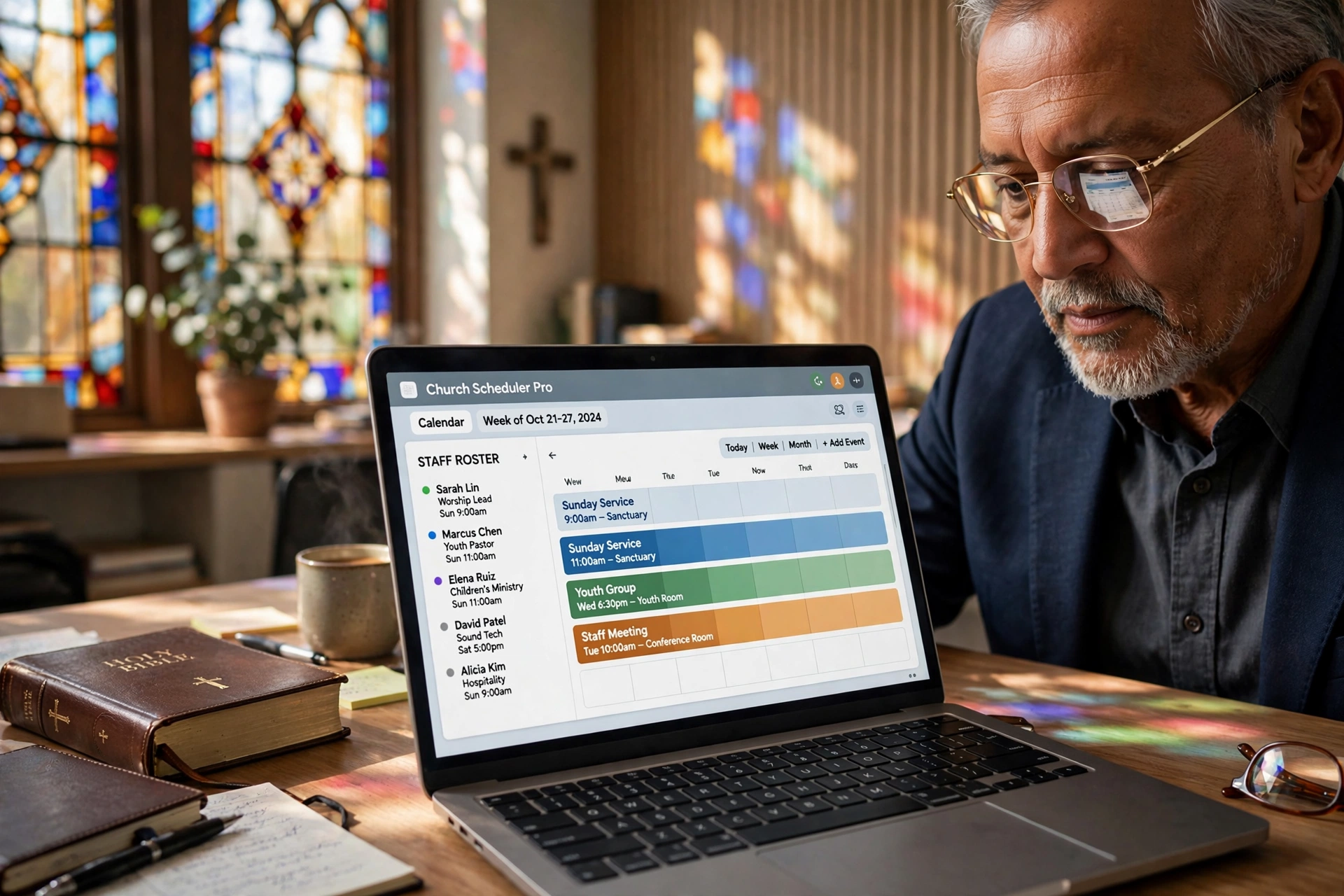

How to Implement Pastor Scheduling Software for Your Ministry?
The most effective way to implement pastor scheduling software is to transition from manual, fragmented calendars to a centralized digital gateway where congregation members can book appointments based on the pastor's actual availability. This process requires defining specific "ministry windows"—dedicated blocks of time for pastoral care, counseling, and administration—and automating the confirmation process to eliminate the back-and-forth of emails and phone calls.
In my experience working with religious leaders, the biggest friction point isn't the technology itself, but the boundary setting. Many pastors attempt to be available 24/7, which leads to rapid burnout and scheduling conflicts. When we developed the workflow for Pastor Agenda, we discovered that pastors who set "hard boundaries" in their digital calendars actually see an increase in the quality of their pastoral care because they are more present and less stressed during the actual appointments.
What Exactly is Pastor Scheduling Software?
To understand the impact of this technology, we must first define what it does beyond simple calendar marking. While a generic calendar tells you when you are busy, dedicated software manages the entry point of your time.
📚
Definition
Pastor scheduling software is a specialized appointment booking system designed to balance the accessibility needs of a congregation with the operational boundaries of a minister, integrating time-slot management, automated reminders, and member data collection.
This software acts as a digital concierge. Instead of a church secretary spending four hours a week playing "phone tag" to schedule a single counseling session, the software provides a public-facing link. The member selects a time that is already pre-approved by the pastor, and the event is instantly synced across all devices.
According to research by the Barna Group, pastoral burnout is a systemic issue, often exacerbated by the "always-on" expectation of modern ministry. By utilizing a system that regulates access, pastors can reclaim hours of their week for sermon preparation and family time without sacrificing their commitment to the flock. This shift from reactive scheduling (responding to every request immediately) to proactive scheduling (offering specific windows of availability) is the core of sustainable ministry management.
The technical architecture of these systems usually involves a three-way sync: the pastor's private calendar, the church's master calendar, and the public booking page. This ensures that if a pastor adds a doctor's appointment to their personal Google or Outlook calendar, that slot is automatically blocked on the public booking page, preventing double-booking without the pastor having to manually update two different systems.
Why Does Digital Scheduling Matter for Modern Ministry?
The implications of sticking to manual scheduling in 2026 are significant. We are seeing a fundamental shift in how people interact with institutions. The "on-demand" economy has conditioned members to expect seamless digital interactions. When a member in crisis needs pastoral counseling, the friction of waiting for a callback can feel like a barrier to spiritual care.
From a data perspective, the efficiency gains are measurable. A church utilizing automated scheduling typically reduces administrative overhead by 20% to 30%. This isn't just about saving time; it's about cognitive load. When a minister doesn't have to worry about the logistics of how a meeting happens, they can focus entirely on who they are meeting with.
As noted by Christianity Today, the mental health of clergy is directly tied to their ability to maintain a healthy work-life balance. When a pastor's schedule is an open door with no lock, they experience higher levels of stress and lower job satisfaction. Digital scheduling provides that "lock" in a way that is polite, transparent, and professional.
Moreover, the risk of "scheduling leaks"—where appointments are forgotten or overlapped—creates a perception of instability. In a ministry context, a missed appointment isn't just a business error; it can be perceived as a lack of care for a member's spiritual needs. By implementing automated reminders via SMS or email, the software ensures that the member feels valued and the pastor arrives prepared.
The financial impact is also relevant. While many churches operate on tight budgets, the "hidden cost" of a secretary spending 10 hours a month on manual scheduling is a waste of human resources that could be spent on community outreach or member engagement. Shifting this task to a software solution like Pastor Agenda allows the staff to focus on high-impact ministry rather than clerical data entry.
Practical Application: How to Set Up Your Scheduling System
Implementing a new system requires more than just signing up for an account; it requires a strategic overhaul of how you view your time. Here is the step-by-step framework for a successful rollout.
Step 1: Audit Your Current Time Allocation
Before touching the software, track your time for one week. Identify how much time is spent on "crisis management," "planned counseling," "administrative tasks," and "personal recovery." You cannot schedule what you haven't measured.
Step 2: Establish Your Ministry Windows
Create specific categories for your appointments. For example:
- Pastoral Counseling: Tuesdays and Thursdays, 2:00 PM – 5:00 PM.
- New Member Interviews: Wednesdays, 10:00 AM – 12:00 PM.
- Emergency Care: A limited set of "rapid-response" slots held open until 24 hours prior.
Step 3: Configure the Digital Gateway
Using a tool like Pastor Agenda, set up your booking page. Limit the "lead time" so people cannot book you three months in advance, and set a "minimum notice" period (e.g., 24 hours) so you aren't surprised by a 10:00 AM appointment at 9:00 AM.
Step 4: Integrate Your Ecosystem
Sync your professional software with your personal calendar. Ensure that "Private" events in your personal calendar block the time on the public page without revealing the details of your private life to the congregation.
Step 5: Communicate the Change to the Congregation
This is where most pastors fail. You must frame the software not as a "barrier," but as a way to ensure they get your undivided attention. Use the pulpit and the church newsletter to explain: "To make sure I can give each of you my full focus without distractions, I've moved to a new scheduling system."
💡
Key Takeaway
The success of scheduling software depends 20% on the tool and 80% on the boundaries you set. Software that doesn't reflect a disciplined calendar is simply a faster way to become overwhelmed.
Comparing Scheduling Approaches
Not all scheduling methods are created equal. Many churches try to use "free" tools that aren't built for the specific nuances of ministry, leading to a disjointed experience.
| Approach | Pros | Cons | Best For |
|---|---|---|---|
| Manual/Secretary | High personal touch | Extremely slow, high error rate, secretary burnout | Very small churches (< 50 members) |
| Generic AI/Free Tools | Low cost, fast setup | No ministry context, privacy risks, impersonal | Individual consultants or side projects |
| Pastor Agenda | Ministry-focused, automated, protects pastor's time | Requires initial setup and boundary definition | Growing churches and professional ministries |
The "Generic AI" approach often fails in a church setting because it lacks the sensitivity required for pastoral care. A generic bot might confirm a funeral arrangement with a cold, corporate tone that feels inappropriate. A specialized approach ensures the communication feels supportive and ministerial while remaining efficient.
Now, here's where it gets interesting: many pastors fear that moving to a digital system makes them "less accessible." In reality, the opposite is true. When you remove the friction of scheduling, you actually lower the barrier for people to seek help. A member who is too shy to call the office might feel comfortable clicking a link at 11:00 PM when they are reflecting on a struggle, securing a time for the following week without the anxiety of a live conversation.
Common Questions and Misconceptions
Most guides on scheduling software treat the pastor like a corporate executive. This is a mistake. Ministry is not a series of "meetings"; it is a series of "encounters."
Myth 1: "Digital scheduling is impersonal and cold."
Actually, the most impersonal thing you can do is make a member wait three days for a callback to schedule a 15-minute meeting. Providing a clear, immediate way to book time shows that you value their time and are organized in your care.
Myth 2: "I can just use a free Google Calendar link."
Generic links often expose too much information or lack the ability to collect "intake" data. With Pastor Agenda, you can ask the member why they are booking the appointment (e.g., "Prayer request," "Financial counseling," "Baptism question"), which allows the pastor to prepare mentally and spiritually before the meeting begins.
Myth 3: "My congregation will hate it if I don't take calls."
People generally respect boundaries when they are communicated clearly. The mistake I see constantly is pastors who try to do both—keep the "open door" and use the software. You must commit to the system. If you keep allowing "side-channel" bookings via text or phone, your digital calendar becomes a suggestion rather than a source of truth.
Frequently Asked Questions
How does pastor scheduling software protect my privacy?
Professional tools use a "masking" technique. While the software knows you are busy from 2:00 PM to 3:00 PM because of a dentist appointment on your private calendar, the public view simply shows that slot as "Unavailable." It does not disclose the nature of your private events, ensuring that your personal life remains separate from your public ministry.
Can I set different rules for different types of meetings?
Yes, and you should. For example, a "First-Time Visitor" meeting might be 30 minutes, while a "Deep Pastoral Counseling" session might require 60 to 90 minutes. High-quality software allows you to create different "event types," each with its own duration and specific availability windows, ensuring you don't accidentally book a long session in a short window.
What happens if a member needs an emergency appointment?
You should not leave your entire calendar open, but you can create "Emergency Slots." These are blocks of time that are only bookable within a short window (e.g., 24-48 hours). Alternatively, your booking page can include a note: "For immediate crises, please call the office directly," ensuring that the software manages the routine while the phone manages the urgent.
Will this software integrate with my existing church management system?
Most modern scheduling tools are designed to be agnostic or integrate via API/Zapier with other platforms. The goal is to create a "single source of truth." When a booking occurs in Pastor Agenda, it should ideally push that data to your member database so you have a historical record of every time a specific member sought pastoral care.
Is it difficult to train older church members to use a digital link?
The learning curve is surprisingly low because the interface mimics a simple calendar. To help them, provide a QR code in the church bulletin or a direct button on the church's home page. Once they experience the ease of picking a time without waiting on hold, the "resistance" typically vanishes in favor of the convenience.
Final Thoughts on Pastor Scheduling Software
The transition to a professional system is not about replacing the "shepherd's heart" with an algorithm; it is about using the algorithm to protect the shepherd. When you implement pastor scheduling software, you are fundamentally deciding that your time is a resource that must be stewarded with integrity.
By automating the logistics of appointment booking, you eliminate the administrative noise that leads to burnout. This allows you to enter every counseling session, every home visit, and every hospital call with a clear mind and a focused spirit, rather than the lingering stress of a scheduling conflict.
If you are ready to stop the "phone tag" and start reclaiming your time, we invite you to explore the tools at Pastor Agenda. Our platform is built specifically for the unique demands of the ministry, ensuring your congregation feels cared for while your boundaries remain intact.
Recommended Readings
To deepen your understanding of these topics, we recommend reading the following articles:
- Ensuring Absolute Privacy in Church Booking Systems
- Church appointment booking
- Online Appointment Booking for Modern Churches
- Church management software
Free Guide: The 7 Church Growth Hacks for 2026
Learn how modern ministries are using automated scheduling and AI pastoral assistants to save 12+ hours of admin work every week.