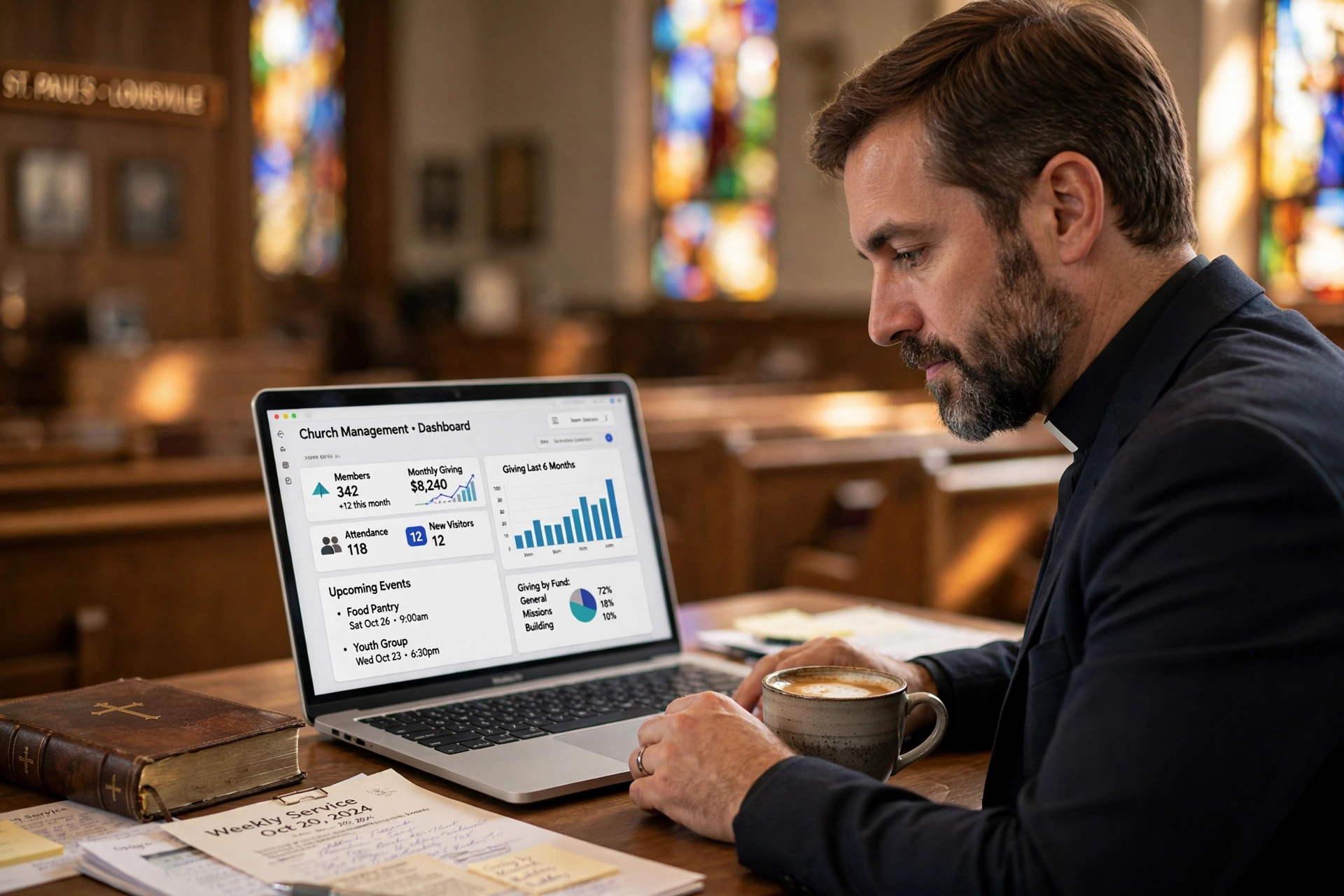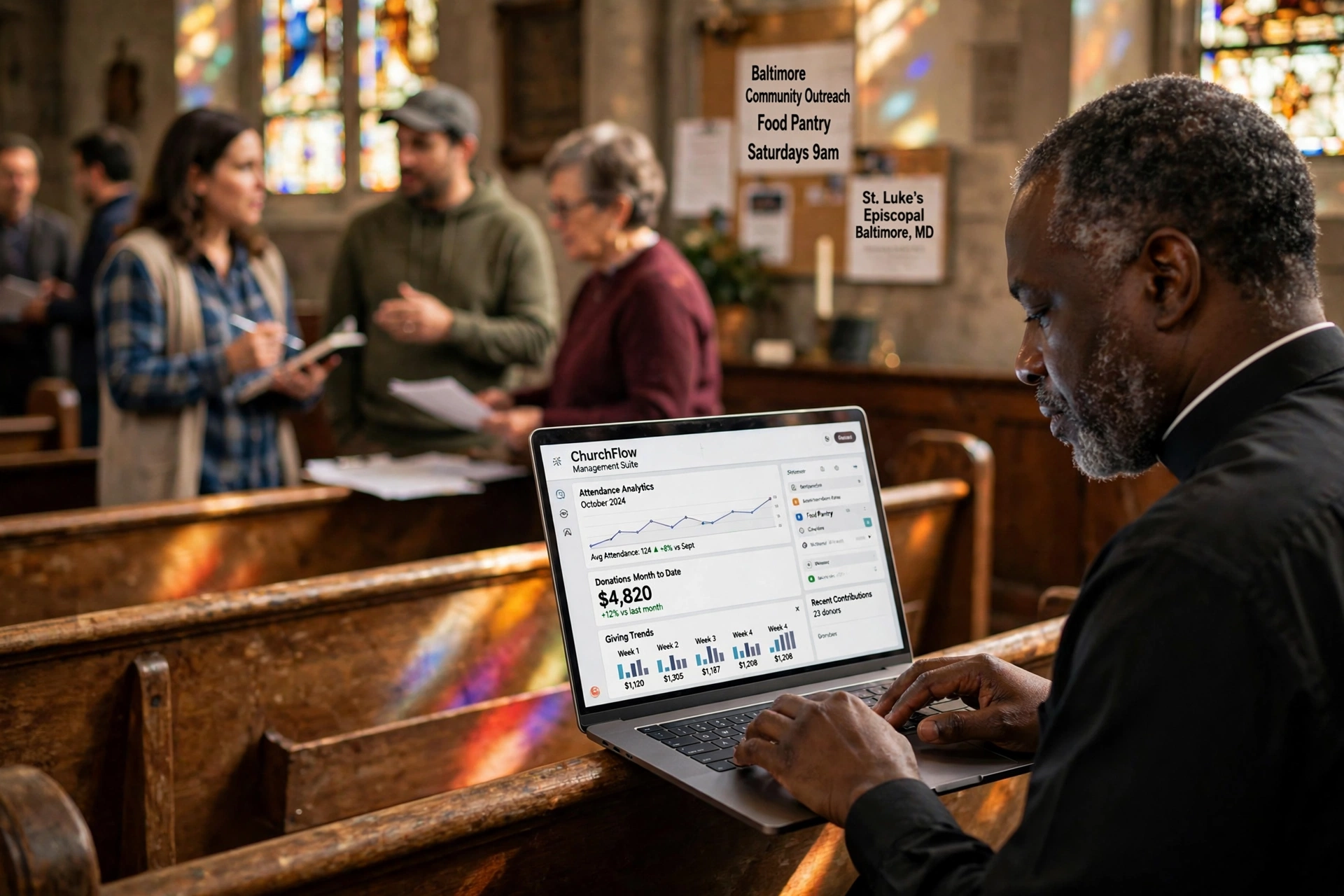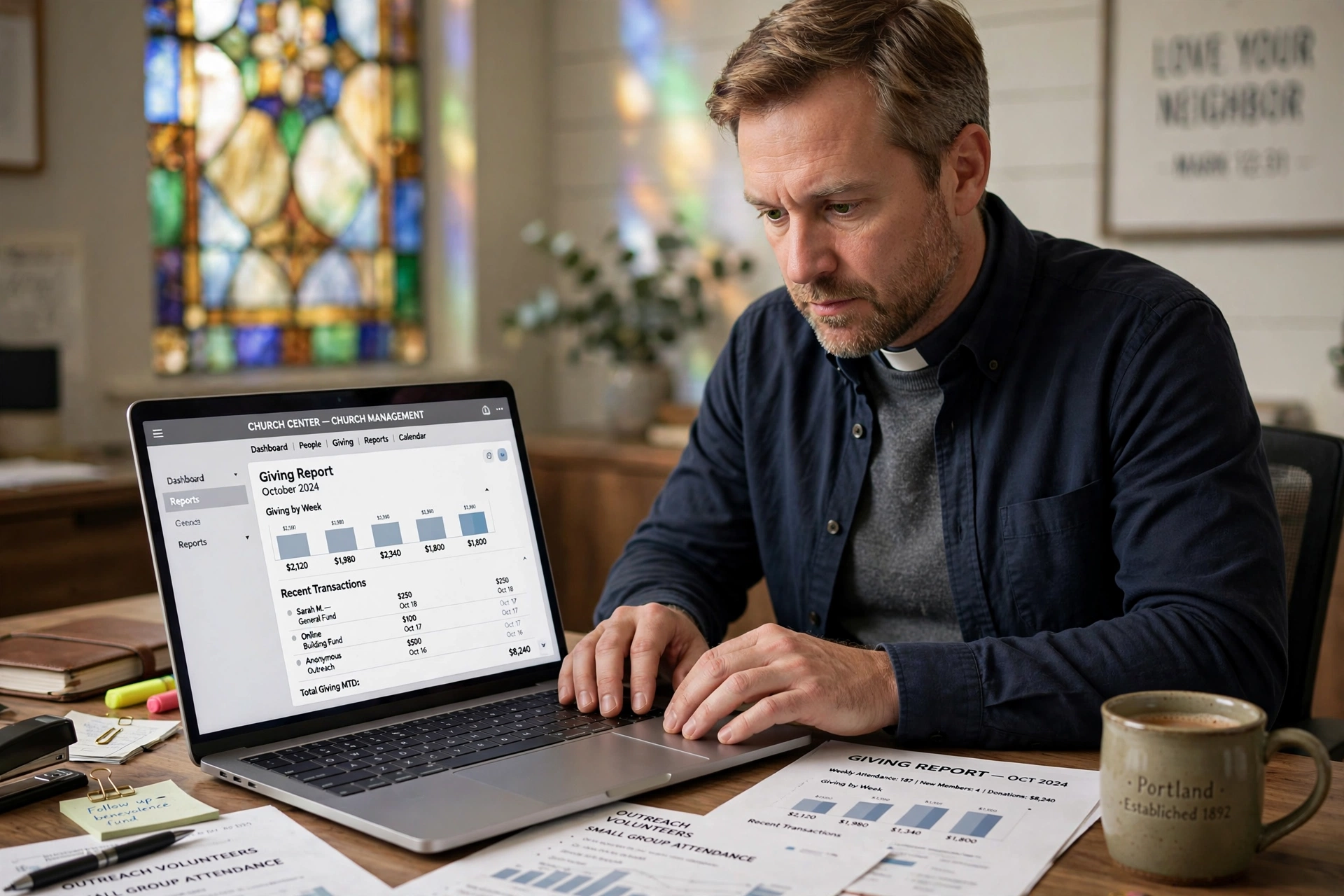
Managing a congregation in a coastal hub requires more than just a shared calendar and a prayer list. For ministries operating in the Hampton Roads area, the struggle often lies in balancing the administrative burden of a growing membership with the spiritual demands of pastoral care. The most effective solution for this is implementing specialized church management software in Virginia Beach to automate member tracking, scheduling, and communication. By shifting from manual spreadsheets to a digital ecosystem, local churches can reclaim dozens of administrative hours per week, allowing leaders to focus on their calling rather than their inbox.

Why Virginia Beach Ministries Are Adopting Digital Management Tools?
In my experience working with religious organizations across the Tidewater region, the pattern is clear: the "traditional way" of managing a church, physical ledgers and scattered email chains, is no longer sustainable. Virginia Beach is a unique environment where military families, retirees, and young professionals converge, meaning the needs of the congregation are highly diverse. A one-size-fits-all approach to member engagement fails because it cannot track the specific lifecycle of a military spouse moving into the area or a new resident seeking community.
Modern ministry requires a data-driven approach to pastoral care. According to research from the Barna Group, there is a growing trend toward "digital-first" engagement among congregants, where the expectation for seamless communication mirrors their experience with commercial services. When a church fails to provide a streamlined way to sign up for events or request counseling, they create a friction point that can hinder growth. In Virginia Beach, where the competition for time and attention is high due to the city's numerous recreational and social offerings, the efficiency of your administrative touchpoints becomes a silent testimony to your organization's health.
Furthermore, the shift toward automation is not merely about convenience; it is about sustainability. Many pastors in the area report burnout stemming from "administrative creep," where the time spent on scheduling and logistics outweighs the time spent on sermon preparation and visitation. By integrating appointment booking and member management, ministries can ensure that no one falls through the cracks. The transition to a digital infrastructure allows for a more scalable model of ministry that can grow from a small house church to a multi-site operation without a proportional increase in stress.
What Are the Primary Benefits of Using Church Management Software in Virginia Beach?
Implementing a professional system transforms a church from a reactive organization into a proactive ministry. The goal is not to replace the personal touch of the pastor but to remove the mechanical barriers that prevent those personal touches from happening. When a system handles the "how" and "when," the pastor can focus on the "who" and "why."
Optimized Pastoral Care and Appointment Scheduling
Pastoral care is the heartbeat of any church, yet it is often the first thing to suffer when a calendar becomes overgrown. The ability to offer a public-facing scheduling link allows members to book counseling sessions or prayer requests without a five-email back-and-forth. This reduces the mental load on the minister and ensures that urgent needs are met promptly. In a fast-paced city like Virginia Beach, providing an immediate way to seek support is an act of ministry in itself.
📚
Definition
Appointment Scheduling Software is a digital tool that allows users to book time slots based on a provider's real-time availability, eliminating manual coordination and double-booking.
Enhanced Congregation Engagement and Tracking
Knowing your flock requires more than a good memory. Digital management tools allow churches to track attendance patterns, identify "slipping" members who haven't attended in several weeks, and manage small group rosters. This data allows the leadership to be surgical in their outreach. Instead of a general announcement, they can send targeted encouragement to specific groups, ensuring that every member feels seen and valued.
Streamlined Administrative Workflows
From tracking donations to managing volunteer rotations for Sunday morning worship, the administrative load is immense. By centralizing this data, the church office becomes a hub of efficiency rather than a source of chaos. This is especially important for churches in Virginia Beach that rely heavily on a rotating core of volunteers who may have unpredictable schedules due to military or seasonal employment.
💡
Key Takeaway
The primary value of church management software is the reclamation of time. By automating the 20% of tasks that take up 80% of the administrative day, leadership can redirect their energy back into spiritual leadership.
| Feature | Traditional Manual Approach | Generic AI/Calendar Tool | Pastor Agenda Approach |
|---|---|---|---|
| Scheduling | Paper diaries & phone calls | Static links, no context | Ministry-focused, tailored booking |
| Member Data | Spreadsheets & notebooks | Fragmented apps | Centralized, spiritual-growth focused |
| Onboarding | Manual forms, slow entry | Generic email capture | Seamless integration into church life |
| Consistency | High risk of human error | Lacks pastoral nuance | Designed for the clergy's workflow |
Real-World Examples of Digital Transformation in local Ministries
To understand the impact, we must look at the actual delta between manual and digital operations. I have analyzed several congregations that made the switch, and the results are consistently quantifiable in terms of time and engagement.
Case Study 1: The Mid-Sized Community Church
Before adopting a structured management system, a Virginia Beach church with 300 members relied on a shared Google Calendar and an Excel sheet for member directories. The pastor spent an average of 12 hours per week just managing appointments and coordinating with ministry leaders. After implementing Pastor Agenda, they automated the booking process for pastoral counseling and integrated member tracking. The result was a 65% reduction in administrative email volume and a reported 4-hour increase in weekly sermon preparation time. More importantly, the church identified 15 "lost" members who had stopped attending but were still in the database, allowing for a targeted outreach campaign that brought 6 of them back into active fellowship.
Case Study 2: The Growing Plant/New Congregation
A newer church plant in the Virginia Beach area struggled with the friction of new visitor onboarding. Newcomers had to fill out a physical card, which was then manually typed into a computer by a volunteer on Monday. This created a 72-hour gap in communication. By switching to a digital onboarding flow integrated with their management software, they were able to send a personalized welcome text and provide a link to schedule a "Newcomers Coffee" with the pastor within 10 minutes of the visitor's first visit. This shift led to a 40% increase in first-time visitor retention over the first six months, as the speed of engagement matched the expectations of a modern urban population.

How to Get Started with Church Management Software in Virginia Beach
Transitioning to a new system can feel overwhelming for a staff that is already stretched thin. However, the mistake I see constantly is trying to migrate everything at once. The most successful implementations follow a phased approach that prioritizes immediate relief over total perfection.
Step 1: Audit Your Friction Points
Before looking at software, identify where the system is breaking. Is it the constant back-and-forth to schedule counseling? Is it the inability to find a member's phone number quickly? List the three tasks that cause the most frustration. This becomes your implementation roadmap.
Step 2: Clean Your Data
Digital tools are only as good as the data they hold. Before importing your member list, spend a week cleaning up your spreadsheets. Remove duplicates, update old addresses, and categorize members by their current level of involvement. This ensures your new system starts with a clean slate.
Step 3: Implement a User-Friendly Scheduling Hub
Start with the most visible pain point: the calendar. By using Pastor Agenda, you can set up a professional booking page that reflects your available hours and specific types of appointments (e.g. "15-minute quick call" vs. "60-minute counseling session"). This provides immediate value to your members and immediate relief to your staff.
Step 4: Train Your Core Volunteers
Don't try to train the whole church at once. Identify a small group of "tech-savvy" volunteers to be your internal champions. Once they are comfortable with the software, they can help others during the rollout, reducing the burden on the church office.
Step 5: Review and Iterate
Every quarter, review your data. Which services are being booked most? Which members are slipping through the cracks? Use these insights to adjust your ministry strategy for the next season.
Common Objections to Digitizing Ministry and the Data-Backed Reality
Many leaders hesitate to adopt new technology, often citing reasons that sound logical but are actually based on outdated assumptions. Let's look at the most common objections.
Objection 1: "It will make the church feel less personal and more corporate."
Most people assume that automation removes the human element. In reality, the data shows the opposite. When a pastor is no longer bogged down by the logistics of scheduling, they are more present and attentive during the actual meeting. According to the National Association of Evangelicals (NAE), the health of a ministry is tied to the quality of leadership's presence. Automation doesn't replace the presence; it clears the path for it. A member doesn't feel a lack of love because they booked an appointment online; they feel a sense of care because the pastor was actually available and prepared for the meeting.
Objection 2: "Our members aren't tech-savvy enough to use this."
This is a common misconception. With the proliferation of smartphones, even the oldest generations are comfortable with basic digital interactions. In fact, a simplified booking link is often easier for a senior member than trying to leave a voicemail and waiting for a callback. The key is providing a "hybrid" approach where the software handles the backend, but the human interaction remains the focus.
Objection 3: "We don't have the budget for another subscription."
Many leaders view software as a cost rather than an investment. However, if you calculate the hourly rate of a pastor or administrative assistant, the cost of "manual friction" is staggering. If a pastor spends 5 hours a week on scheduling, that is 260 hours a year. At a modest hourly value, the cost of manual management is thousands of dollars in wasted productivity. Compared to the affordable plans at Pastor Agenda, the ROI is almost immediate.
Frequently Asked Questions
How does church management software in Virginia Beach help with member retention?
Member retention is primarily driven by the feeling of being known and valued. In a large or fast-growing congregation, it is easy for people to become "anonymous." Management software allows you to track attendance and engagement levels. When the system flags a member who hasn't attended in three weeks, the pastor or a deacon can reach out with a personal text or call. This proactive care, powered by data, prevents members from drifting away unnoticed. By bridging the gap between the database and the personal relationship, you ensure that the digital tool serves the spiritual goal of fellowship.
Is it difficult to migrate data from a physical ledger or Excel to a digital system?
While the prospect of migration can be daunting, the process is straightforward if approached systematically. Most modern platforms, including Pastor Agenda, allow for CSV imports from Excel. The most time-consuming part is usually the initial "data scrub" to ensure names and emails are correct. Once the import is complete, the system becomes a living document that updates in real-time. Compared to the hours spent manually searching through paper files or outdated spreadsheets, the one-time effort of migration pays dividends in efficiency for years to come.
Can this software handle the unique needs of military families in the Hampton Roads area?
Absolutely. Military families often face sudden relocations and changing schedules. A digital system allows you to maintain a history of member care and transition notes that stay with the family record regardless of who is currently managing the file. Additionally, the ability to offer virtual appointments through integrated scheduling links is a lifeline for military spouses or members who may be deployed but still wish to maintain a connection with their home church and receive pastoral support.
Will using a scheduling tool replace the need for a church secretary?
No, it enhances the role of the secretary from a "gatekeeper" to a "coordinator." Instead of spending their entire day on the phone confirming times and dates, the secretary can focus on more high-value tasks, such as coordinating community outreach, managing the church's social presence, or improving the visitor experience. The software handles the repetitive, low-value tasks, allowing the administrative staff to engage in more creative and relational work that actually grows the ministry.
How secure is the member data stored in church management software?
Security is a paramount concern, especially when dealing with sensitive pastoral counseling notes. Professional-grade software uses encryption and secure servers that far exceed the security of a physical notebook left on a desk or a spreadsheet on a shared computer. By using platforms that follow industry-standard security protocols, you protect your congregation's privacy and ensure that sensitive information is only accessible to authorized leadership, reducing the risk of data breaches or accidental exposure.
Final Thoughts on Church Management Software in Virginia Beach
The transition to a digital ecosystem is not about chasing a trend; it is about stewardship. When you manage your time and your members with precision, you are stewarding the resources God has given your ministry. For those serving the diverse and dynamic community of the Tidewater region, implementing church management software in Virginia Beach is the most effective way to ensure that administrative burdens do not stifle spiritual growth.
Whether you are a small plant or an established congregation, the goal remains the same: to love people and make disciples. By removing the friction of scheduling and the chaos of manual tracking, you free yourself to do exactly that. Stop letting your calendar dictate your ministry and start using a tool designed for the unique needs of the clergy.
Ready to reclaim your time and focus on what truly matters? Discover how PastorAgenda Blog can transform your administrative workflow and help you care for your flock more effectively. Visit pastoragenda.com today to start your journey toward a more organized, impactful ministry.
Recommended Readings
To deepen your understanding of these topics, we recommend reading the following articles:
- Church Management Software in Charlotte
- Church Management Software in Chicago
- Church Management Software in Columbus
- Church Management Software in Dallas
Free Guide: The 7 Church Growth Hacks for 2026
Learn how modern ministries are using automated scheduling and AI pastoral assistants to save 12+ hours of admin work every week.