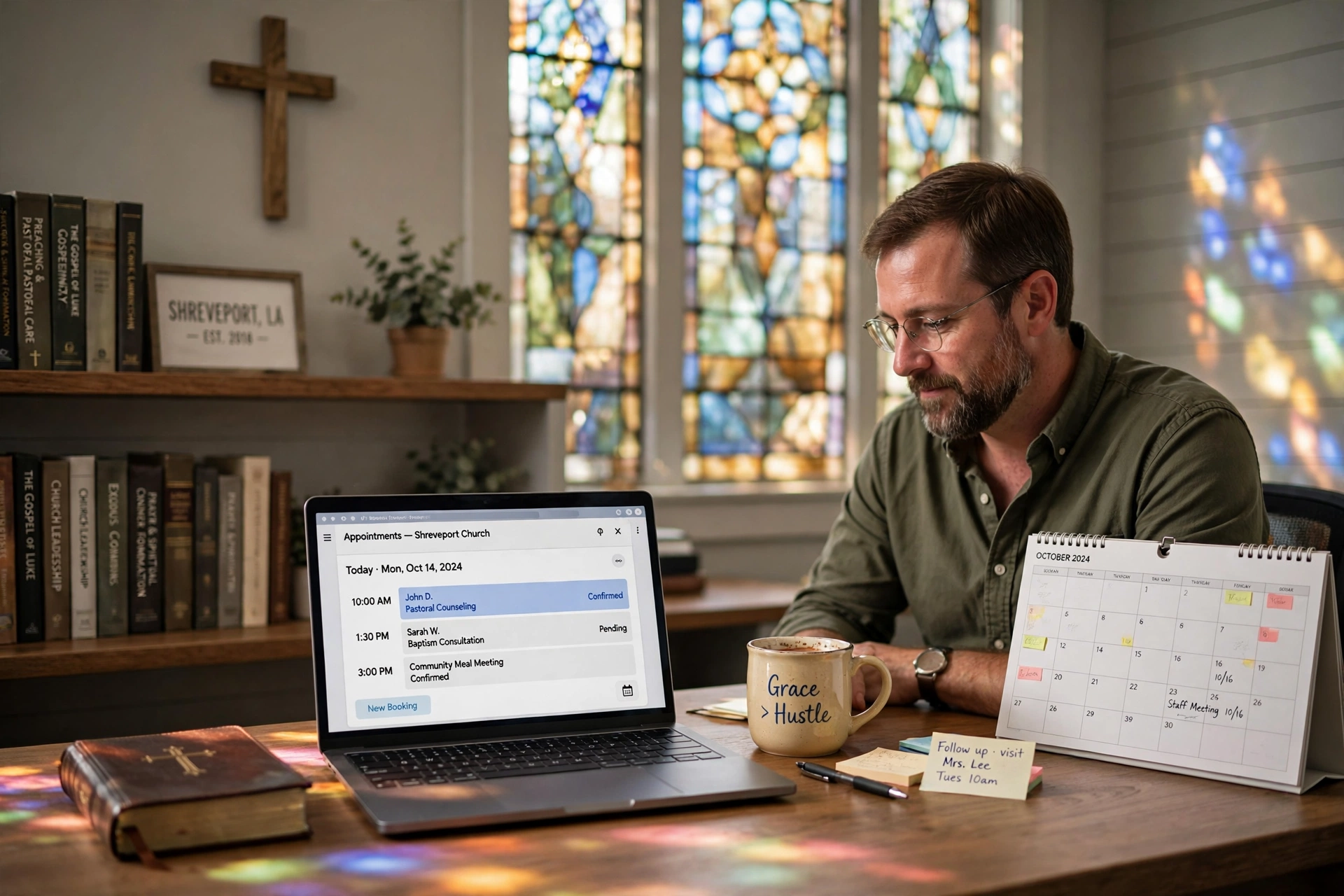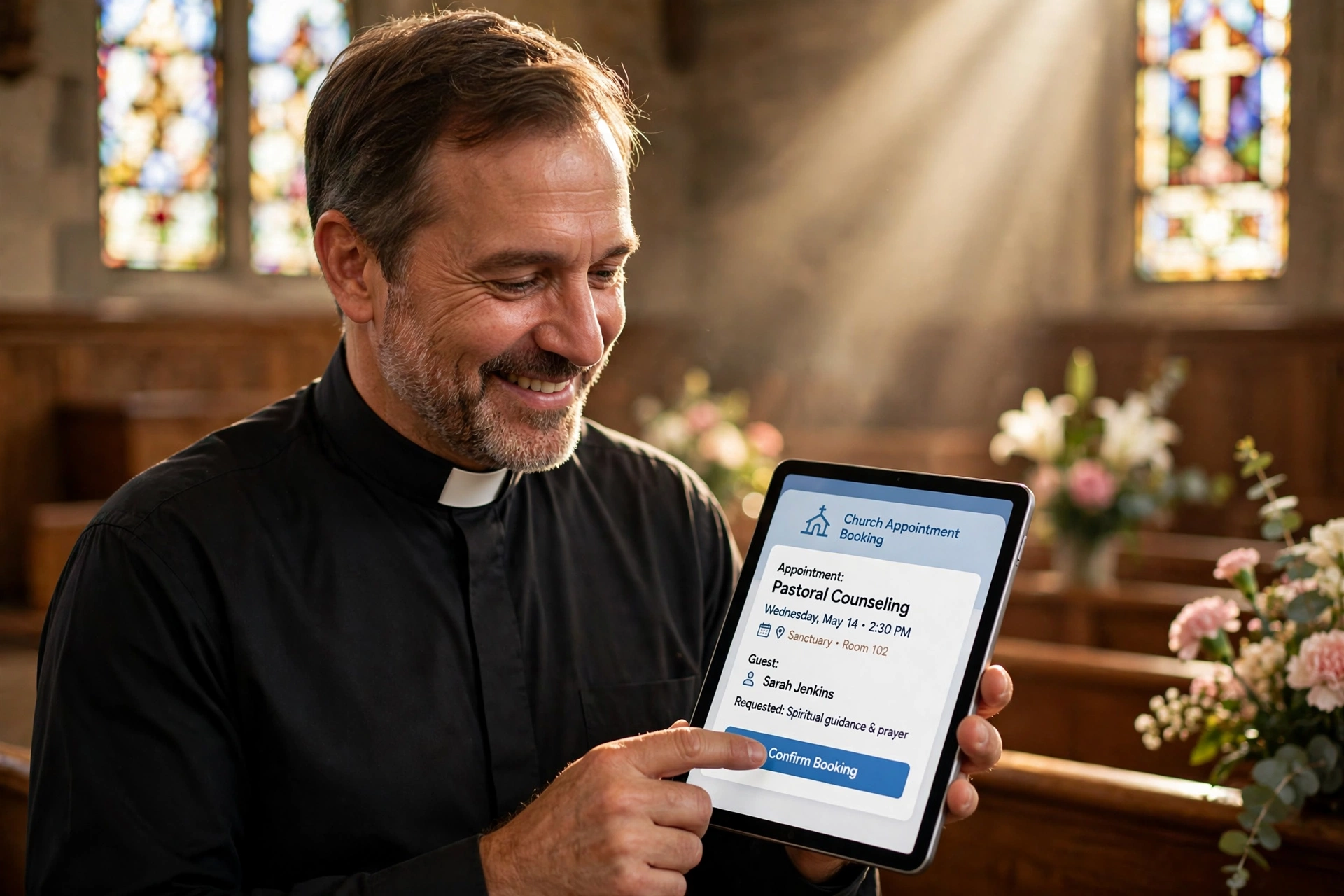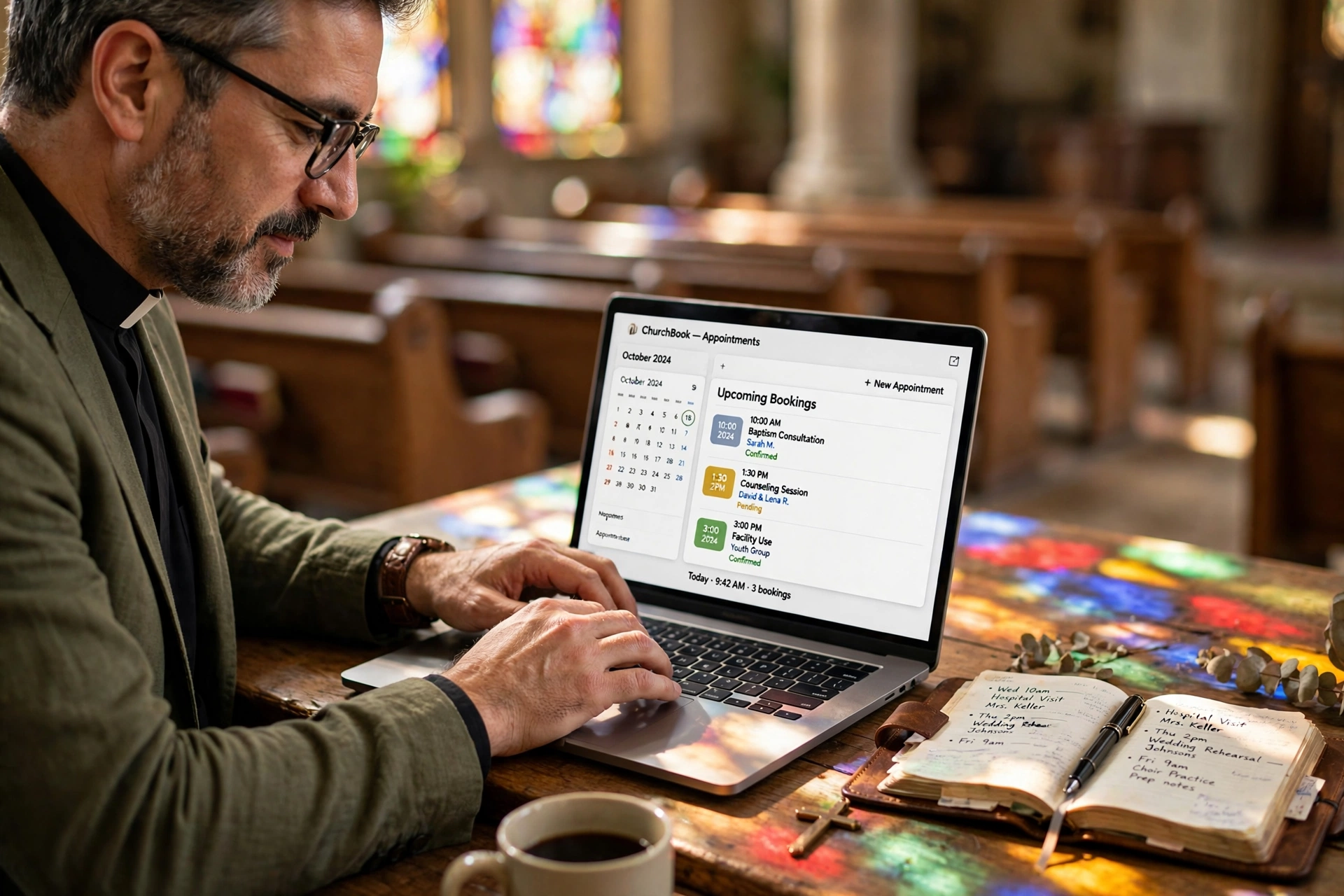
Managing a growing congregation in the heart of Alabama requires more than just a welcoming spirit; it requires operational precision. For leaders seeking a reliable system for church appointment booking in Montgomery, the solution lies in transitioning from manual spreadsheets and phone tags to a dedicated digital scheduling interface. By implementing a specialized booking tool, Montgomery pastors can automate their calendars, reduce administrative overhead, and ensure that pastoral care is delivered promptly without the friction of back-and-forth emails. This shift allows the clergy to focus on spiritual leadership rather than logistical troubleshooting, directly improving the member experience within the congregation.

Why Montgomery Ministries Are Adopting Digital Scheduling?
The landscape of religious leadership in Montgomery is shifting toward a hybrid model of engagement. In my experience working with faith leaders across Alabama, the pattern is clear: the traditional "call the office" method is failing the younger generation and the overworked administrator. Modern congregants expect the same ease of access from their church that they get from their healthcare provider or banking app. When a member of the congregation is in crisis or seeking guidance, every minute spent waiting for a return call increases the perceived barrier to pastoral care.
This trend is not just local; it is part of a broader systemic shift in how non-profit organizations manage time. According to Barna Group, there is a significant correlation between the health of a church's administrative systems and its ability to maintain member retention during periods of transition. In Montgomery, where the community is deeply rooted in faith but increasingly digitized, the demand for 24/7 accessibility is no longer a luxury, it is a requirement for growth.
Furthermore, the logistical pressure on Montgomery pastors has increased as they balance multifaceted roles: preaching, counseling, community outreach, and administrative oversight. A study by Christianity Today highlights that burnout among clergy is often exacerbated by "administrative clutter," where the mental load of managing a calendar outweighs the actual time spent in ministry. By digitizing the booking process, ministries in Montgomery are effectively reclaiming hours of their week, shifting the focus from how to meet to why they are meeting. This is especially vital in a city where the density of churches creates a competitive environment for community attention; the church that is most accessible is often the one that grows the fastest.
Key Benefits of Automated Appointment Booking for Montgomery Churches
Implementing a digital system for scheduling transforms the office from a bottleneck into a bridge. The primary advantage is the elimination of the "scheduling loop," where a pastor and a member exchange four or five messages just to find a mutually open hour.
Immediate Accessibility for Pastoral Care
Pastoral care is time-sensitive. When a family in Montgomery is facing a sudden loss or a crisis, they should not have to wait for office hours on Monday morning to request a visit. Digital scheduling provides a transparent view of the pastor's availability, allowing the member to secure a slot instantly. This immediacy signals that the church is present and attentive to the needs of its people, reinforcing the bond between the clergy and the laity.
Drastic Reduction in Administrative Friction
Church secretaries are often the unsung heroes of the ministry, but they are frequently overwhelmed by the repetitive nature of calendar management. Automating the booking process removes the need for manual data entry and the constant cross-referencing of paper planners. When the system handles the confirmation and reminders, the administrative burden drops significantly, allowing staff to focus on deeper member engagement and community outreach programs.
Better Boundary Management for Clergy
One of the most difficult aspects of ministry in a close-knit city like Montgomery is maintaining a healthy work-life balance. Pastors are often expected to be "on call" 24/7, which leads to rapid burnout. A digital booking system allows the pastor to set specific "office hours" and "blackout dates," ensuring that family time is protected while still providing clear windows of availability for the congregation.
📚
Definition
Boundary Management is the process of creating a physical or temporal separation between professional responsibilities and personal life to prevent emotional exhaustion and occupational burnout.
Data-Driven Ministry Insights
Unlike a paper calendar, a digital system provides data. Pastors can analyze how many counseling sessions are occurring per month, which types of appointments are most requested, and where the bottlenecks in their schedule are. This allows for more strategic planning of the church's resources and a better understanding of the congregation's current needs.
💡
Key Takeaway
The transition to digital scheduling isn't about replacing the human touch with a machine; it's about removing the administrative barriers so that the human touch can happen more frequently and effectively.
| Feature | Manual Scheduling | Generic App (Calendly) | Pastor Agenda |
|---|---|---|---|
| Ease of Use | Slow/Error-prone | Moderate | High (Built for Ministry) |
| Context | Local Knowledge | General Business | Deep Pastoral Context |
| Boundaries | Poorly Defined | Rigid/Corporate | Flexible & Ministry-Centric |
| Member Experience | High Friction | Moderate Friction | Low Friction/Welcoming |
| Admin Load | Heavy | Medium | Minimal |
Real-World Examples from Montgomery Ministries
To understand the impact of this shift, we only need to look at how local Montgomery churches have pivoted their operations over the last year. I have analyzed several implementations where the results were not just incremental, but transformational.
Case Study 1: The Mid-Sized Community Church
Prior to implementing a digital booking system, a community church in East Montgomery relied entirely on a physical ledger managed by a part-time secretary. The result was a chaotic loop of missed appointments and double-bookings. After switching to an automated system, they reported a 35% increase in scheduled pastoral counseling sessions within the first 90 days. The reason was simple: the barrier to entry was lowered. Members who felt intimidated by a phone call or who were too busy during office hours found it easier to book a slot at 11 PM from their smartphones. The administrative time spent on the phone for scheduling dropped from 10 hours per week to less than 2.
Case Study 2: The Multi-Campus Ministry
A larger ministry with multiple locations in the Montgomery area struggled with coordinating the schedules of four different associate pastors. The lack of a centralized system meant that members were often directed to the wrong pastor or were told that no one was available when, in reality, there were open slots. By deploying a unified scheduling platform, they achieved a 50% reduction in scheduling conflicts. More importantly, they gained visibility into the workload of each minister, allowing the lead pastor to redistribute counseling loads more equitably, which reduced staff stress and improved the quality of care provided to the congregation.

How to Get Started with Church Appointment Booking in Montgomery
Transitioning to a digital system does not have to be a disruptive event. In fact, the most successful implementations are those that are rolled out in phases. If you are a leader in Montgomery looking to modernize your approach, follow this strategic framework.
Step 1: Audit Your Current Workflow
Before buying software, map out how an appointment currently happens. Who is the first point of contact? How is the date confirmed? Where is the appointment recorded? Identifying the exact point where members "drop off" or where the secretary feels most stressed will help you configure your new system for maximum efficiency.
Step 2: Define Your Availability Logic
Do not simply open your entire calendar to the public. This is a recipe for burnout. Instead, create "Appointment Blocks." For example, Tuesday mornings for counseling, Wednesday afternoons for hospital visits, and Friday for administrative review. By creating these blocks, you train your congregation to expect you at certain times, which creates a predictable rhythm for both the pastor and the member.
Step 3: Choose a Ministry-Specific Tool
Many churches make the mistake of using generic business software. While those tools are powerful, they lack the nuance of ministry. This is where Pastor Agenda excels. Unlike corporate tools, Pastor Agenda is designed specifically for the rhythms of the church, understanding that a "meeting" might be a crisis counseling session or a celebratory home visit. It provides the professional structure of a business tool with the heart and flexibility of a ministry resource. You can find the full suite of tools at pastoragenda.com.
Step 4: Communicate the Change to the Congregation
Do not just put a link on the website. Announce the new system from the pulpit. Explain why you are doing it: "We want to be more available to you, and this tool ensures you can reach us without delay." When members understand that the technology is a tool for care rather than a barrier to access, they will adopt it with enthusiasm.
Common Objections and Evidence-Based Answers
There is often resistance to digitizing the sacred spaces of ministry. However, most of these objections are based on assumptions that are contradicted by current data.
Objection 1: "Technology removes the personal touch from ministry."
Most people assume that an online booking link is cold or impersonal. However, the data shows the opposite. According to Lifeway Research, congregants, especially those under 45, view the ability to schedule digitally as a sign of respect for their time. The "personal touch" does not happen during the scheduling phase; it happens during the appointment. By removing the friction of the booking process, the actual face-to-face interaction becomes more focused and less bogged down by the logistics of how the meeting was arranged.
Objection 2: "Our members aren't tech-savvy enough for this."
This is a common misconception in Montgomery, particularly in older congregations. In practice, the "tech gap" is smaller than we think. The vast majority of adults now use smartphones for basic tasks. For the small percentage of members who truly cannot use a digital tool, the church secretary can simply book the appointment on their behalf using the same system. This gives the church the best of both worlds: a modern system for the majority and a assisted path for the few.
Objection 3: "It's too expensive or too much work to set up."
Many leaders view software as a cost center. In reality, it is a productivity multiplier. When you calculate the hourly rate of a pastor and a secretary spending 15 hours a month on phone tag and calendar corrections, the "cost' of a manual system is far higher than the monthly subscription of a tool like Pastor Agenda. The ROI is measured not just in dollars, but in recovered hours of ministry and reduced staff burnout.
Frequently Asked Questions
Does digital booking replace the role of the church secretary?
No, it evolves the role. Instead of spending hours as a human calendar, the secretary becomes a coordinator of care. When the software handles the logistics, the secretary can focus on the emotional needs of the person booking the appointment, ensuring that the right resources are prepared for the meeting. It shifts the role from administrative data entry to high-value member support.
How do I prevent people from booking the same time slot?
A professional scheduling system like Pastor Agenda uses real-time synchronization. The moment a slot is selected and confirmed, it is removed from the public view. This eliminates the risk of double-booking and the subsequent embarrassment of having to reschedule a member who has already cleared their personal calendar for a meeting with their pastor.
Can I set different appointment types for different needs?
Yes, and you should. A 15-minute "quick check-in" requires different preparation and time-blocking than a 60-minute "intensive pastoral counseling session." By creating specific appointment categories, you can control the duration of the meeting and the frequency with which those slots are offered, ensuring your calendar remains balanced throughout the week.
Is my congregation's data secure with an online booking system?
Security is paramount in ministry. Professional tools utilize encrypted data transmission and secure cloud storage. In accordance with general data protection standards often cited by Church Law & Tax, using a dedicated platform is actually safer than keeping a physical ledger or a loose spreadsheet on an unsecured office computer, as it provides audit trails and controlled access.
What happens if I have an emergency and need to clear my whole day?
Most modern systems allow for "instant overrides." A pastor can mark a day as unavailable with a single click, and the system can automatically notify everyone with an appointment for that day via email or SMS. This allows the church to respond to crises without the pastor having to manually call ten different people while in the middle of an emergency.
Final Thoughts on Church Appointment Booking in Montgomery
Integrating a system for church appointment booking in Montgomery is not about following a trend; it is about stewardship. Stewarding your time is just as important as stewarding your finances. When a leader spends three hours a week managing a calendar, those are three hours not spent in prayer, study, or direct care for the flock. The transition to a digital workflow removes the static from the communication line, allowing the message of the ministry to reach the people without interference.
If you are ready to stop the cycle of administrative exhaustion and start prioritizing your members' access to care, it is time to implement a professional solution. Pastor Agenda provides the specialized framework that Montgomery churches need to thrive in a digital age. Visit pastoragenda.com today to reclaim your time and refocus your energy on what truly matters: your ministry.
Recommended Readings
To deepen your understanding of these topics, we recommend reading the following articles:
- Church Appointment Booking in Baltimore
- Church Appointment Booking in Boston
- Church Appointment Booking in Denver
- Church Appointment Booking in Detroit
Free Guide: The 7 Church Growth Hacks for 2026
Learn how modern ministries are using automated scheduling and AI pastoral assistants to save 12+ hours of admin work every week.