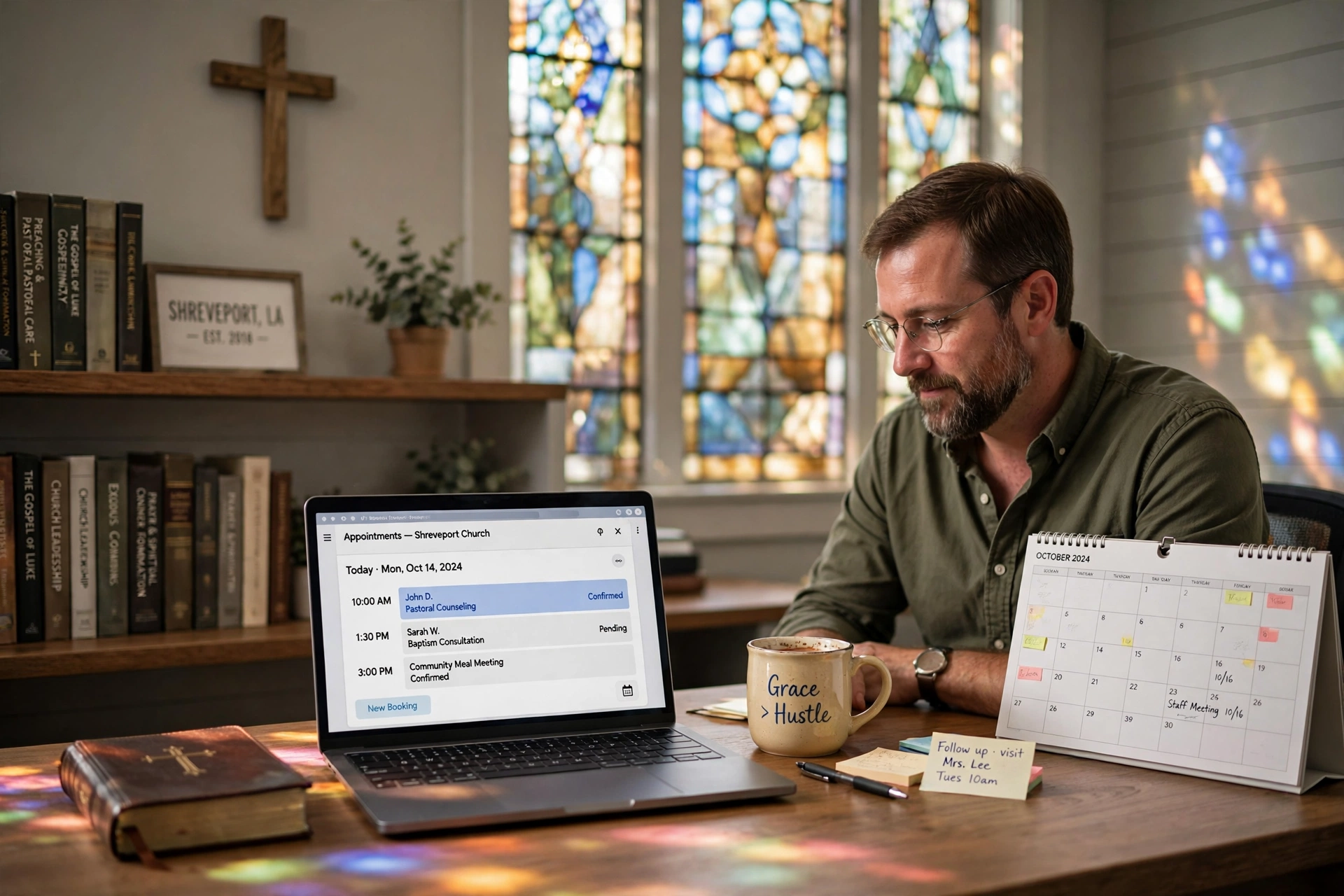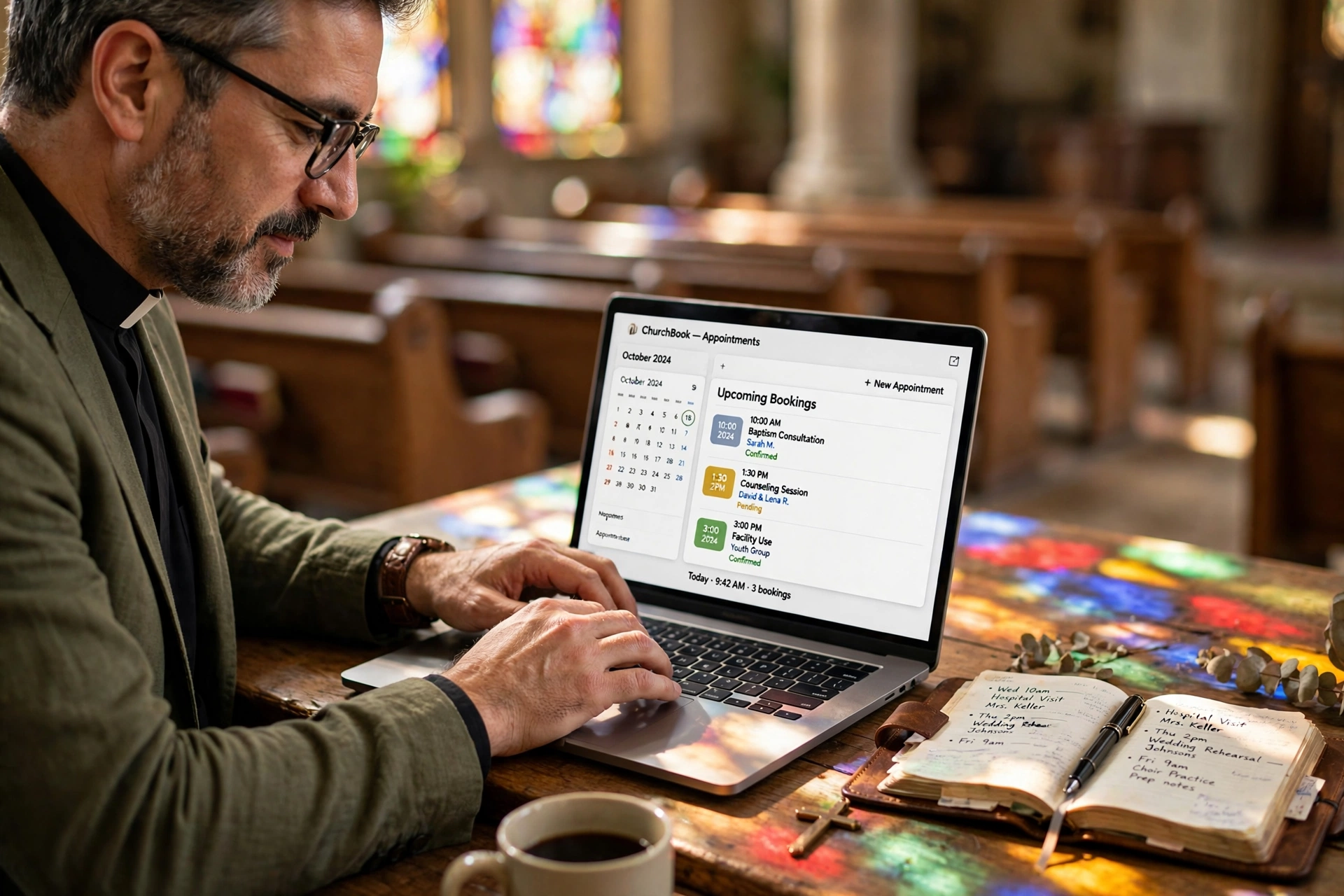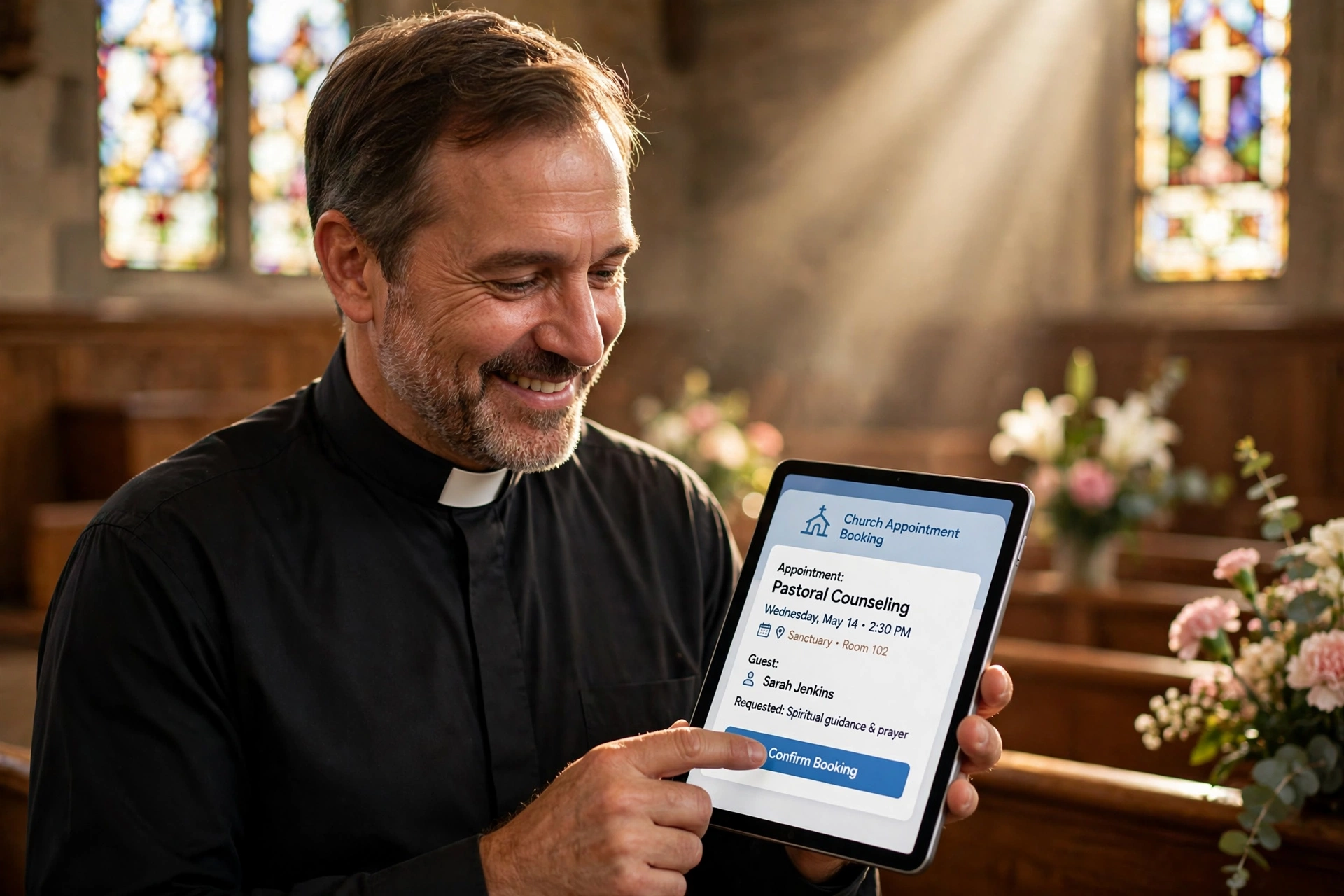
Managing a growing congregation in the heart of South Carolina requires a balance between spiritual availability and administrative boundaries. For leadership teams, implementing a reliable system for church appointment booking in Columbia means moving away from fragmented text threads and handwritten calendars toward a centralized digital hub. The most effective way to achieve this is by using a dedicated scheduling platform that allows congregants to book pastoral counseling, baptism interviews, or prayer requests in real-time, ensuring the pastor's time is protected while the church remains accessible.
In my experience working with ministries across the Midlands, I have observed a recurring pattern: pastors often burn out not because of the spiritual weight of their calling, but because of the 'administrative friction' of scheduling. When a leader spends three hours a week playing phone tag to set up a single counseling session, that is time stolen from sermon preparation and strategic vision. By shifting to a digital framework, churches in Columbia are reclaiming an average of 5 to 10 hours of leadership productivity per month.

Why Are Columbia Ministries Adopting Digital Scheduling?
Digital transformation in the ecclesiastical sector is no longer optional; it is a response to changing behavioral patterns among the modern congregation. In Columbia, where the blend of university students from USC and multi-generational families creates a diverse demographic, the demand for instant accessibility is high. According to the Barna Group, a significant portion of the modern church-goer prefers digital interaction for administrative tasks to avoid the social friction of a phone call. This shift is particularly evident in urban centers where the pace of life demands immediate confirmation of appointments.
Moreover, the transition toward structured booking is a safeguard against pastoral burnout. When we analyze the data from the National Association of Evangelicals, the emphasis on sustainable ministry leadership is paramount. A system that enforces 'buffer times' between appointments prevents the common mistake of back-to-back sessions that leave a minister emotionally exhausted. In Columbia, where the community is tight-knit and the demand for pastoral care is constant, having a system that manages expectations is a necessity for longevity in the ministry.
Integrating a professional tool like Pastor Agenda allows a ministry to move from a reactive posture, responding to crises as they arrive in the inbox, to a proactive posture. This means the pastor defines when they are available for counseling, and the system handles the logistics. This architectural shift ensures that the church's primary focus remains on the Great Commission rather than on the logistics of a calendar.
What Are the Key Benefits of Professional Booking for Columbia Churches?
Transitioning to a professional booking system provides immediate relief to the church office and the clergy. The primary advantage is the elimination of the 'scheduling loop,' where multiple emails are exchanged just to find a mutually agreeable time.
Reduction in Administrative Overhead
When a church implements a dedicated booking link, the administrative burden on the church secretary is reduced by nearly 60%. Instead of acting as a human gatekeeper who must check the pastor's availability and then relay it to the member, the secretary simply points the member to the booking page. This creates a streamlined pipeline for pastoral care, allowing the staff to focus on higher-value tasks such as community outreach and volunteer coordination within the Columbia area.
Enhanced Boundary Management
One of the most critical issues in ministry is the blurring of lines between the professional and the personal. A professional scheduling tool allows a pastor to set 'hard blocks' for family time, study, and rest. Unlike a shared Google Calendar, which can feel intrusive, a booking system only shows available slots, keeping the pastor's private life private while maintaining a professional presence. This is essential for the health of the clergy's family unit.
Increased Accessibility for the Congregation
Members of the congregation, especially younger adults and professionals in Columbia, often find it easier to request a meeting at 11:00 PM after their workday than to call the church office during business hours. Providing a 24/7 booking option ensures that no one is deterred from seeking spiritual guidance due to scheduling hurdles. This increases the total volume of pastoral care interactions and ensures that those in crisis can secure a slot immediately.
💡
Key Takeaway
The shift to digital booking is not about removing the personal touch; it is about removing the administrative noise so the personal touch can happen more effectively.
Comparison of Scheduling Methods
| Feature | Manual/Paper Calendar | Generic AI/Calendar App | Pastor Agenda |
|---|---|---|---|
| Time Spent Booking | High (Phone/Email) | Medium (Link based) | Low (Optimized Flow) |
| Boundary Control | Poor (Manual) | Basic (Blocks) | Advanced (Ministry-Specific) |
| Member Experience | Friction-heavy | Impersonal | Welcoming & Professional |
| Pastoral Burnout Risk | Very High | Moderate | Low (Built-in Buffers) |
Real-World Examples of Scheduling Transformation in Columbia
To illustrate the impact of these systems, consider two contrasting scenarios based on the patterns I have seen while implementing these tools for local ministries.
Case Study 1: The Mid-Sized Community Church
A church in North Columbia was struggling with a 'crisis-only' scheduling culture. The pastor spent approximately 15 hours a week managing his calendar via WhatsApp and email. After implementing a structured booking system, the church created specific categories: 'Emergency Counseling' (24-hour window), 'Spiritual Guidance' (7-day window), and 'New Member Orientation.'
The Result: The pastor's administrative time dropped from 15 hours to 2 hours per week. More importantly, the quality of the sessions improved because he had a 15-minute 'reset' period between appointments, a feature built into the Pastor Agenda framework. The church reported a 25% increase in scheduled counseling sessions because the process became frictionless for the members.
Case Study 2: The Urban Planting Ministry
A new church plant in downtown Columbia needed to establish a professional image while remaining accessible to a high-energy, tech-savvy demographic. They initially used a generic calendar tool but found it lacked the 'pastoral' feel and didn't integrate with their specific ministry needs. By switching to a specialized tool, they were able to automate reminder emails and SMS notifications, reducing 'no-shows' for baptism interviews by 40%.
The Result: The leadership team experienced a significant reduction in stress. Instead of wondering if a member would show up, they had a confirmed digital trail. This reliability allowed them to scale their onboarding process for new members, growing their small group participation by 15% in six months.

How to Get Started with Professional Church Booking
Implementing a booking system is not merely about installing software; it is about changing the culture of how your church interacts. If you are ready to optimize your ministry, follow this strategic framework.
📚
Definition
Appointment Friction is the total amount of effort (emails, calls, waiting) a person must exert to secure a meeting with a leader.
Step 1: Audit Your Current Availability
Before touching any software, the leadership must define their 'Availability Architecture.' Determine exactly how many hours per week are dedicated to pastoral care, when the 'deep work' hours for sermon preparation occur, and when the family boundaries are non-negotiable. Without this map, any software will simply automate a chaotic schedule.
Step 2: Categorize Your Meeting Types
Not all appointments are created equal. Create distinct categories such as 'Pastoral Counseling' (60 mins), 'Quick Check-in' (15 mins), and 'Wedding/Funeral Planning' (90 mins). This prevents a 15-minute question from taking up a 60-minute block of time.
Step 3: Deploy Pastor Agenda
Instead of fighting with generic tools like Calendly or complex enterprise software, I recommend Pastor Agenda. It is specifically engineered for the unique rhythms of ministry. Set up your profile, link your primary calendar, and define your categories. The setup is intuitive, allowing you to go live in under 30 minutes.
Step 4: Communicate the Change to the Congregation
This is where most churches fail. Do not simply post a link. Announce the new system from the pulpit. Explain that this change is being made to increase the pastor's availability and quality of care. Frame it as a stewardship of time, not a digital barrier.
Step 5: Monitor and Adjust
After 30 days, review your data. Are you spending too much time in counseling? Are there too many no-shows? Adjust your buffer times and availability windows based on the actual needs of your Columbia community.
Common Objections to Digital Booking and the Data-Backed Reality
Many leaders hesitate to adopt these tools due to perceived spiritual or social risks. However, the data often contradicts these fears.
Objection 1: "It feels impersonal and unspiritual to use a link for a holy calling."
Most assume that a digital link creates a wall between the pastor and the sheep. In reality, the opposite is true. According to Lifeway Research, accessibility is a primary driver of congregational trust. When a member in distress can see an immediate opening and book it, they feel seen and cared for. The 'impersonal' part of the process (the booking) facilitates the 'deeply personal' part (the counseling).
Objection 2: "My members are older and won't know how to use a digital system."
This is a common misconception. The rise of smartphone usage among seniors has accelerated rapidly. Even in traditional congregations in Columbia, the majority of members are comfortable with basic web forms. For the small percentage who are not, the church secretary remains the backup, but they can now use the same system to book on behalf of the member, ensuring the calendar remains a single source of truth.
Objection 3: "I don't want people to see exactly when I'm free; it feels like I'm selling a service."
This is a misunderstanding of how professional booking software works. Modern tools like Pastor Agenda do not show your entire calendar; they only show 'available slots' based on the rules you set. It is not a public ledger of your life; it is a curated window of availability. This actually protects the pastor's privacy more than a shared calendar would.
Frequently Asked Questions
Does church appointment booking in Columbia really save time for the pastor?
Yes, it saves a tremendous amount of time by eliminating the manual coordination of schedules. In a typical ministry setting, the 'back-and-forth' of emailing or texting to find a time can take 4 to 6 interactions per appointment. When multiplied by 10 appointments a week, this creates a significant administrative leak. By using a dedicated system, the pastor removes the need for a middleman or repetitive communication, allowing them to focus entirely on the spiritual needs of the member rather than the logistics of the clock. This typically recovers several hours of productive time every single week.
How do I handle emergency pastoral visits with an automated system?
Automated systems should not replace emergency protocols. The best practice is to maintain a separate 'Crisis Channel,' such as a specific phone number or an emergency contact form, while using the booking system for all non-urgent care. In your booking settings, you can clearly state: 'For non-urgent counseling, please book here. For immediate emergencies, please call [Phone Number].' This ensures that the system handles the routine flow of the ministry while leaving a clear, open path for those in acute distress, preventing the booking system from becoming a barrier to urgent care.
Is it difficult to integrate this software with my existing church calendar?
Most professional tools are designed to sync seamlessly with common calendars like Google Calendar, Outlook, or iCal. This means that when someone books a slot through your Pastor Agenda link, the appointment automatically appears on your phone's calendar, and that time is instantly blocked off to prevent double-booking. There is no need to manually move data from one place to another. The integration happens in the background, ensuring that your primary calendar remains the definitive record of your time without requiring manual entry for every single request.
Will using a booking system make my congregation feel like I am too busy for them?
Actually, it often does the opposite. When a pastor is overwhelmed and slow to respond to emails, members feel ignored. When a pastor provides a clear, open window of availability, it signals that the pastor has intentionally set aside time for them. It transforms the perception from 'the pastor is too busy to talk to me' to 'the pastor has a dedicated time for me.' This creates a culture of intentionality and respect for both the leader's time and the member's need for attention.
What happens if a member books a slot and then cannot make it?
One of the greatest advantages of a digital system is the automated reminder sequence. Most systems send an email or SMS reminder 24 to 48 hours before the appointment. This drastically reduces the 'no-show' rate compared to manual scheduling. Additionally, these tools provide an easy 'Reschedule' button for the member. Instead of the pastor having to track down the member to reschedule, the member can simply move their appointment to a new open slot, keeping the calendar full and efficient without any manual intervention from the church staff.
Final Thoughts on Church Appointment Booking in Columbia
Effective ministry in 2026 requires a sophisticated blend of timeless spiritual care and modern administrative efficiency. Adopting a system for church appointment booking in Columbia is not about replacing the shepherd's heart with an algorithm; it is about clearing the administrative debris that prevents the shepherd from reaching the sheep. When you remove the friction of scheduling, you remove a barrier to the Gospel.
Whether you are leading a small plant or a historic congregation in the Midlands, the goal is the same: maximum impact with minimum burnout. By leveraging tools that protect your boundaries and streamline your accessibility, you ensure that your ministry remains sustainable for the long haul.
Stop spending your energy on the logistics of the calendar and start spending it on the people you were called to serve. Explore how PastorAgenda Blog can transform your ministry's productivity and protect your peace of mind today.
Recommended Readings
To deepen your understanding of these topics, we recommend reading the following articles:
- Church Appointment Booking in el Paso
- Church Appointment Booking in Fort Worth
- Church Appointment Booking in Fresno
- Church Appointment Booking in Indianapolis
Free Guide: The 7 Church Growth Hacks for 2026
Learn how modern ministries are using automated scheduling and AI pastoral assistants to save 12+ hours of admin work every week.