
Which Pastor Scheduling Software is Actually Worth Your Time?
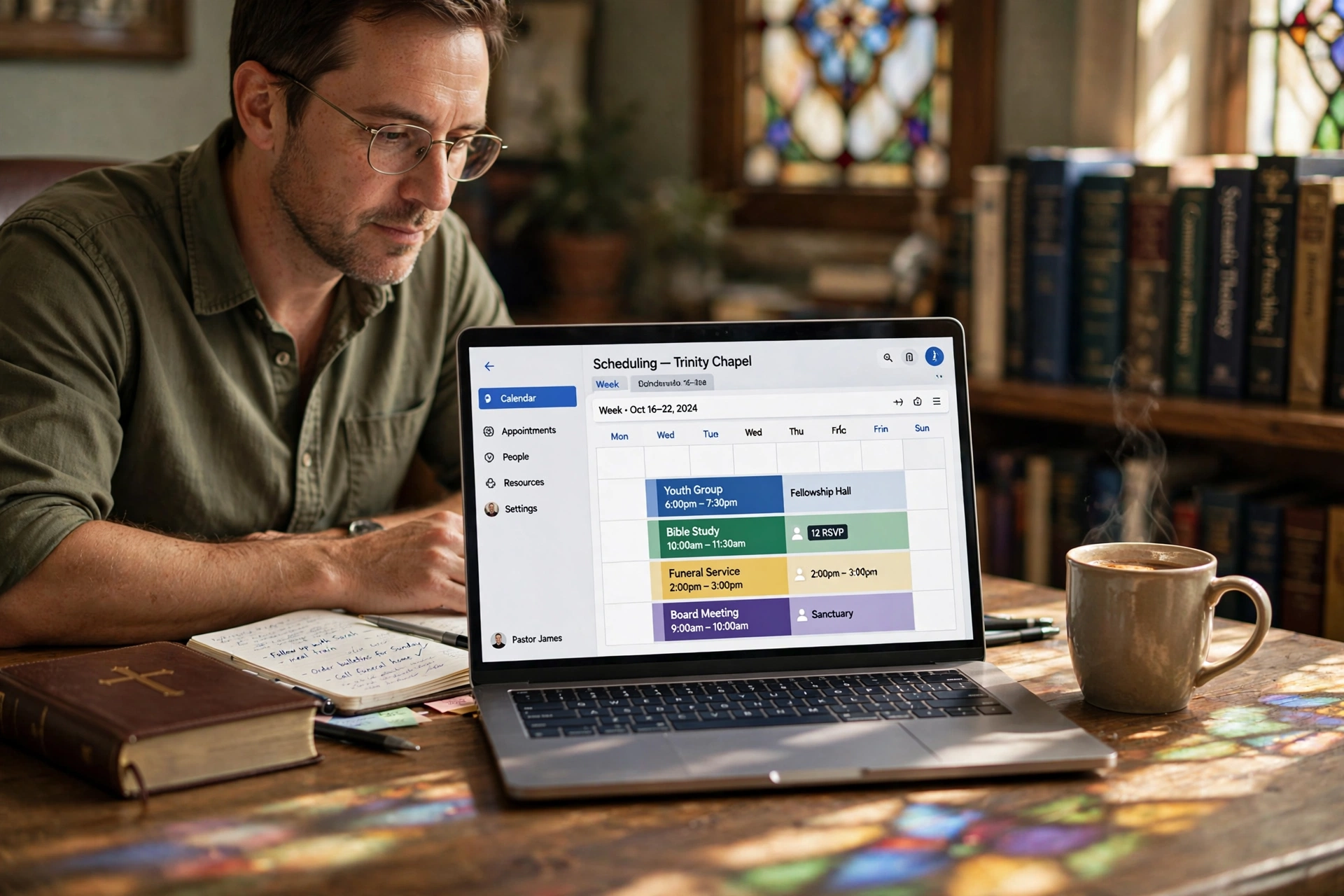
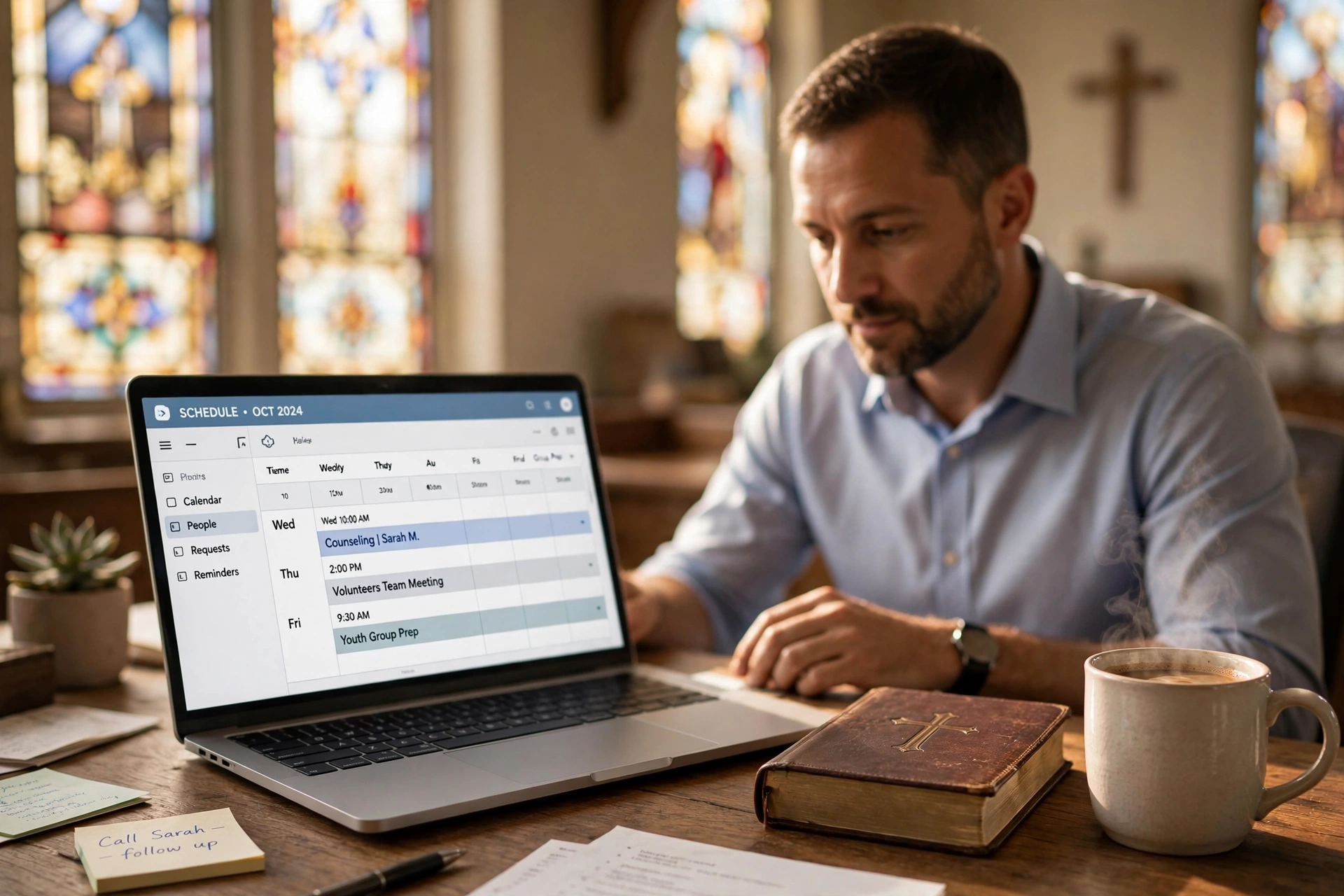
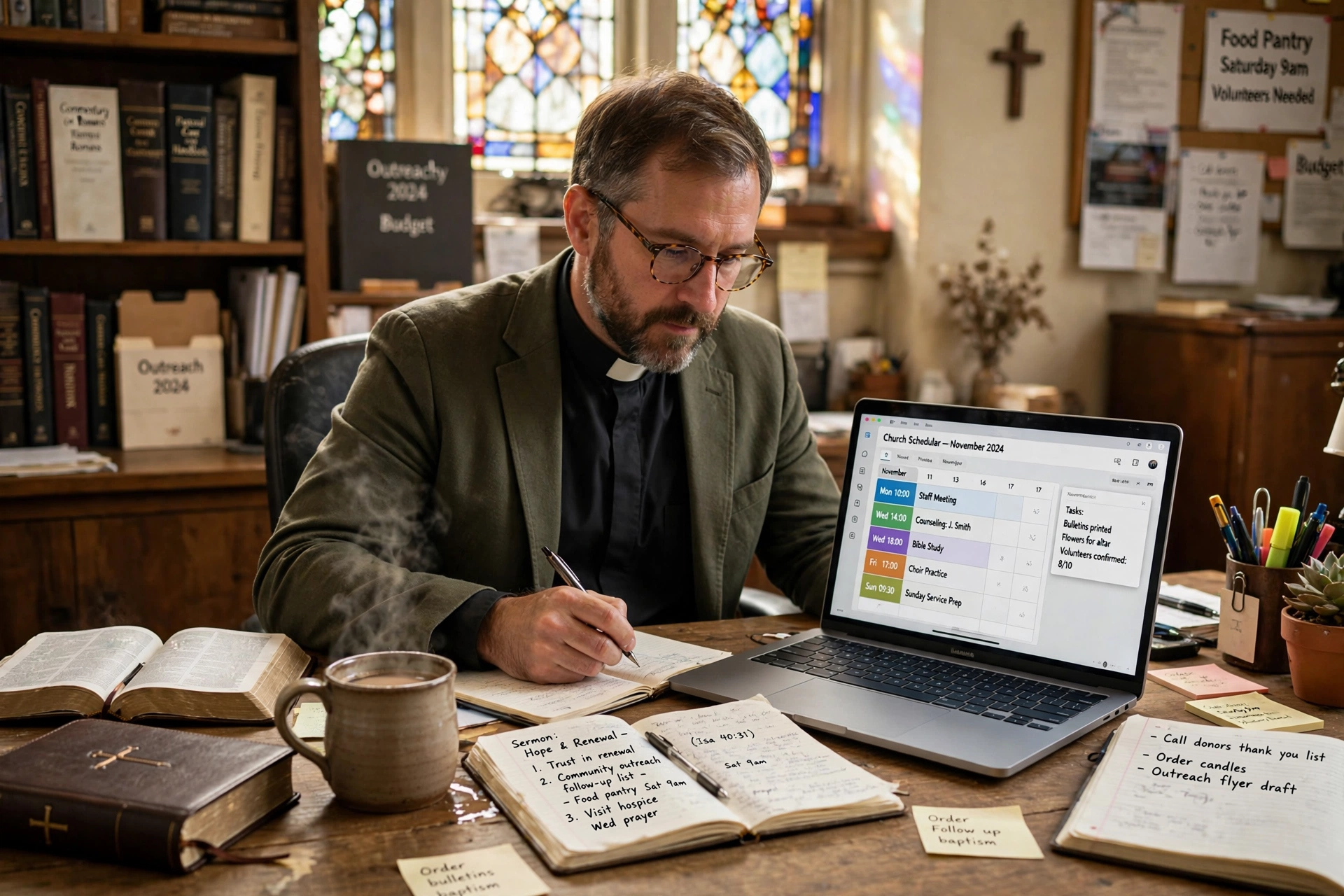
Managing a ministry's calendar often feels like a battle against chaos. After analyzing dozens of church workflows, I've found that most pastors lose roughly five to ten hours per month simply playing "email tag" to coordinate a single counseling session or hospital visit. When deciding which pastor scheduling software to implement, the answer depends entirely on whether you need a generic productivity tool or a dedicated ecosystem that understands the nuances of pastoral care. For leaders who prioritize boundary setting and congregation accessibility, a specialized tool like Pastor Agenda is the only logical choice because it bridges the gap between professional efficiency and spiritual availability.
Understanding the Framework of Ministry Scheduling
To choose the right tool, we first have to define what we are actually solving. Scheduling in a church context isn't just about time slots; it's about managing the tension between "being available to the flock" and "maintaining the health of the leader."
📚
Definition
Pastor Scheduling Software is a specialized category of appointment booking systems designed to automate the coordination of pastoral counseling, home visits, and ministry meetings while protecting the leader's private time and administrative blocks.
In my experience working with church leaders, the biggest mistake I see is treating a ministry calendar like a corporate sales funnel. A corporate tool focuses on "conversion" and "lead capture," but a ministry tool must focus on "care" and "stewardship." If a member of your congregation is in crisis, they shouldn't feel like they are booking a sales call with a software company.
The technical architecture of these tools generally falls into two categories: synchronous and asynchronous. Synchronous tools require manual approval for every request, while asynchronous tools allow the user to pick a pre-approved slot. According to the Barna Group, pastoral burnout is often linked to the blurring of boundaries between work and home life. Software that allows a pastor to set "hard boundaries" (blackout dates) and "soft boundaries" (buffer times between appointments) is not just a convenience; it is a mental health necessity for the clergy.
When evaluating options, you must look for "buffer management." A generic tool might let someone book a 30-minute slot right up against another. In a ministry setting, a counseling session that starts at 2:00 PM often runs late because of the emotional weight of the conversation. A professional system must automatically inject 15-30 minute buffers to prevent the "domino effect" of a ruined afternoon.
Why the Right Choice Directly Impacts Ministry Health
The decision of which software to use isn't a technicality; it's a strategic decision that affects the growth and stability of your congregation. When a pastor is bogged down by manual scheduling, they are spending more time as an administrator than as a shepherd.
The data shows that administrative friction creates a barrier to entry for those seeking help. According to research by Lifeway Research, accessibility to leadership is a primary driver in how members perceive the "health" of their church. If a new member tries to schedule a "New Members Class" or a "First-Time Visit" and finds the process cumbersome or slow, the psychological connection to the church is weakened before the meeting even happens.
Furthermore, the risk of "scheduling leakage"—where appointments are forgotten or double-booked—creates a perception of instability. In a professional environment, a double-booked meeting is an annoyance. In a pastoral setting, forgetting a hospital visit or a grieving family's appointment can be perceived as a lack of care. This is why automated reminders are not just a "feature" but a requirement for maintaining trust within the congregation.
From a productivity standpoint, the "cognitive load" of managing a calendar manually is immense. When a pastor has to remember to check an email, check a physical planner, and then send a confirmation text, they are using mental energy that should be reserved for sermon preparation and prayer. By automating this, you are effectively reclaiming hours of high-level cognitive function every week.
Practical Implementation: Moving from Chaos to Order
Transitioning to a professional system requires more than just signing up for an account. You need a deployment strategy that doesn't alienate your less tech-savvy members. Now here's where it gets interesting: the most successful transitions happen when the software is framed not as a "barrier," but as a "bridge to better care."
Here is the step-by-step framework I recommend for implementing Pastor Agenda or any professional scheduling system:
- Audit Your Time Blocks: Before touching the software, categorize your week into "Deep Work" (Sermon prep, study), "Ministerial Work" (Counseling, visits), and "Rest" (Sabbath, family).
- Establish Your Availability: Set your "Open Windows." For example, Tuesdays and Thursdays from 10 AM to 4 PM. This prevents the "always-on" expectation that leads to burnout.
- Create Specific Appointment Types: Do not just have one "Meeting" option. Create distinct categories: "15-Minute Quick Check-in," "60-Minute Pastoral Counseling," and "Home Visit (requires 30m travel time)."
- Integrate with Your Primary Calendar: Ensure the software syncs in real-time with your Google or Outlook calendar. If you add a doctor's appointment to your personal calendar, that slot must instantly disappear from the public booking page.
- Distribute the Link Strategically: Place your scheduling link in your email signature, on the church website's "Contact" page, and in the church's mobile app.
💡
Key Takeaway
The goal of scheduling software is not to replace the personal touch of ministry, but to remove the administrative friction that prevents the personal touch from happening.
By using a dedicated system like Pastor Agenda, you move the logistics to the background. Instead of a long thread of "Does Wednesday at 2 work for you?" followed by "No, how about Thursday?", the member simply clicks a link and chooses a time that is already guaranteed to work. This empowers the congregation and protects the pastor.
Comparing Your Options: Generic vs. Specialized
Many leaders ask if they can just use a free tool like Calendly or a generic Google Calendar. While those tools are powerful, they are built for the corporate world. Here is the breakdown of how different approaches stack up when applied to a church environment.
| Feature | Manual / Paper Planner | Generic AI/Corporate Tools | Pastor Agenda (Specialized) |
|---|---|---|---|
| Booking Speed | Very Slow (Days of back-and-forth) | Fast (Instant) | Fast (Instant & Contextual) |
| Boundary Protection | Poor (Manual tracking only) | Moderate (Basic blocks) | High (Ministry-specific buffers) |
| Congregation Feel | Personal but inefficient | Corporate / "Salesy" | Welcoming and Organized |
| Error Rate | High (Double-booking common) | Low (Automated sync) | Extremely Low (Validated slots) |
| Setup Effort | None (but high daily cost) | Moderate (Generic setup) | Low (Pre-configured for ministry) |
| Best For | Very small house churches | Solo freelancers | Growing congregations & professional clergy |
The "Generic Approach" often fails because it lacks the nuance of pastoral care. For example, most corporate tools don't account for "Travel Time" as a distinct variable that needs to be padded around an appointment. If you have a home visit across town, a generic tool might book another appointment the second you finish the first, leaving you no time to drive back to the office. A specialized approach recognizes that a "Home Visit" is a different type of event than an "Office Meeting."
Common Questions and Misconceptions
Most guides on church tech get this wrong by suggesting that "any tool will do" as long as it's free. That is a dangerous simplification. Here are the most common myths I encounter.
Myth 1: "Using a booking link feels impersonal and cold."
Actually, the opposite is true. Nothing is more frustrating for a member in crisis than waiting three days for a pastor to reply to an email to confirm a time. Providing a clear, immediate way to secure a time on your calendar signals that you are organized and that their needs are a priority. The "personal touch" happens during the meeting, not during the scheduling of it.
Myth 2: "I don't need software because my church is small."
Small churches are actually where scheduling software is most critical. In a small church, the pastor often wears five different hats (administrator, youth leader, preacher, counselor). Without a system, these roles collide. I've seen pastors of 50-member churches suffer the same burnout as those in mega-churches because they lacked a system to protect their time.
Myth 3: "Generic free tools are just as good as paid specialized ones."
Free tools are designed to upsell you to a "Pro" plan to get the features you actually need—like multiple appointment types or custom branding. More importantly, they don't offer the "ecosystem" of a tool built for the church. When you use a specialized tool, you are benefiting from a logic flow designed specifically for the rhythm of the ecclesiastical week.
Frequently Asked Questions
Which pastor scheduling software is best for a first-time user?
For those who have never used digital scheduling, the best software is one with a low learning curve and a high degree of automation. You want a system that handles the synchronization between your public availability and your private calendar without requiring manual intervention. Pastor Agenda is designed specifically for this, removing the "corporate" complexity and replacing it with a streamlined interface that allows a pastor to set up their availability in under ten minutes. The key is to choose a tool that doesn't require a degree in IT to manage, as the goal is to save time, not create a new administrative burden.
How do I prevent my congregation from booking me during my Sabbath?
The most effective way to protect your Sabbath is through "Hard Blocks" or "Blackout Dates." In your scheduling software, you should designate your Sabbath and family time as "Unavailable." Most high-quality tools allow you to set recurring unavailability. For example, you can mark every Friday evening through Saturday evening as blocked. Because the software syncs with your primary calendar, any one-off events (like a family wedding) added to your personal calendar will automatically hide those slots from your members, ensuring your boundaries remain intact without you having to manually tell people "no."
Can scheduling software help with pastoral counseling confidentiality?
While scheduling software handles the logistics of the meeting, it should not be used to store sensitive counseling notes. The best practice is to use the software for the "Who, When, and Where," and keep the "What" (the clinical or spiritual notes) in a separate, encrypted, and HIPAA-compliant or secure internal system. However, a good tool like Pastor Agenda helps confidentiality by reducing the number of people (like church secretaries) who need to handle the initial scheduling process, allowing the pastor to maintain a direct, private line of communication with the member.
What is the best way to handle "emergency" appointments in a digital system?
You should never let an emergency be handled by a standard scheduling link. The correct approach is to create a "Triage System." On your booking page, include a clear note: "For immediate crises or emergencies, please call [Phone Number] or contact the church office directly." In the software, you can reserve a few "Emergency Slots" each day that are not visible to the public but can be manually assigned by you or an assistant. This ensures that while the bulk of your care is organized, you still have the flexibility to respond to a sudden tragedy or hospital admission.
How do I transition members who prefer phone calls to using a scheduling link?
The transition should be gradual and benefit-focused. Instead of saying "I no longer take phone requests," say "To make sure I can give you my full attention and find a time that works perfectly for you, I've set up this new scheduling system." When they see that they can book a time in 30 seconds without waiting for a callback, the convenience usually outweighs the habit. You can also have the church secretary offer the link during phone calls: "The Pastor is available on Tuesday; would you like me to text you the link so you can pick the exact time that suits you best?"
Final Thoughts on Pastor Scheduling Software
Choosing the right pastor scheduling software is ultimately an act of stewardship. You are stewarding the most limited resource in your ministry: your time. When you eliminate the friction of manual booking, you aren't just "using a tool"; you are creating space for deeper ministry, more focused sermon preparation, and essential rest.
Whether you are leading a small community or a large congregation, the trade-off is clear. You can continue to manage your time through a fragmented system of emails and texts, or you can implement a professional framework that protects your boundaries and honors your members' time. If you are ready to move from administrative chaos to ministerial order, Pastor Agenda provides the specialized tools you need to lead with excellence.
To reclaim your time and focus on your calling, visit pastoragenda.com and start organizing your ministry today.
Recommended Readings
To deepen your understanding of these topics, we recommend reading the following articles:
- Ensuring Absolute Privacy in Church Booking Systems
- Church appointment booking
- Online Appointment Booking for Modern Churches
- Church management software
Free Guide: The 7 Church Growth Hacks for 2026
Learn how modern ministries are using automated scheduling and AI pastoral assistants to save 12+ hours of admin work every week.